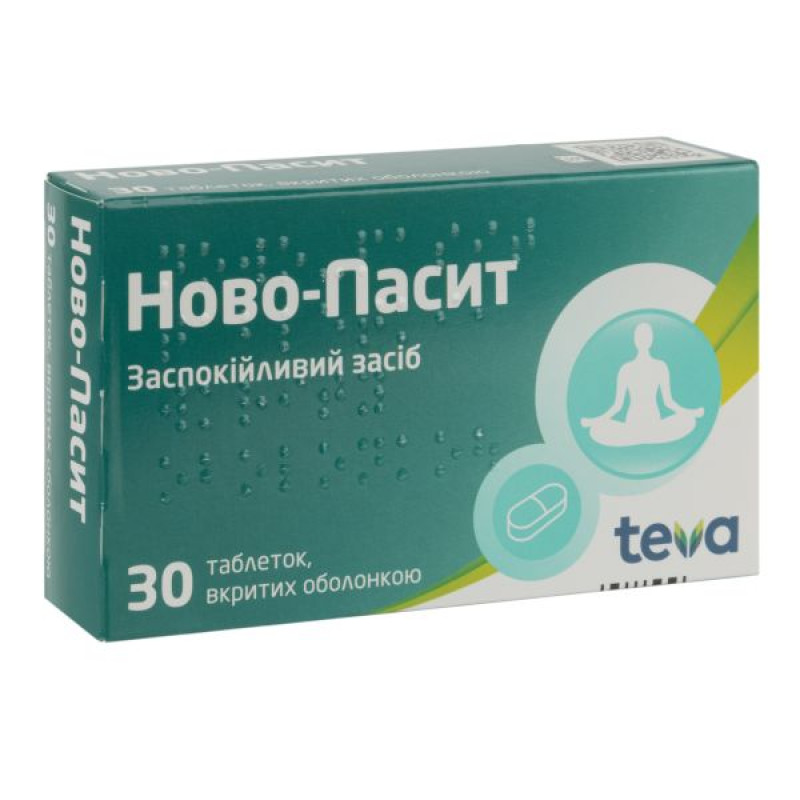
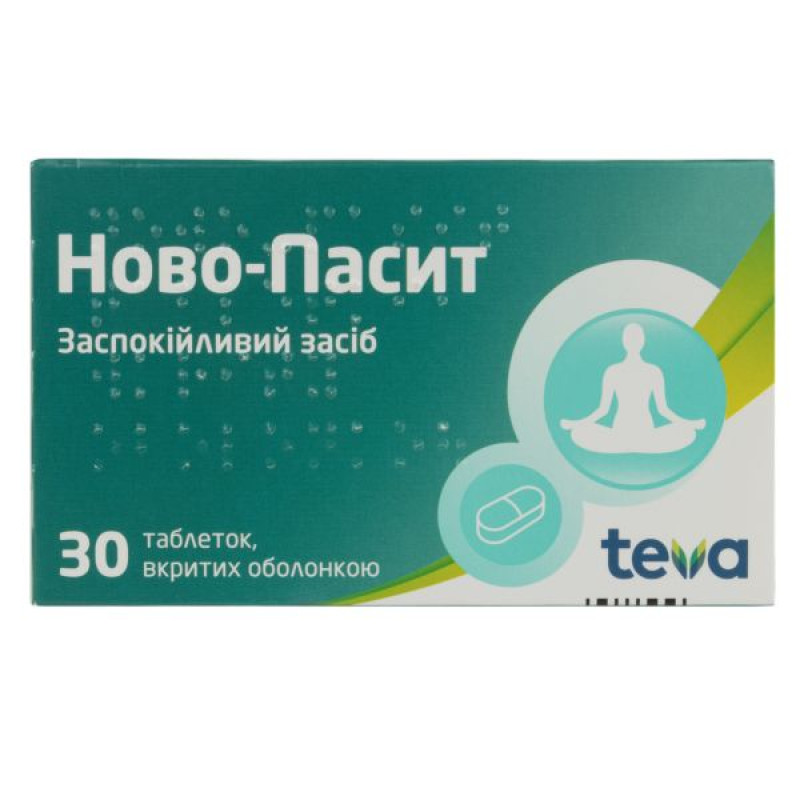
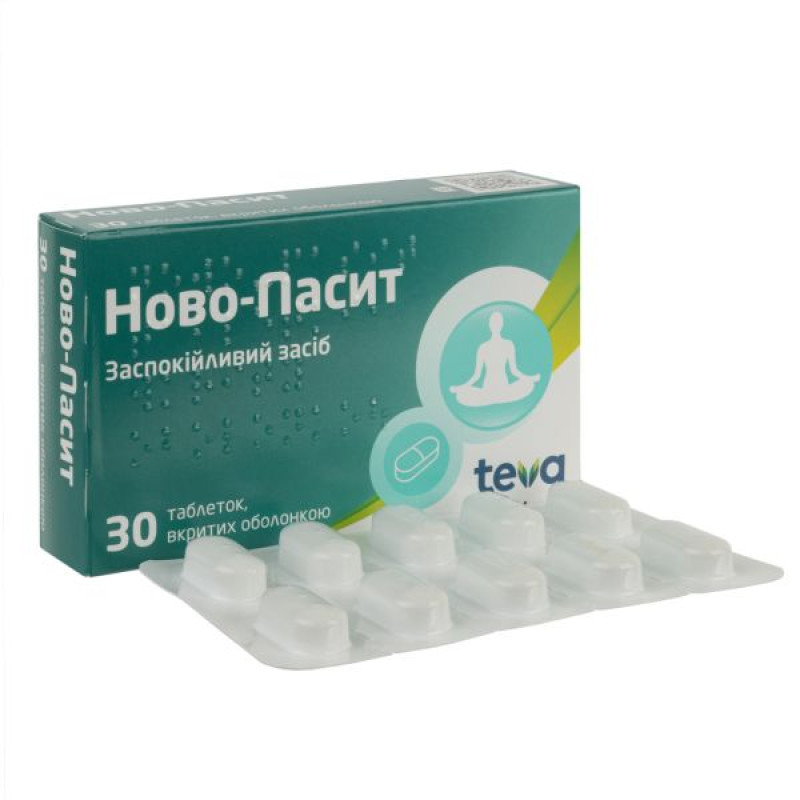
Instructions Novo-Passit coated tablets blister pack No. 30
Composition
active ingredients: dry extract of Novo-Passit, guaifenesin;
1 tablet contains: dry extract of Novo-Passit (elderflowers (Sambusi flos), hawthorn leaves and flowers (Crataegi folium cum flore), St. John's wort herb (Hyperici herba), lemon balm herb (Melissae herba), passionflower herb (Passiflorae herba), hop cones (Lupuli flos), valerian root (Valerianae radix)) 157.5 mg; guaifenesin 200 mg;
excipients:
core: colloidal anhydrous silica, microcrystalline cellulose, glycerol tribehenate, magnesium stearate, lactose monohydrate;
shell: polyvinyl alcohol, titanium dioxide (E 171), talc, lecithin, xanthan gum, quinoline yellow (E 104), iron oxide yellow (E 172), indigo carmine (E 132).
Dosage form
Film-coated tablets.
Main physicochemical properties: light green oval tablets, coated with a film, with a break line on both sides.
Pharmacotherapeutic group
Hypnotics and sedatives. ATX code N05C M.
Pharmacological properties
Pharmacodynamics
The pharmacologically active components of the drug are guaifenesin and an extract from medicinal plants, which have a predominantly sedative effect. St. John's wort herb also has an antidepressant effect. The mechanism of action is to inhibit serotonin reuptake and inhibit monoamine oxidase. Valerian extract (Valeriana officinalis) has a hypnotic and sedative effect. The mechanism of action is associated with the effect on GABA receptors and chloride channels, opening of chloride channels and inhibition of neuronal excitability.
The calming effect of the extract is combined with the anxiolytic and muscle relaxant effects of guaifenesin (relaxes smooth muscles).
Pharmacokinetics
Guaifenesin is rapidly absorbed from the gastrointestinal tract, metabolized in the liver by conjugation with glucuronic acid, and excreted in the form of inactive metabolites, mainly in the urine.
The biological half-life is approximately 1 hour.
Indication
Mild form of neurasthenia, especially if accompanied by anxiety, fear, sadness, restlessness, irritability, decreased concentration or increased fatigue; mild form of insomnia, exhaustion; neurotic memory impairment.
For maintenance therapy for migraine, headache caused by nervous tension; vascular psychosomatic disorders with neurocirculatory asthenia, neurogenic tetany, facial pain; for climacteric syndrome.
Functional diseases of the gastrointestinal tract, dyspeptic syndrome without organic damage, irritable bowel syndrome.
For adjunctive therapy in organic diseases of the gastrointestinal tract with a pronounced neurotic component.
Psychosomatic dermatoses accompanied by itching (urticaria, atopic eczema).
Contraindication
Hypersensitivity to the active ingredients or to any of the excipients of the drug; myasthenia gravis; epilepsy; depression and other conditions accompanied by central nervous system depression; bradycardia; concomitant use of cyclosporine or tacrolimus; use in children under 12 years of age; use in HIV-positive patients taking protease inhibitors.
Interaction with other medicinal products and other types of interactions
Guaifenesin
Guaifenesin enhances the analgesic effect of paracetamol and acetylsalicylic acid and enhances the effects of alcohol, sedative antihistamines and other substances that depress the central nervous system. The central action of muscle relaxants may enhance the undesirable effects of guaifenesin, especially muscle weakness.
Perforated St. John's wort
St. John's wort may induce cytochrome P450 isoenzymes CYP3A4, CYP1A2 and CYP2C9, which may reduce the effect of other concomitantly administered drugs that are metabolized by these isoenzymes. St. John's wort also induces P-glycoprotein. This interaction was first observed in healthy volunteers when indinavir and St. John's wort were administered concomitantly. It is also expected that a similar interaction will occur with other retroviral protease inhibitors (amprenavir, nelfinavir, ritonavir, saquinavir) and non-nucleoside reverse transcriptase inhibitors (delavirdine, efavirenz, nevirapine) used in the treatment of HIV-positive patients. Concomitant administration of antiretroviral drugs with St. John's wort results in decreased efficacy with possible development of resistance. Therefore, St. John's wort should not be used concomitantly with these drugs.
Clinically significant interactions with St. John's wort have also been described with concomitant administration of cyclosporine, tacrolimus, digoxin and warfarin. This interaction may lead to a decrease in the plasma concentrations of these drugs and, therefore, to a decrease in their therapeutic effect.
St. John's wort should not be used with cyclosporine. If the patient is taking cyclosporine, St. John's wort should be discontinued and the cyclosporine dosage adjusted based on plasma cyclosporine levels. Patients should be closely monitored for any signs of tissue rejection after transplantation.
Concomitant use of St. John's wort and tacrolimus may result in subtherapeutic concentrations of tacrolimus, which may lead to graft rejection. Patients should avoid concomitant use of St. John's wort and tacrolimus. If a patient is taking St. John's wort and tacrolimus concomitantly, St. John's wort should be discontinued and tacrolimus plasma levels monitored as tacrolimus dose adjustment may be necessary.
Concomitant administration of St. John's wort with digoxin is not recommended. If it is necessary to prescribe St. John's wort, the level of digoxin in the blood plasma should be monitored and the dose adjusted accordingly. When increasing the dose of digoxin, the dose of St. John's wort remains unchanged; a doctor should be consulted regarding discontinuation of therapy.
The simultaneous use of St. John's wort with warfarin is not recommended. If it is necessary to prescribe St. John's wort, prothrombin time should be monitored during warfarin therapy and the dose adjusted accordingly. When the dose of warfarin is increased, the dose of St. John's wort remains unchanged; a doctor should be consulted regarding discontinuation of therapy.
St. John's wort perforated can significantly reduce the effect of theophylline, so simultaneous use is not recommended. In cases where it is necessary to take St. John's wort, theophylline levels in the blood plasma should be monitored and, if necessary, the theophylline dose should be adjusted without changing the dose of St. John's wort.
Concomitant use with oral contraceptives may cause abnormal uterine bleeding (menorrhagia, hypermenorrhea, metrorrhagia). A decrease in the contraceptive effect may occur. It is recommended to use combined oral hormonal contraceptives in combination with other methods of contraception (barrier methods) during St. John's wort therapy.
Concomitant therapy with amitriptyline is not recommended.
Concomitant treatment with St. John's wort and antiepileptic drugs (carbamazepine, phenobarbital, phenytoin) is not recommended. A decrease in the drug's plasma level and the occurrence of seizures are possible. If it is necessary to prescribe St. John's wort, the level of antiepileptic drugs in the blood plasma and symptoms of a decrease in the drug's effectiveness (for example, increased seizure activity) should be monitored. In the event of discontinuation of St. John's wort therapy, it may be necessary to reduce the dose of antiepileptic drugs, and symptoms of toxicity of antiepileptic drugs should be monitored.
Clinically significant interactions have been observed between St. John's wort and antidepressants of the selective serotonin reuptake inhibitor (SSRI) group and triptans. Due to the increased risk of adverse reactions associated with these interactions, St. John's wort should not be used concomitantly with these drugs.
The use of St. John's wort is not recommended for patients taking antibiotics, sulfonamides, antihypertensive calcium channel blockers, female sex hormones, and hypocholesterolemic agents (statins).
Passionflower
When used simultaneously with drugs that depress the central nervous system, such as barbiturates, tranquilizers, the sedative and hypnotic effect of the drug is enhanced. Simultaneous administration with benzodiazepines is not recommended. Simultaneous administration with disulfiram should be avoided. Alcoholic beverages should not be consumed during treatment with the drug.
Valerian
Enhances the effects of alcohol, sedatives, hypnotics, hypotensive, anxiolytic and antispasmodic drugs.
Hawthorn
Enhances the effect of sedatives, hypnotics, antiarrhythmics, and cardiac glycosides.
Melissa
With simultaneous use, the effect of other sedatives and hypnotics may be enhanced.
Impact on laboratory test results
Guaifenesin may cause false-positive results in diagnostic tests for 5-hydroxyindoleacetic acid (photometric method using nitrosonaphthol as a reagent) and vanillylmandelic acid in urine. With this in mind, treatment with the drug should be discontinued 48 hours before collecting urine for these tests.
Application features
The drug should be used with caution in severe liver and kidney diseases, intoxication with substances that depress the central nervous system.
During the period of use of the drug, patients, especially those with fair skin, should avoid prolonged intense exposure to ultraviolet rays (sunbathing, staying in the sun in the mountains, solarium).
Patients receiving treatment with indinavir or other antiretroviral drugs should avoid the use of St. John's wort, as it may lead to the development of resistance to antiretroviral drugs and reduce the effectiveness of treatment.
Use with caution in patients with severe organic diseases of the digestive tract.
In elderly patients, treatment should be started with the minimum dose.
While using the drug, you should refrain from drinking alcoholic beverages.
There may be a specific sensitivity to the smell of valerian.
Guaifenesin should be discontinued 48 hours before urine collection for analysis for the determination of vanillylmandelic acid and 5-hydroxyindoleacetic acid in urine using nitrosonaphthol as a reagent (see section "Interaction with other medicinal products and other types of interactions").
If you have been told by your doctor that you have an intolerance to some sugars, contact your doctor before taking this medicine. Patients with rare hereditary problems of galactose intolerance, the Lapp lactase deficiency or glucose-galactose malabsorption should not take this medicine.
Use during pregnancy or breastfeeding
Due to insufficient safety data, the drug is contraindicated during pregnancy and breastfeeding.
Ability to influence reaction speed when driving vehicles or other mechanisms
The use of the drug may lead to inhibition of reactions, which manifests itself individually in each patient (see the section "Adverse reactions"). Therefore, one should refrain from potentially hazardous activities that require increased attention, such as driving a vehicle or working with other mechanisms.
Method of administration and doses
Adults and children (ages 12 and over)
Take 1 tablet 3 times a day. If necessary, the daily dose can be increased to 2 tablets 3 times a day or reduced to ½ tablet in the morning and afternoon and
1 tablet in the evening. The dose can be adjusted according to the patient's condition. The interval between each individual dose should be 4 to 6 hours.
The maximum daily dose is 6 tablets (Novo-Passit dry extract 0.9 g/guaifenesin 1.2 g).
The recommended duration of use is 4-5 weeks. For longer use, consult a doctor.
The tablets should be swallowed whole with sufficient liquid (water, tea or fruit juice, except grapefruit).
Children
The drug should be used in children over 12 years of age.
Overdose
Overdose initially manifests itself as central nervous system depression and drowsiness. Later, these symptoms may be accompanied by nausea, mild muscle weakness, joint pain, and a feeling of heaviness in the stomach.
The following symptoms may also be observed: a feeling of bitterness in the mouth, unpleasant sensations in the liver area; headache, dizziness, lethargy, general weakness, hand tremors, dilated pupils, a feeling of tightness in the chest, abdominal pain, decreased hearing and vision, tachycardia; decreased blood pressure, bradycardia; decreased concentration.
Urolithiasis has been reported with guaifenesin overdose.
Treatment is exclusively symptomatic according to the general principles of treatment of overdose. There is no specific antidote.
Adverse reactions
Immune system disorders: hypersensitivity reactions, vasculitis.
From the nervous system: dizziness, drowsiness, inhibition of emotional reactions, depression.
Gastrointestinal: feeling of discomfort in the digestive tract, nausea, vomiting, cramps, heartburn, diarrhea or constipation.
Skin and subcutaneous tissue disorders: exanthema, itching, rash, urticaria, photosensitivity (UV radiation should be avoided during treatment), hyperemia, skin edema.
Musculoskeletal and connective tissue disorders: muscle weakness.
Respiratory system: difficulty breathing.
From the cardiovascular system: increased blood pressure, tachycardia, bradycardia, ventricular tachycardia.
General disorders: increased fatigue, general weakness, decreased mental and physical performance.
Expiration date
3 years.
Storage conditions
Store at a temperature not exceeding 25 °C in the original packaging and out of the reach of children.
Packaging
10 tablets in a blister, 1 or 3 blisters in a box.
Vacation category
Without a prescription.
Producer
Teva Czech Industries s.r.o.
Location of the manufacturer and address of its place of business
Ostravska Street 305/29, Komarov, 747 70 Opava, Czech Republic.