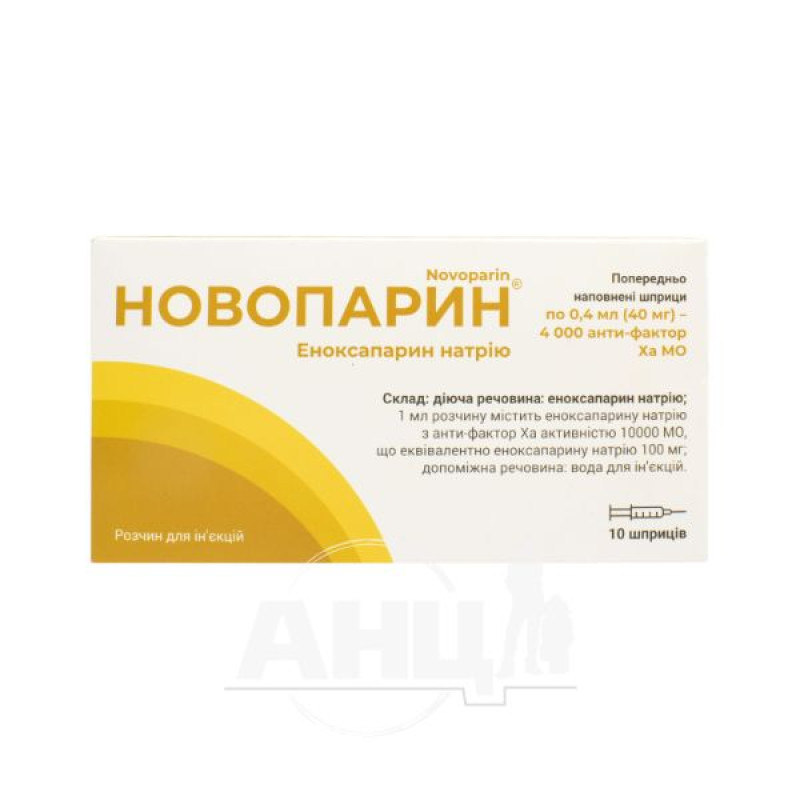
Novoparin ® injection solution is indicated for use in adults:
for the prevention of venous thromboembolic complications in surgical patients at moderate and high risk, especially in patients undergoing orthopedic or general surgical interventions, including surgical interventions for oncological diseases; for the prevention of venous thromboembolic complications in therapeutic patients with acute diseases (such as acute heart failure, respiratory failure, severe infections or rheumatic diseases) and reduced mobility, who are at increased risk of venous thromboembolism; for the treatment of deep vein thrombosis (DVT) and pulmonary embolism (PE), except in cases of PE, which may require thrombolytic therapy or surgery; for the prevention of thrombus formation in the extracorporeal circulation during hemodialysis;
In acute coronary syndrome:
for the treatment of unstable angina and non-ST segment elevation myocardial infarction (NSTEMI), in combination with oral acetylsalicylic acid; for the treatment of acute ST segment elevation myocardial infarction (STEMI), including in patients who are scheduled for medical treatment or subsequent percutaneous coronary intervention (PCI).
Composition
The active substance is enoxaparin sodium (1 ml of solution contains enoxaparin sodium with anti-factor Xa activity of 10,000 IU, equivalent to enoxaparin sodium 100 mg; 4,000 anti-factor Xa IU / 0.4 ml, equivalent to enoxaparin sodium 40 mg).
The excipient is water for injection.
Contraindication
Enoxaparin sodium is contraindicated for use in patients with the following conditions:
Hypersensitivity to enoxaparin sodium, heparin or its derivatives, including other LMWH; history of immune-mediated heparin thrombocytopenia (HIT) within the last 100 days in the presence of circulating antibodies; active clinically significant bleeding and conditions with a high risk of bleeding, including recent hemorrhagic stroke, gastrointestinal ulcer, the presence of a malignant neoplasm with a high risk of bleeding, recent surgery on the brain, spinal cord or eyes, known or suspected esophageal varices, arteriovenous malformations, vascular aneurysms or serious malformations of the intraspinal or intracerebral vessels; spinal or epidural anesthesia or locoregional anesthesia, if enoxaparin sodium was used for treatment within the previous 24 hours.
Method of application
Individual thromboembolic risk in patients can be assessed using a validated risk stratification model (scale).
For patients at moderate risk of thromboembolic events, the recommended dose of enoxaparin sodium is 2000 IU (20 mg) once daily, administered by subcutaneous (s/c) injection. Preoperative initial administration (2 hours before surgery) of enoxaparin sodium at a dose of 2000 IU (20 mg) has been shown to be effective and safe in moderate-risk surgical procedures. In moderate-risk patients, prophylactic treatment with enoxaparin sodium should be continued for a period of at least 7-10 days, regardless of the state of recovery (e.g., mobility). Prophylaxis should be continued until the patient no longer has significantly reduced mobility.
For patients at high risk of thromboembolic events, the recommended dose of enoxaparin sodium is 4000 IU (40 mg) once daily, preferably administered 12 hours before surgery by subcutaneous (s/c) injection. If it is necessary to start prophylactic use of enoxaparin sodium more than 12 hours before surgery (for example, a high-risk patient awaiting delayed orthopedic surgery), the last injection should be administered no later than 12 hours before surgery and prophylactic use should be resumed 12 hours after surgery.
For patients undergoing major orthopedic surgery, long-term thromboprophylaxis is recommended - up to 5 weeks.
For patients at high risk of venous thromboembolism (VTE) undergoing abdominal or pelvic surgery for cancer, long-term thromboprophylaxis is recommended - up to 4 weeks.
Application features
Pregnant women
If epidural anesthesia is planned, it is recommended to cancel enoxaparin sodium treatment before performing it.
It is not known whether enoxaparin is excreted in human milk. In lactating rats, the excretion of enoxaparin or its metabolites into milk is very low. Absorption of enoxaparin sodium after oral administration is unlikely, so it can be used during breastfeeding.
There are no clinical data on the effect of enoxaparin sodium on fertility. Animal studies have not shown any effect of the drug on fertility.
Children
The safety and efficacy of enoxaparin sodium in pediatric patients have not yet been established.
Drivers
The effect of enoxaparin sodium on the ability to drive vehicles and operate other mechanisms is absent or insignificant.
Overdose
Unintentional overdose of enoxaparin sodium as a result of intravenous, extracorporeal or subcutaneous administration may lead to hemorrhagic complications. After taking even fairly high doses, absorption of enoxaparin sodium is unlikely.
Side effects
In clinical trials, the most frequently reported adverse reactions were haemorrhagic events, thrombocytopenia and thrombocytosis.
Interaction
Subcutaneous injection - do not mix with other medications.
Storage conditions
Store in the original packaging at a temperature not exceeding 25 °C, out of the reach of children. Do not freeze.
Shelf life - 3 years.