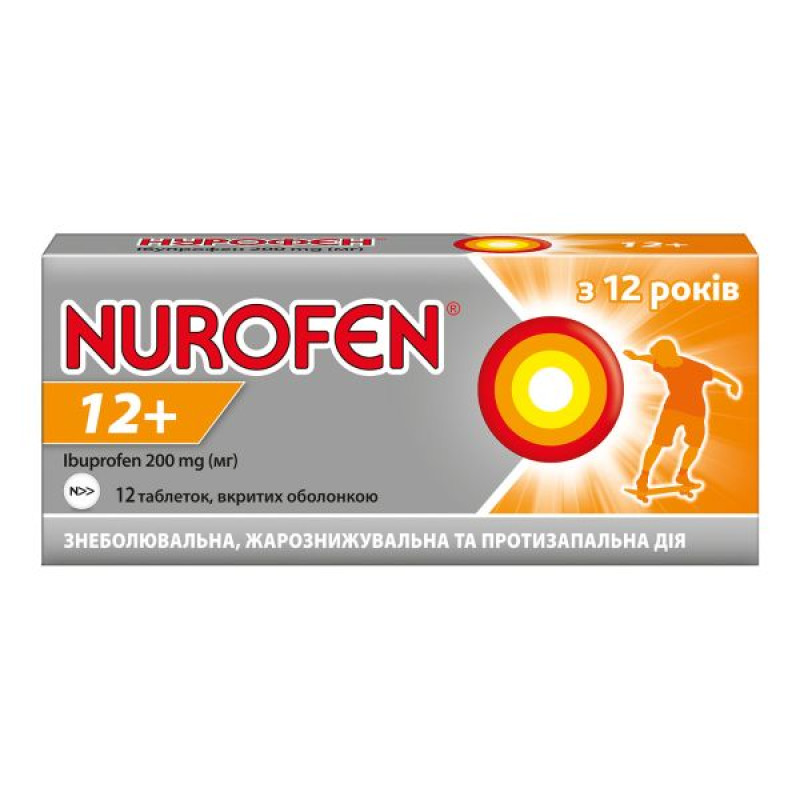
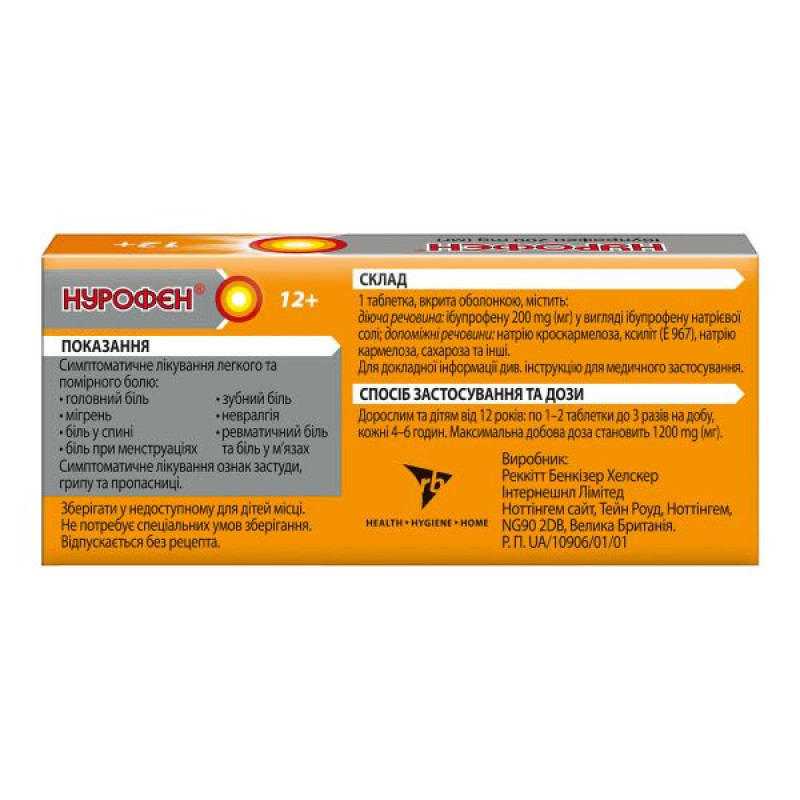
Instructions Nurofen 12+ film-coated tablets 200 mg blister No. 12
Composition
active ingredient: ibuprofen;
1 film-coated tablet contains 200 mg of ibuprofen as ibuprofen sodium salt;
Excipients: croscarmellose sodium, xylitol (E 967), microcrystalline cellulose, magnesium stearate, colloidal anhydrous silica, carmellose sodium, talc, acacia, sucrose, titanium dioxide (E 171), macrogol 6000, printing ink.
Dosage form
Film-coated tablets.
Main physicochemical properties: round biconvex tablet, coated with a sugar shell, white to almost white in color, with a printed identification logo in black on one side.
Pharmacotherapeutic group
Nonsteroidal anti-inflammatory and antirheumatic drugs. Propionic acid derivatives.
ATX code M01A E01.
Pharmacological properties
Pharmacodynamics. Ibuprofen is a nonsteroidal anti-inflammatory painkiller, the action of which is associated with slowing down the synthesis of prostaglandins. Ibuprofen has analgesic, antipyretic and anti-inflammatory effects. It has been clinically proven that in the treatment of pain, ibuprofen in tablets in the form of ibuprofen sodium salt begins to act much faster compared to ibuprofen in the form of acid. When using ibuprofen in a dose of 400 mg, pain relief lasts up to 8 hours. During the study of the treatment of toothache after using 2 tablets of the drug NUROFEN® 12+ compared to placebo, significant pain relief was felt after 15 minutes. In this study, significantly more patients experienced significant pain relief after using 2 tablets of the drug NUROFEN® 12+ compared to using 2 tablets of paracetamol 500 mg. These patients also experienced a significant reduction in pain intensity and greater pain relief within 6 hours compared to paracetamol.
Experimental data suggest that ibuprofen may competitively inhibit the effect of low-dose aspirin (acetylsalicylic acid) on platelet aggregation when these drugs are used concomitantly. Some pharmacodynamic studies have shown that when single doses of ibuprofen 400 mg were administered within 8 hours before or within 30 minutes after immediate-release aspirin (81 mg), a reduction in the effect of aspirin (acetylsalicylic acid) on thromboxane formation or platelet aggregation was observed. Therefore, it cannot be excluded that regular long-term use of ibuprofen may reduce the cardioprotective effect of low-dose acetylsalicylic acid. With non-systematic use of ibuprofen, such a clinically significant effect is considered unlikely.
Pharmacokinetics. When taken orally, ibuprofen is rapidly absorbed from the gastrointestinal tract and reaches peak plasma concentrations after 45 minutes on an empty stomach. After taking ibuprofen with food, peak plasma concentrations are reached after 1-2 hours. The half-life of ibuprofen is almost 2 hours. However, after taking NUROFEN® 12+ tablets, peak plasma concentrations are reached 35 minutes after taking the drug on an empty stomach.
Ibuprofen is actively (90%) bound to plasma proteins, slowly penetrates into the synovial cavities, where its concentration can remain high, while the plasma concentration decreases.
Ibuprofen is metabolized in the liver. Ibuprofen is rapidly and completely eliminated from the body. More than 90% of the administered dose is excreted by the kidneys in the form of metabolites and their compounds.
It should be noted that the bioavailability of ibuprofen sodium salt is significantly higher and the effect occurs twice as fast as when using regular ibuprofen tablets.
There are no differences in pharmacokinetics depending on the patient's age.
Indication
Symptomatic treatment of mild to moderate pain, including headache, migraine, back pain, neuralgia, muscle pain, rheumatic pain, menstrual pain, toothache. Symptomatic treatment of symptoms of colds, flu and fever.
Contraindication
Individual hypersensitivity to ibuprofen or to other components of the drug.
History of hypersensitivity reactions (e.g. asthma, rhinitis, angioedema or urticaria) after taking ibuprofen, acetylsalicylic acid or other non-steroidal anti-inflammatory drugs (NSAIDs).
Gastric ulcer, duodenal ulcer, gastrointestinal bleeding in the acute stage or in history (two or more severe episodes of confirmed ulcer or bleeding).
History of gastrointestinal bleeding or perforation associated with NSAID use.
Severe hepatic impairment, severe renal impairment, severe heart failure (NYHA class IV).
Cerebrovascular or other bleeding.
Disorders of hematopoiesis or blood clotting.
Glucose-galactose malabsorption syndrome or sucrase-isomaltase deficiency, fructose intolerance.
The last trimester of pregnancy.
Interaction with other medicinal products and other types of interactions
Ibuprofen, like other NSAIDs, should not be used in combination with:
acetylsalicylic acid (aspirin), as this increases the risk of adverse reactions, except when aspirin (dose not exceeding 75 mg per day) has been prescribed by a doctor.
Experimental data suggest that ibuprofen may inhibit the effect of low-dose acetylsalicylic acid (aspirin) on platelet aggregation when used concomitantly. However, the extrapolation of these data to the clinical situation is limited, and there is no definitive conclusion that regular long-term use of ibuprofen may reduce the cardioprotective effect of low-dose acetylsalicylic acid. Such clinically significant effects are considered unlikely with non-systematic use of ibuprofen;
other NSAIDs, including selective cyclooxygenase-2 inhibitors: the simultaneous use of two or more NSAIDs should be avoided, as this increases the risk of adverse reactions.
Ibuprofen should be used with caution in combination with the following medicines:
Anticoagulants: NSAIDs may enhance the effect of anticoagulants such as warfarin;
Antihypertensives (angiotensin-converting enzyme (ACE) inhibitors and angiotensin II antagonists) and diuretics: NSAIDs may reduce the therapeutic effect of these drugs. In some patients with compromised renal function (e.g. dehydrated patients or elderly patients with compromised renal function), the concomitant use of an ACE inhibitor or angiotensin II antagonist and drugs that inhibit cyclooxygenase may lead to further deterioration of renal function, including acute renal failure, which is usually reversible. These interactions should be considered when a patient is receiving a selective cyclooxygenase-2 inhibitor and ACE inhibitors or angiotensin II antagonists. Such combinations should be prescribed with caution, especially in elderly patients. If long-term treatment is necessary, the patient should be adequately hydrated and renal function should be monitored at the start of combination therapy and periodically thereafter.
Diuretics increase the risk of renal toxicity from NSAIDs;
corticosteroids: increased risk of ulcers and bleeding in the gastrointestinal tract;
antiplatelet agents and selective serotonin reuptake inhibitors: increased risk of gastrointestinal bleeding;
cardiac glycosides: NSAIDs can exacerbate cardiac dysfunction, reduce glomerular filtration function of the kidneys, and increase the level of glycosides in blood plasma;
Lithium: possible increase in lithium levels in blood plasma;
Methotrexate: there is a potential for increased plasma levels of methotrexate;
cyclosporine: increased risk of nephrotoxicity;
Mifepristone: NSAIDs should not be used earlier than 8 to 12 days after mifepristone administration, as they may reduce its effectiveness;
tacrolimus: increased risk of nephrotoxicity with simultaneous use of NSAIDs and tacrolimus;
Zidovudine: There is an increased risk of hematological toxicity when zidovudine is used concomitantly with NSAIDs. There is evidence of an increased risk of hemarthrosis and hematoma in HIV-infected patients with hemophilia receiving concomitant treatment with zidovudine and ibuprofen.
quinolone antibiotics: simultaneous administration with NSAIDs increases the risk of seizures;
Sulfonylurea drugs and phenytoin: possible enhancement of the effects of the drugs.
Application features
Side effects that occur after using ibuprofen can be reduced by using the lowest effective dose needed to treat symptoms for the shortest period of time.
Elderly patients have an increased incidence of adverse reactions to NSAIDs, especially gastrointestinal bleeding and perforation, which can be fatal.
Effects on the respiratory system.
Bronchospasm may occur in patients who suffer from bronchial asthma or allergic diseases or have a history of these diseases.
Other NSAIDs.
Concomitant use of ibuprofen with other NSAIDs, including selective cyclooxygenase-2 inhibitors, increases the risk of adverse reactions and should be avoided.
Systemic lupus erythematosus and mixed connective tissue disease.
Ibuprofen should be used with caution in patients with systemic lupus erythematosus and mixed connective tissue disease due to an increased risk of aseptic meningitis.
Effect on the kidneys.
Long-term use of NSAIDs can lead to a dose-dependent decrease in prostaglandin synthesis and provoke the development of renal failure. Patients with impaired renal function, cardiac disorders, impaired liver function, patients taking diuretics, and elderly patients are at high risk of this reaction. In such patients, renal function should be monitored.
There is a risk of kidney dysfunction in dehydrated children and adolescents.
Effect on the liver.
Liver dysfunction.
Patients with arterial hypertension or a history of moderate congestive heart failure should start treatment with caution (doctor's advice is required), since cases of fluid retention, arterial hypertension and edema have been reported with ibuprofen therapy, as with other NSAIDs.
Clinical trial data suggest that ibuprofen use, particularly at high doses (2400 mg/day), may increase the risk of arterial thrombotic events (e.g. myocardial infarction or stroke). Overall, epidemiological data do not suggest that low-dose ibuprofen (e.g. ≤ 1200 mg/day) is associated with an increased risk of arterial thrombotic events.
Patients with uncontrolled hypertension, congestive heart failure (NYHA class II-III), established ischemic heart disease, peripheral arterial disease and/or cerebrovascular disease should be treated with ibuprofen only after careful clinical assessment. High doses (2400 mg/day) should be avoided.
Patients with risk factors for cardiovascular complications (such as hypertension, hyperlipidemia, diabetes mellitus, smoking) should be prescribed long-term NSAID treatment, especially if high doses of ibuprofen (2400 mg per day) are required, only after careful consideration.
Cases of Kounis syndrome have been reported in patients treated with ibuprofen. Kounis syndrome is manifested by cardiovascular symptoms associated with narrowing of the coronary arteries due to an allergic or hypersensitivity reaction, which can lead to myocardial infarction.
Effect on the gastrointestinal system.
NSAIDs should be used with caution in patients with chronic inflammatory bowel disease (ulcerative colitis, Crohn's disease) as these conditions may be exacerbated. Gastrointestinal bleeding, perforation, and ulceration, sometimes fatal, have been reported at any stage of NSAID treatment, regardless of the presence of warning symptoms or a history of severe gastrointestinal disorders.
The risk of gastrointestinal bleeding, perforation, and ulceration increases with increasing doses of NSAIDs, in patients with a history of ulceration, especially if complicated by bleeding or perforation, and in the elderly. These patients should start treatment with the lowest dose. Caution should be exercised when treating patients receiving concomitant medications that increase the risk of ulceration or bleeding, such as oral corticosteroids, anticoagulants (e.g. warfarin), selective serotonin reuptake inhibitors, or antiplatelet agents (e.g. aspirin). In these patients, as well as in patients requiring concomitant low-dose acetylsalicylic acid (aspirin) or other medications that increase gastrointestinal risk, the physician should consider the feasibility of combination therapy with misoprostol or proton pump inhibitors.
Patients with a history of gastrointestinal disorders, especially elderly patients, should report any unusual gastrointestinal symptoms (predominantly bleeding), especially gastrointestinal bleeding at the beginning of treatment.
In the event of gastrointestinal bleeding or ulceration in patients receiving ibuprofen, treatment should be discontinued immediately.
Severe skin adverse reactions
Severe cutaneous adverse reactions, including exfoliative dermatitis, erythema multiforme, Stevens-Johnson syndrome, toxic epidermal necrolysis, drug reaction with eosinophilia and systemic symptoms (DRESS) and acute generalized exanthematous pustulosis, which can be life-threatening or fatal, have been reported with ibuprofen (see section 4.8). The majority of these reactions occurred within the first month.
If signs and symptoms suggestive of these reactions occur, ibuprofen should be discontinued immediately and alternative treatment considered (if necessary).
Masking the symptoms of underlying infections
Nurofen® 12+ may mask the symptoms of an infectious disease, which may delay the initiation of appropriate treatment and thereby complicate the course of the disease. This has been observed in bacterial community-acquired pneumonia and bacterial complications of chickenpox. When Nurofen® 12+ is used for fever or to relieve pain in an infection, monitoring for the infectious disease is recommended. In outpatient settings, the patient should consult a doctor if symptoms persist or worsen.
Impact on fertility in women.
There is some evidence that drugs that inhibit cyclooxygenase/prostaglandin synthesis may impair female fertility by affecting ovulation. This effect is reversible upon discontinuation of therapy.
Each tablet contains approximately 24.3 mg (1.06 mmol) of sodium, which should be taken into account when prescribing the drug to patients on a low-sodium diet.
Use during pregnancy or breastfeeding
Inhibition of prostaglandin synthesis may adversely affect pregnancy and/or embryo/foetal development. Epidemiological data indicate an increased risk of miscarriage, congenital heart defects and gastroschisis after use of prostaglandin synthesis inhibitors in early pregnancy. The absolute risk of cardiovascular abnormalities increases from less than 1% to approximately 1.5%. The risk is believed to increase with increasing dose and duration of therapy. In animals, prostaglandin synthesis inhibitors have been shown to increase pre- and post-implantation and embryonic mortality.
From the 20th week of pregnancy, ibuprofen may cause oligohydramnios due to fetal renal dysfunction. This may occur shortly after initiation of treatment and is usually reversible after discontinuation of treatment. In addition, there have been reports of narrowing of the ductus arteriosus following treatment in the second trimester of pregnancy, most of which resolved after discontinuation of treatment. Therefore, ibuprofen should not be given during the first and second trimesters of pregnancy unless clearly necessary. If ibuprofen is used by a woman attempting to conceive or during the first and second trimesters of pregnancy, the dose should be kept as low and the duration of treatment as short as possible. Antenatal monitoring for oligohydramnios and narrowing of the ductus arteriosus should be considered after exposure to ibuprofen for several days from the 20th week of gestation. Nurofen® 12+ should be discontinued if oligohydramnios or narrowing of the ductus arteriosus is detected.
During the third trimester of pregnancy, all prostaglandin synthesis inhibitors may pose risks:
Risks to the fetus:
cardiopulmonary toxicity (premature narrowing/closure of the ductus arteriosus and pulmonary hypertension);
renal dysfunction (see above);
Risks for the mother at the end of pregnancy and for the newborn:
possible prolongation of bleeding time, anti-aggregation effect, which can occur even at very low doses;
suppression of uterine contractions, leading to delayed or prolonged labor.
Therefore, ibuprofen is contraindicated during the third trimester of pregnancy (see Contraindications section).
In some studies, ibuprofen has been found in breast milk at very low concentrations. It is unlikely that this would have any adverse effects on a breastfed infant. NSAIDs are not recommended during breastfeeding.
Ability to influence reaction speed when driving vehicles or other mechanisms
Provided that the recommendations for dosage and duration of treatment are followed, the drug is not expected to affect the reaction speed when driving or operating other mechanisms. However, patients who experience dizziness, drowsiness, disorientation, or visual disturbances while taking NSAIDs should refrain from driving or operating other mechanisms.
Method of administration and doses
For oral use in adults and children over 12 years of age. For short-term use only.
The lowest effective dose should be used for the shortest time necessary to relieve symptoms (see section "Special instructions").
The single dose for children aged 12 years and over and adults is 1-2 tablets (200-400 mg ibuprofen) up to 3 times a day, every 4-6 hours, if necessary. The maximum daily dose is 1200 mg (6 tablets per day).
Elderly patients do not require special dose adjustment, except in cases of severe renal or hepatic insufficiency.
Take the medicine during or after meals, without chewing, with water if necessary.
If symptoms of the disease persist for more than 3 days or worsen in children and adolescents, it is necessary to consult a doctor to clarify the diagnosis and adjust the treatment regimen.
If symptoms of the disease in adults do not disappear or worsen, and if the drug needs to be used for more than 10 days, you should consult a doctor to clarify the diagnosis and adjust the treatment regimen.
The duration of treatment is determined by the doctor individually, depending on the course of the disease and the patient's condition.
Children. The drug is used in children over 12 years of age.
Overdose
Symptoms. Nausea, vomiting, epigastric pain, very rarely diarrhea. Tinnitus, headache and gastrointestinal bleeding may also occur. In more severe poisoning, toxic lesions of the central nervous system may occur, manifested as vertigo, drowsiness, sometimes - an excited state and disorientation or coma. Sometimes patients experience convulsions. In severe poisoning, hyperkalemia and metabolic acidosis may occur, an increase in prothrombin time/international normalized ratio (probably due to interaction with blood clotting factors circulating in the bloodstream). Acute renal failure, liver damage, arterial hypotension, respiratory depression and cyanosis may occur. In patients with bronchial asthma, exacerbation of asthma is possible.
Treatment. Treatment should be symptomatic and supportive, and include maintaining a patent airway and monitoring cardiac function and vital signs until the patient's condition is normal. Oral administration of activated charcoal is recommended within 1 hour of a potentially toxic dose. Frequent or prolonged muscle spasms should be treated with intravenous diazepam or lorazepam. Bronchodilators should be used in the presence of bronchial asthma.
Side effects
Adverse reactions associated with the use of ibuprofen are classified by system organ class and frequency. The frequency is defined as follows: very common: ≥ 1/10; common: ≥ 1/100 and < 1/10; uncommon: ≥ 1/1000 and < 1/100; rare: ≥ 1/10000 and < 1/1000; very rare: < 1/10000, frequency unknown (frequency cannot be estimated from the available data). Within each frequency grouping, adverse reactions are presented in order of decreasing seriousness.
The following adverse reactions have been observed with short-term use of ibuprofen at doses not exceeding 1200 mg per day. In the treatment of chronic diseases, additional adverse effects may occur with long-term use.
Gastrointestinal adverse reactions are the most common and are largely dose-dependent, in particular the risk of gastrointestinal bleeding depends on the dose and duration of treatment.
Clinical trial data suggest that the use of ibuprofen, especially at a high dose of 2400 mg per day, increases the risk of arterial thrombotic complications (e.g. myocardial infarction or stroke).
From the blood and lymphatic system:
Very rare: haematopoietic disorders (anaemia, leukopenia, thrombocytopenia, pancytopenia and agranulocytosis). The first signs of such disorders are fever, sore throat, superficial mouth ulcers, flu-like symptoms, severe exhaustion, bleeding and haematoma of unknown etiology.
On the part of the immune system
Uncommon: hypersensitivity reactions accompanied by urticaria and pruritus1;
Very rare: severe hypersensitivity reactions, symptoms of which may include swelling of the face, tongue and larynx, shortness of breath, tachycardia, hypotension (anaphylaxis, angioedema or severe shock);
Frequency unknown: airway reactivity including asthma, bronchospasm or dyspnea.
From the nervous system
Uncommon: headache;
Very rare: aseptic meningitis2
From the heart
Frequency unknown: heart failure, edema, Kounis syndrome.
From the vascular system
Frequency unknown: Arterial hypertension
From the digestive tract
Uncommon: abdominal pain, nausea, dyspepsia
Rare: diarrhea, flatulence, constipation, vomiting
Very rare: gastric ulcer, gastrointestinal perforation or gastrointestinal bleeding, melena, haematemesis, sometimes fatal, especially in elderly patients. Ulcerative stomatitis, gastritis
Frequency unknown: exacerbation of colitis and Crohn's disease
Liver
Very rare: liver dysfunction
Skin and subcutaneous tissue disorders
Uncommon: various skin rashes
Very rare: severe cutaneous adverse reactions (including erythema multiforme, exfoliative dermatitis, Stevens-Johnson syndrome and toxic epidermal necrolysis)
Frequency unknown: drug reaction with eosinophilia and systemic symptoms (DRESS syndrome); acute generalized exanthematous pustulosis; photosensitivity reactions.
Renal and urinary disorders
Very rare: acute renal dysfunction, papillary necrosis, especially with prolonged use, associated with increased serum urea levels and edema
Frequency unknown: acute renal failure
Laboratory studies
Very rare: decreased hemoglobin level
Description of selected adverse reactions
2 The pathogenic mechanism of drug-induced aseptic meningitis is not clear. Available data on aseptic meningitis associated with NSAIDs suggest a hypersensitivity reaction (given the temporal relationship to drug intake and the disappearance of symptoms after drug withdrawal). In patients with autoimmune diseases (systemic lupus erythematosus and mixed connective tissue disease), isolated cases of symptoms of aseptic meningitis (neck stiffness, headache, nausea, vomiting, fever or disorientation) have been observed.
Expiration date
2 years.
Storage conditions
Does not require any special storage conditions. Keep out of the reach of children.
Packaging
12 tablets in a blister, 1 or 2 blisters in a cardboard box.
Vacation category
Without a prescription.
Producer
Reckitt Benckiser Healthcare International Limited/
Reckitt Benckiser Healthcare International Limited.
Location of the manufacturer and its business address.
Nottingham site, Thane Road, Nottingham, NG90 2DB, United Kingdom.