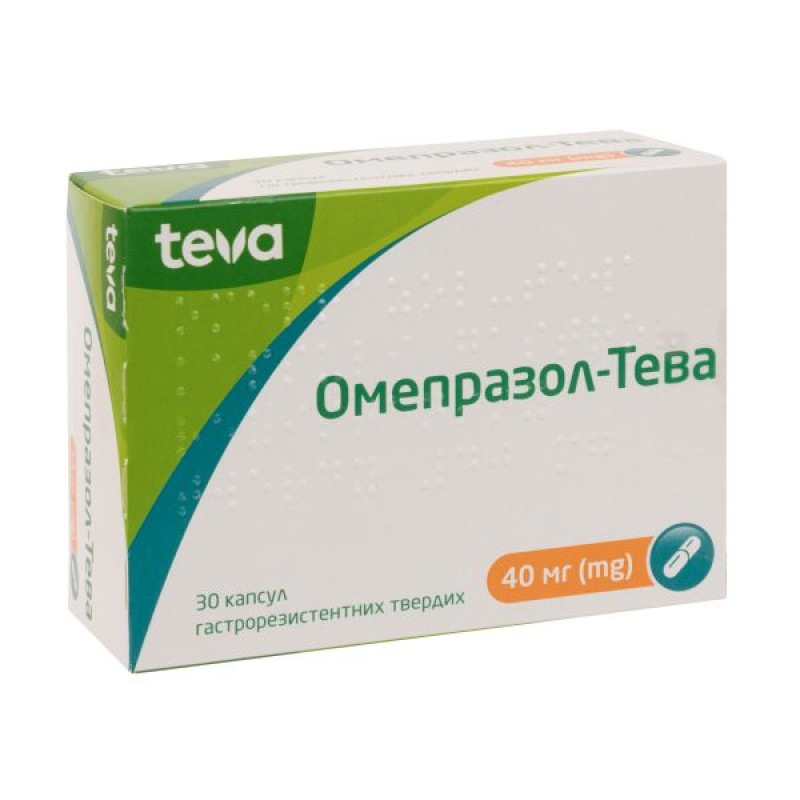
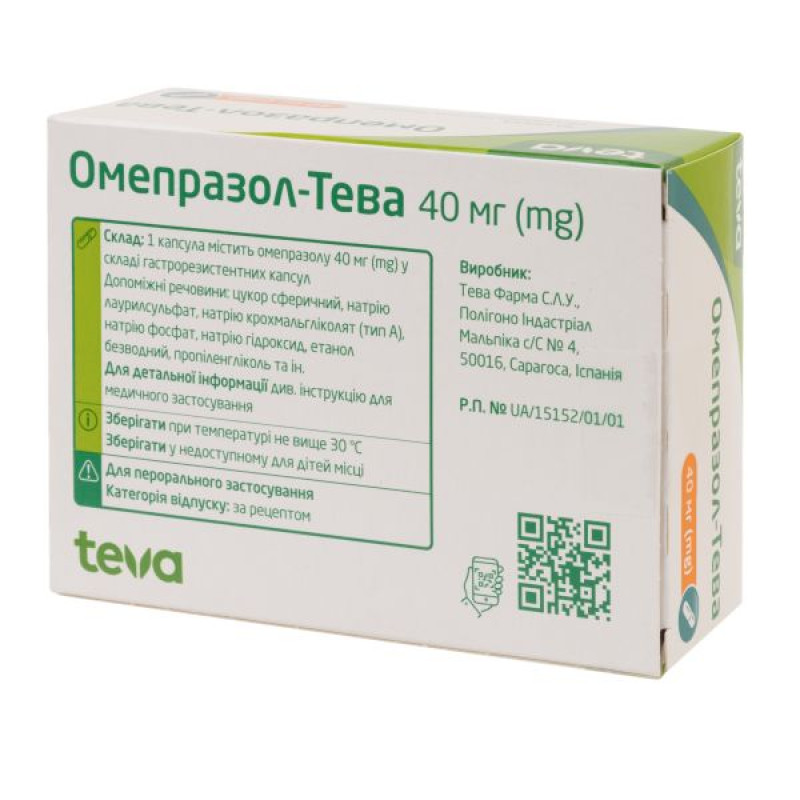
Instructions for use Omeprazole-Teva gastro-resistant capsules 40 mg blister No. 30
Composition
active ingredient: omeprazole;
1 capsule contains omeprazole 20 mg or 40 mg in gastro-resistant capsules;
excipients: spherical sugar, povidone, sodium lauryl sulfate, sodium starch glycolate (type A), sodium phosphate, hypromellose, triethyl citrate, methacrylate copolymer (type A), sodium hydroxide, titanium dioxide (E 171), talc, erythrosine (E 127)*, indigo carmine (E 132)*, titanium dioxide (E 171)*, purified water*, gelatin*, quinoline yellow (E 104)*;
ink composition: shellac, anhydrous ethanol, isopropyl alcohol, propylene glycol, butyl alcohol, povidone, sodium hydroxide, titanium dioxide (E 171).
*As part of the capsule shell
Dosage form
Gastro-resistant hard capsules.
Main physicochemical properties:
Omeprazole-Teva, 20 mg capsules: blue-orange capsules No. 2 with a stamp "O" on the cap and "20" on the body, containing white-beige microgranules.
Omeprazole-Teva, 40 mg capsules: blue-orange capsules No. 0 with a stamp "O" on the cap and "40" on the body, containing white-beige microgranules.
Pharmacotherapeutic group
Drugs for the treatment of peptic ulcer and gastroesophageal reflux disease. Proton pump inhibitors. ATC code A02B C01.
Pharmacological properties
Pharmacodynamics.
Mechanism of action
Omeprazole, a racemic mixture of two enantiomers, reduces gastric acid secretion through a targeted mechanism of action. It is a specific inhibitor of the parietal cell proton pump. It is rapid-acting and provides control by reversible inhibition of gastric acid secretion when dosed once daily.
Omeprazole is a weak base that is concentrated and converted to the active form in the strongly acidic environment of the intracellular tubules of parietal cells, where it inhibits the enzyme H+K+-ATPase - the acid pump. This effect on the final stage of acid formation is dose-dependent and provides highly effective inhibition of both basal and stimulated acid secretion regardless of the nature of the stimulus.
Pharmacodynamic effects
All noted pharmacodynamic effects are based on the effect of omeprazole on acid secretion.
Effect on stomach acid secretion
Oral administration of omeprazole once daily provides rapid and effective inhibition of gastric acid secretion both during the day and at night, with the maximum effect achieved within 4 days of treatment.
Administration of omeprazole 20 mg to patients with duodenal ulcer produces a mean reduction in intragastric acidity of at least 80% within 24 hours, which is maintained thereafter, with a mean reduction in peak acid secretion after pentagastrin stimulation of approximately 70% 24 hours after administration.
Oral administration of omeprazole at a dose of 20 mg in patients with duodenal ulcer allows maintaining intragastric pH at a level ≥ 3 for an average of 17 out of 24 hours after taking the drug.
By reducing acid secretion and intragastric acidity, omeprazole dose-dependently reduces/normalizes esophageal acid exposure in patients with gastroesophageal reflux disease (GERD). The inhibition of acid secretion is related to the area under the pharmacokinetic curve (AUC) of omeprazole, not to the actual plasma concentration at a given time point.
No cases of tachyphylaxis were observed during treatment with omeprazole.
Effect on Helicobacter pylori (H.pylori)
H. pylori is associated with peptic ulcers, including gastric and duodenal ulcers. H. pylori is a major factor in the development of gastritis. H. pylori, together with gastric acid, are major factors in the development of peptic ulcer disease. H. pylori is a major factor in the development of atrophic gastritis, which is associated with an increased risk of gastric cancer.
Eradication of H. pylori with omeprazole and antibiotics is associated with high cure rates and long-term remission of peptic ulcers.
Various dual therapy regimens have been reviewed and found to be less effective than triple therapy. However, their use may be considered in cases where known hypersensitivity precludes the use of any triple combination.
Other effects related to acid suppression
A slightly higher incidence of gastric cysts has been reported during long-term treatment. These changes are a physiological consequence of significant inhibition of acid secretion, are benign and apparently reversible.
During treatment with antisecretory drugs, serum gastrin levels increase in response to decreased acid secretion. As a result of decreased gastric acidity, chromogranin A (CgA) levels increase. Elevated CgA levels may interfere with the diagnosis of neuroendocrine tumors. Available published data suggest that PPI treatment should be discontinued 5 days to 2 weeks before CgA measurements. This will allow CgA levels, which may be falsely elevated after PPI treatment, to return to the reference range.
During long-term treatment with omeprazole, an increase in the number of enterochromaffin-like cells has been observed in some patients (both children and adults), possibly related to an increase in serum gastrin levels. The clinical significance of this finding is unknown.
Children
In an uncontrolled study in children (aged 1 to 16 years) with severe reflux esophagitis, omeprazole at doses of 0.7 to 1.4 mg/kg improved the course of esophagitis in 90% of cases and significantly reduced reflux symptoms. In a single-blind study, children aged 0 to 24 months with a clinical diagnosis of gastroesophageal reflux disease were treated with omeprazole at doses of 0.5, 1.0 or 1.5 mg/kg body weight. The frequency of vomiting/regurgitation episodes was reduced by 50% after 8 weeks of treatment, regardless of dose.
Eradication of H. pylori in children
A randomised double-blind clinical trial (Héliot study) concluded that omeprazole in combination with two antibiotics (amoxicillin and clarithromycin) was safe and effective in the treatment of H. pylori infection in children aged 4 years and older with gastritis. H. pylori eradication rate: 74.2% (23/31 patients) with omeprazole + amoxicillin + clarithromycin compared to 9.4% (3/32 patients) with amoxicillin + clarithromycin. However, no evidence of any clinical benefit was obtained with regard to dyspeptic symptoms. This study does not provide any information for children aged under 4 years.
Pharmacokinetics.
Absorption
Omeprazole and omeprazole magnesium are acid-labile and are administered orally as enteric-coated granules, capsules or tablets. Absorption of omeprazole is rapid, with peak plasma levels occurring approximately 1–2 hours after dosing. Absorption of omeprazole occurs in the small intestine and is usually complete within 3–6 hours. Concomitant food intake does not affect bioavailability. The systemic availability (bioavailability) of a single dose of omeprazole is approximately 40%. After repeated once-daily dosing, bioavailability increases to approximately 60%.
Distribution
The apparent volume of distribution in healthy subjects is approximately 0.3 l/kg body weight. Omeprazole is 97% bound to plasma proteins.
Metabolism
Omeprazole is completely metabolised by the cytochrome P450 (CYP) system. The main part of its metabolism depends on the specific isoform CYP2C19, responsible for the formation of hydroxyomeprazole, the main metabolite in plasma. The other part depends on another specific isoform, CYP3A4, responsible for the formation of omeprazole sulfone. As a consequence of the high affinity of omeprazole for CYP2C19, there is a potential for competitive inhibition and metabolic interactions between medicinal products that are substrates for CYP2C19. However, due to its low affinity for CYP3A4, omeprazole is not able to inhibit the metabolism of other CYP3A4 substrates. In addition, omeprazole has no inhibitory effect on the main CYP enzymes.
Approximately 3% of Caucasians and 15-20% of Asians lack a functional CYP2C19 enzyme and are therefore referred to as “poor metabolisers”. In these individuals, the metabolism of omeprazole is likely to be mainly catalysed by CYP3A4. After repeated administration of a 20 mg dose of omeprazole once daily, the AUC in “poor metabolisers” was 5-10 times higher than in subjects with a functional CYP2C19 enzyme (“extensive metabolisers”). The mean peak plasma concentrations were also 3-5 times higher. These findings do not affect the posology of omeprazole.
Breeding
The plasma elimination half-life of omeprazole is generally less than 1 hour after both single and repeated once-daily dosing. Omeprazole is completely eliminated from plasma in the dose interval without any tendency for accumulation during once-daily dosing. Almost 80% of an oral dose of omeprazole is excreted as metabolites in the urine, the remainder in the faeces, mainly by biliary secretion.
The AUC of omeprazole increases with repeated administration. This increase is dose-dependent and results in a non-linear relationship between dose and AUC after repeated administration. This time- and dose-dependence is due to a decrease in first-pass metabolism and systemic clearance, probably due to inhibition of the CYP2C19 enzyme by omeprazole and/or its metabolites (e.g. the sulfone). No effect of any omeprazole metabolite on gastric acid secretion has been found.
Special patient groups
Liver dysfunction
The metabolism of omeprazole is impaired in patients with hepatic impairment, leading to an increase in AUC. Omeprazole did not show a tendency for accumulation when administered once daily.
The pharmacokinetics of omeprazole, in particular systemic bioavailability and elimination rate, are not altered in patients with renal impairment.
Elderly patients
The metabolic rate of omeprazole in elderly patients (75–79 years) is slightly reduced.
Children
When treating children aged 1 year and older with the recommended doses, plasma concentrations comparable to those in adults were observed. In children aged less than 6 months, the clearance of omeprazole is reduced due to the low capacity to metabolize omeprazole.
Indication
Adult use
Treatment of duodenal ulcers
Prevention of recurrence of duodenal ulcers
Treatment of benign stomach ulcers
Prevention of recurrence of benign gastric ulcers
Eradication of H. pylori in combination with appropriate antibiotics in peptic ulcer
Treatment of gastric and duodenal ulcers associated with NSAID use
Prevention of gastric and duodenal ulcers associated with NSAID use in patients at risk
Treatment of reflux esophagitis
Long-term maintenance therapy of patients with gastroesophageal reflux disease (GERD)
Treating symptoms of gastroesophageal reflux disease
Treatment of Zollinger-Ellison syndrome.
Use in children
Children aged 1 year and over and weighing ≥ 10 kg
Treatment of reflux esophagitis
Symptomatic treatment of heartburn and acid regurgitation in gastroesophageal reflux disease
Children aged 4 and over
In combination with antibiotics for the treatment of duodenal ulcers caused by H. pylori.
Contraindication
Hypersensitivity to omeprazole, substituted benzimidazoles or to any of the other ingredients of the drug. Omeprazole, like other proton pump inhibitors, should not be used concomitantly with nelfinavir (see section "Interaction with other medicinal products and other forms of interaction").
Interaction with other medicinal products and other types of interactions
Effect of omeprazole on the pharmacokinetics of other drugs
Drugs whose absorption depends on gastric pH
Suppression of gastric acidity during treatment with omeprazole may reduce or increase the absorption of drugs whose absorption depends on gastric pH.
Plasma concentrations of nelfinavir and atazanavir are decreased when these drugs are co-administered with omeprazole.
The simultaneous use of omeprazole and nelfinavir is contraindicated (see section "Contraindications").
Co-administration of omeprazole (40 mg once daily) decreased the mean exposure of nelfinavir by approximately 40% and the mean exposure of the pharmacologically active metabolite M8 decreased by approximately 75-90%. The interaction may also involve inhibition of CYP2C19.
Concomitant use of omeprazole and atazanavir is not recommended. Co-administration of omeprazole (40 mg once daily) with atazanavir 300 mg/ritonavir 100 mg in healthy volunteers resulted in a 75% decrease in atazanavir exposure. Increasing the dose of atazanavir to 400 mg did not compensate for the effect of omeprazole on atazanavir exposure. Co-administration of omeprazole (20 mg once daily) with atazanavir 400 mg/ritonavir 100 mg in healthy volunteers resulted in a 30% decrease in atazanavir exposure compared to atazanavir 300 mg/ritonavir 100 mg.
Concomitant use of omeprazole (20 mg once daily) and digoxin in healthy volunteers resulted in a 10% increase in digoxin bioavailability. Very rare cases of digoxin toxicity have been reported. Caution should be exercised when digoxin and high doses of omeprazole are administered concomitantly to elderly patients. In such cases, increased therapeutic monitoring of digoxin by the physician is indicated.
In healthy volunteers, a pharmacokinetic (PK)/pharmacodynamic (PD) interaction was observed between clopidogrel (300 mg loading dose/75 mg daily maintenance dose) and omeprazole (80 mg/day orally), resulting in a mean 46% decrease in exposure to the active metabolite of clopidogrel and a mean 16% decrease in maximal inhibitory effect on (ADP-induced) platelet aggregation. Conflicting data on the clinical manifestations of this PK/PD interaction in terms of major cardiovascular diseases have been obtained from observational and clinical studies. As a precautionary measure, concomitant use of omeprazole and clopidogrel should be avoided.
Other active ingredients
The absorption of posaconazole, erlotinib, ketoconazole and itraconazole is significantly reduced, and thus clinical efficacy may be impaired. Concomitant administration of the medicinal product with posaconazole and erlotinib should be avoided.
Active substances metabolized by CYP2C19
It is recommended to monitor phenytoin plasma concentrations during the first two weeks after starting treatment with omeprazole and, if the phenytoin dose is adjusted, monitoring and further dose adjustment are necessary after stopping treatment with omeprazole.
In healthy volunteers, administration of omeprazole at a dose of 40 mg increased the Cmax and AUC of cilostazol by 18% and 26%, respectively, and of one of its active metabolites by 29% and 69%, respectively.
Unknown mechanisms of interaction
Co-administration of omeprazole with saquinavir/ritonavir resulted in an increase in plasma concentrations of saquinavir of approximately 70%, which is associated with good tolerability in HIV-infected patients.
Increased serum concentrations of tacrolimus have been reported when co-administered with omeprazole. Increased monitoring of tacrolimus concentrations and renal function (creatinine clearance) is required when co-administered with omeprazole and tacrolimus dose adjustment is necessary.
Increased methotrexate levels have been reported in some patients when co-administered with PPIs. If high doses of methotrexate are required, temporary withdrawal of omeprazole should be considered.
Effect of other drugs on the pharmacokinetics of omeprazole
CYP2C19 and/or CYP3A4 inhibitors
Since omeprazole is metabolised by CYP2C19 and CYP3A4, active substances known to inhibit CYP2C19 or CYP3A4 (e.g. clarithromycin and voriconazole) may increase omeprazole serum levels by decreasing its rate of metabolism. Concomitant treatment with omeprazole and voriconazole may result in a more than two-fold increase in omeprazole exposure. Since high doses of omeprazole are well tolerated, no dose adjustment of omeprazole is generally necessary. However, dose adjustment should be considered in patients with severe hepatic impairment and if long-term treatment is indicated.
CYP2C19 and/or CYP3A4 inducers
Active substances with a known ability to induce CYP2C19, CYP3A4 or both enzymes (e.g. rifampicin, St. John's wort) may lead to reduced serum levels of omeprazole by accelerating its rate of metabolism.
Application features
If there are such alarming symptoms as significant unintentional weight loss, persistent vomiting, dysphagia, haematemesis or melena, if there is suspicion or presence of an ulcer, it is necessary to exclude the presence of malignancy, since taking the drug may mask its symptoms and delay the establishment of a correct diagnosis.
Concomitant use of atazanavir with PPIs is not recommended. If the combination of atazanavir with a PPI cannot be avoided, close clinical monitoring (e.g. viral load) is recommended in conjunction with an increase in the dose of atazanavir to 400 mg per 100 mg of ritonavir; the dose of omeprazole should not exceed 20 mg.
Treatment with proton pump inhibitors may lead to a small increased risk of developing intestinal infections caused by bacteria such as Salmonella and Campylobacter, and in hospitalized patients, possibly caused by Clostridium difficile.
Omeprazole is an inhibitor of CYP2C19. When initiating or ending treatment with omeprazole, the potential for interactions with drugs metabolized by CYP2C19, such as clopidogrel, should be considered. The clinical significance of this interaction remains unclear. As a precautionary measure, concomitant use of omeprazole and clopidogrel should be avoided.
Increased CgA levels may interfere with the results of tests for the detection of neuroendocrine tumors. To avoid this interference, omeprazole should be discontinued 5 days before CgA measurement. If CgA and gastrin levels have not returned to the reference range after initial measurements, these measurements should be repeated 14 days after discontinuation of proton pump inhibitor treatment.
Acute tubulointerstitial nephritis (TIN) has been reported in patients taking omeprazole. It can occur at any time during omeprazole therapy. Acute tubulointerstitial nephritis may progress to renal failure. If TIN is suspected, omeprazole should be discontinued and appropriate treatment should be initiated immediately.
Omeprazole, like other acid-inhibiting drugs, may reduce the absorption of vitamin B12 (cyanocobalamin) due to hypo- or achlorhydria. This should be taken into account when treating patients with vitamin B12 deficiency or at risk of reduced vitamin B12 absorption during long-term therapy.
Severe hypomagnesemia may occur in patients taking PPIs, including omeprazole, for at least 3 months (in most cases of hypomagnesemia, patients have been taking the drug for 1 year). Hypomagnesemia can be suspected due to such serious manifestations as fatigue, muscle spasms, seizures, delirium, dizziness, ventricular arrhythmia. However, it should be borne in mind that in some cases the manifestations may be masked, which prevents timely recognition of such a complication. In most patients, the manifestations of hypomagnesemia disappear and the condition normalizes after the use of magnesium preparations and the withdrawal of proton pump inhibitors.
In patients requiring long-term PPI therapy and concomitantly taking digoxin or other drugs that may cause hypomagnesemia (e.g. diuretics), magnesium levels should be checked before initiating treatment and periodically during treatment.
Severe cutaneous adverse reactions, including Stevens-Johnson syndrome (SJS), toxic epidermal necrolysis (TEN), drug reaction with eosinophilia and systemic symptoms (DRESS) and acute generalized exanthematous pustulosis (AGEP), which can be life-threatening or fatal, have been reported very rarely and therefore rarely in association with the use of omeprazole.
The use of PPIs may occasionally be associated with the development of subacute cutaneous lupus erythematosus (SCL). If skin manifestations occur, especially in areas exposed to sunlight and accompanied by arthralgia, a doctor should be consulted immediately and the possibility of discontinuation of omeprazole should be considered. A history of SCL following PPI use may increase the risk of subacute SCL with other proton pump inhibitors.
In some cases, treatment of chronic diseases in children may require longer-term use of the drug, although this is not recommended.
During long-term therapy, and especially in cases where the treatment period exceeds 1 year, patients should be under regular medical supervision.
If the patient has been diagnosed with an intolerance to some sugars, contact your doctor before taking this medicinal product.
Patients with rare hereditary problems of fructose intolerance, glucose-galactose malabsorption or sucrase-isomaltase insufficiency should not take this medicine.
This medicinal product contains less than 1 mmol (23 mg) sodium/dose, i.e. essentially 'sodium-free'.
Use during pregnancy or breastfeeding
Pregnancy: The results of three prospective epidemiological studies (more than 1000 pregnant women with successful deliveries) did not reveal any adverse effects of omeprazole on pregnancy and/or on the health of the fetus/newborn child. The drug can be used during pregnancy.
Breastfeeding. Omeprazole passes into breast milk, but its effect on the infant is unlikely when used in therapeutic doses.
Reproductive function: Oral administration of the racemic mixture of omeprazole in animal studies did not affect reproductive function.
Ability to influence reaction speed when driving vehicles or other mechanisms
The drug is unlikely to affect the ability to drive or use machines. Undesirable effects such as dizziness and visual disturbances may occur. If such disorders occur, patients should not drive or use machines.
Method of administration and doses
Before starting treatment, it is necessary to exclude the presence of malignancy, as the administration of omeprazole may mask symptoms and complicate diagnosis.
Dosage for adults
Treatment of duodenal ulcers
The recommended dose for patients with duodenal ulcer is 20 mg omeprazole once daily. In most patients, duodenal ulcer healing occurs within 2 weeks. In patients who are not completely healed after the initial course, healing usually occurs during an additional 2-week treatment period. In patients with a poor response to therapy, the recommended dose is 40 mg omeprazole per day and ulcer healing is usually achieved within 4 weeks.
Prevention of recurrence of duodenal ulcers
For the prevention of recurrence of duodenal ulcers in patients with a negative test result for H. pylori or when H. pylori eradication is not possible, the recommended dose is 20 mg omeprazole once daily. For some patients, a daily dose of 10 mg may be sufficient*. If treatment is ineffective, the dose can be increased to 40 mg.
Treatment of benign stomach ulcers
The recommended dose is 20 mg omeprazole once daily. In most patients, gastric ulcers heal within 4 weeks. In patients who are not completely healed after the initial course, healing usually occurs during an additional 4-week treatment period. In patients with a poor response to therapy, the recommended dose is 40 mg omeprazole daily, and healing is usually achieved within 8 weeks.
The recommended dose for the prevention of relapse in patients with poorly responsive gastric ulcers is 20 mg omeprazole once daily. If necessary, the dose can be increased to 40 mg once daily.
Eradication of H. pylori in peptic ulcer
For the eradication of H. pylori, the choice of antibacterial drugs should take into account individual drug tolerance and follow national, regional, and local characteristics and treatment guidelines.
Omeprazole 20 mg + clarithromycin 500 mg + amoxicillin 1000 mg 2 times/day for 1 week, or
Omeprazole 20 mg + clarithromycin 250 mg (if necessary 500 mg) + metronidazole 400 mg (if necessary 500 mg, or tinidazole 500 mg) 2 times/day for 1 week, or
Omeprazole 40 mg 1 time/day + amoxicillin 500 mg + metronidazole 400 mg (if necessary 500 mg or tinidazole 500 mg) 3 times/day for 1 week.
With each regimen, if the patient is still H. pylori-positive, therapy can be repeated.
Treatment of NSAID-associated gastric and duodenal ulcers
For the treatment of gastric and duodenal ulcers associated with the use of NSAIDs, the recommended dose is 20 mg omeprazole once daily. In most patients, the ulcer heals within 4 weeks. In patients who are not completely healed after the initial course, healing usually occurs during an additional 4-week treatment period.
Prevention of NSAID-associated gastric and duodenal ulcers in patients at risk
For the prevention of gastric and duodenal ulcers associated with the use of NSAIDs in patients at risk (age over 60 years, history of gastric and duodenal ulcers, history of upper gastrointestinal bleeding), the recommended dose is 20 mg omeprazole once daily.
Treatment of reflux esophagitis
The recommended dose is 20 mg omeprazole once daily. Most patients recover within 4 weeks. Patients who do not fully recover after the initial course are recommended to continue treatment for 4 weeks. For patients with severe esophagitis, 40 mg omeprazole daily is recommended, with recovery usually achieved within 8 weeks.
Long-term maintenance therapy for patients with GERD
For long-term treatment of patients with gastroesophageal reflux disease, the recommended dose is 10 mg* omeprazole once daily. If necessary, the dose can be increased to 20–40 mg omeprazole once daily.
Treating GERD symptoms
In the treatment of symptoms of GERD, the recommended dose is 20 mg of omeprazole once daily. The patient may be able to tolerate a dose of 10 mg*, but the dose should be adjusted individually. If the desired effect is not achieved after 4 weeks of treatment with omeprazole 20 mg daily, the patient should be further evaluated.
Treatment of Zollinger-Ellison syndrome
For patients with Zollinger-Ellison syndrome, the dose should be selected individually. Treatment is continued until clinical symptoms disappear. The recommended initial dose is 60 mg omeprazole once daily. Observation of more than 90% of patients with severe disease and insufficient response to other treatments has shown the effectiveness of maintenance therapy in doses of 20–120 mg per day. Daily doses above 80 mg should be divided and administered in 2 doses.
Dosage for children
Children aged 1 year and over and weighing ≥ 10 kg
Treatment of reflux esophagitis
Symptomatic treatment of heartburn and acid regurgitation in GERD
Dosage recommendations:
| Age | Body weight | Dosage |
| ≥ 1 year | 10–20 kg | 10 mg* once/day. If necessary, the dose can be increased to 20 mg once a day. |
| ≥ 2 years | > 20 kg | 20 mg once/day. If necessary, the dose can be increased to 40 mg once a day. |
Treatment of reflux esophagitis: the duration of treatment is 4–8 weeks.
Symptomatic treatment of heartburn and acid regurgitation in GERD: the duration of treatment is 2–4 weeks. If the desired result is not achieved after 2–4 weeks, the patient should be further examined.
Children aged 4 and over
Treatment of duodenal ulcers caused by H. pylori
The selection of appropriate combination therapy should be based on official national, regional and local guidelines on bacterial resistance. The duration of treatment (7 to 14 days) and the appropriate use of antibacterial agents should also be considered. Treatment should be carried out under the supervision of a physician.
Dosage recommendations:
| Body weight | Dosage |
| 15–30 kg | Omeprazole 10 mg* + amoxicillin 25 mg/kg body weight + clarithromycin 7.5 mg/kg body weight. Take the drugs together 2 times/day for 1 week. |
| 31–40 kg | Omeprazole 20 mg + amoxicillin 750 mg + clarithromycin 7.5 mg/kg body weight. Take the drugs together 2 times/day for 1 week. |
| > 40 kg | Omeprazole 20 mg + amoxicillin 1000 mg + clarithromycin 500 mg. Take the drugs together 2 times/day for 1 week. |
* – if a dose of 10 mg is necessary, the drug should be used in the appropriate dosage.
Special patient groups
Hepatic impairment: For patients with hepatic impairment, a daily dose of 10–20 mg is sufficient (see section 5.2).
Elderly patients: No dose adjustment is required for elderly patients (see section 5.2).
Method of application
It is recommended to take the capsules in the morning, preferably before meals, without damaging the capsule (the capsules should not be chewed or broken) and with a small amount of water.
For patients with swallowing difficulties and for children who can drink or swallow semi-solid food. The capsules can be opened and the contents swallowed directly with half a glass of water, or mixed with a slightly acidic drink, such as fruit juice or applesauce or still water. This mixture should be drunk immediately after preparation or within 30 minutes. The mixture should be shaken before taking and washed down with half a glass of water.
Alternatively, patients may dissolve the capsule and swallow the granules with half a glass of water. The enteric-coated granules should not be chewed.
Children
The drug should be used in children over 1 year of age and weighing more than 10 kg as prescribed by a doctor for the treatment of reflux esophagitis, symptomatic treatment of heartburn and acid regurgitation in gastroesophageal reflux disease, and in children over 4 years of age for the treatment of duodenal ulcers caused by H. pylori, under the supervision of a doctor.
Overdose
Very limited data are available on the effects of omeprazole overdose in humans. Doses up to 560 mg of omeprazole have been reported in the literature, and single oral doses of up to 2400 mg of omeprazole have been reported, i.e. 120 times the usual recommended dose.
Nausea, vomiting, dizziness, abdominal pain, headache, diarrhea have been reported. Isolated cases of overdose have been accompanied by apathy, depression, and confusion. However, all of these symptoms were transient, and no serious consequences have been reported.
The elimination rate does not change (first-order kinetics) with increasing dose. If necessary, treatment is symptomatic.
Side effects
The most common adverse reactions (in 1–10% of patients) are headache, abdominal pain, constipation, diarrhea, flatulence, and nausea/vomiting.
Severe cutaneous adverse reactions, including Stevens-Johnson syndrome (SJS), toxic epidermal necrolysis (TEN), drug reaction with eosinophilia and systemic symptoms (DRESS) and acute generalized exanthematous pustulosis (AGEP), have been reported in association with omeprazole treatment.
The following adverse reactions have been reported during clinical trials with omeprazole or during post-marketing use. None of the reactions were considered to be dose-related.
Adverse reactions are classified into the following groups according to their effect on organs or organ systems.
From the blood and lymphatic system: thrombocytopenia, leukopenia, agranulocytosis and pancytopenia.
Immune system disorders: hypersensitivity reactions, including fever, angioedema and anaphylactic reaction/shock.
Metabolism and nutrition disorders: hyponatremia, hypomagnesemia, hypomagnesemia which may lead to hypokalemia; severe hypomagnesemia which may lead to hypocalcemia.
On the part of the psyche: insomnia, anxiety, confusion, depression, aggression, hallucinations.
From the nervous system: headache, dizziness, paresthesia, drowsiness, taste disturbance.
From the organs of vision: blurred vision.
From the organs of hearing and balance: vertigo.
Respiratory, thoracic and mediastinal disorders: bronchospasm.
Gastrointestinal: diarrhea, constipation, abdominal pain, nausea/vomiting, flatulence, fundic gland polyps (benign), dry mouth, stomatitis, gastrointestinal candidiasis, microscopic colitis.
From the hepatobiliary system: increased