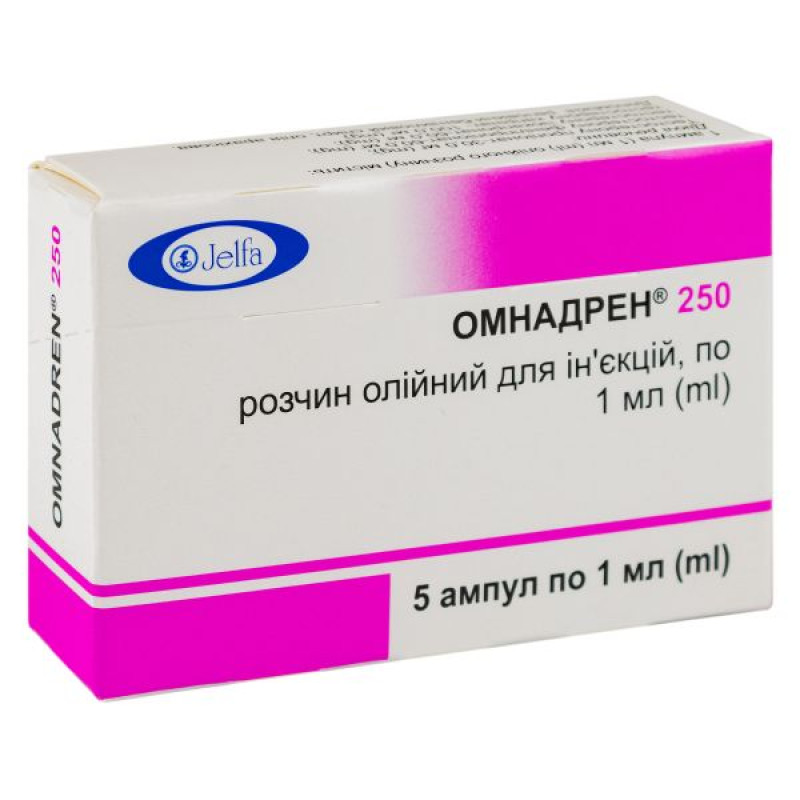
Instructions Omnadren 250 oily solution for injection ampoule 1 ml No. 5
Composition
active ingredients: testosterone propionate, testosterone phenylpropionate, testosterone isocaproate, testosterone caprate;
1 ml of solution contains: testosterone propionate 30.0 mg; testosterone phenylpropionate 60.0 mg; testosterone isocaproate 60.0 mg; testosterone caprate 100.0 mg;
Excipients: benzyl alcohol, peanut oil.
Dosage form
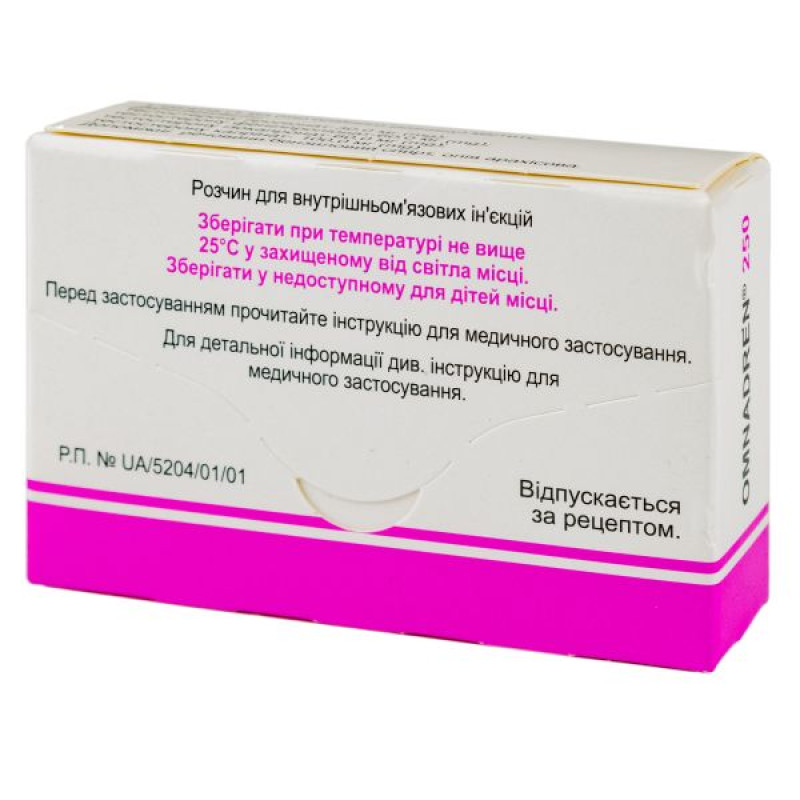
Solution for intramuscular injection.
Main physicochemical properties: light yellow transparent oily liquid.
Pharmacotherapeutic group
Androgens. ATX code G03B A03.
Pharmacological properties
Pharmacodynamics
Omnadren® 250 is a hormonal drug.
The drug contains four testosterone esters, which have different speeds of action. Testosterone in men is involved in the formation of gonadal functions, the development of external genitalia, prostate, in the maturation of seminal vesicles, the appearance of male biotic signs (growth, male voice timbre, hair growth). In the female body, testosterone acts antagonistically to estrogens. It has a positive effect in climacteric disorders.
Pharmacokinetics
Omnadren® 250 is a mixture of testosterone esters that are slowly absorbed at different rates after intramuscular injection, which allows maintaining a relatively constant level of testosterone in the blood. In the blood, almost 98% of testosterone is bound to a specific fraction of globulins that bind testosterone and estradiol. Biotransformation occurs in the liver to various 17-ketosteroids, approximately 90% of which are excreted in the urine after conjugation with glucuronic or sulfuric acid. 6% of the absorbed dose is excreted in the feces.
Indication
In men - hypogonadism, delayed puberty, post-castration syndrome, impotence caused by testosterone deficiency, impaired spermatogenesis.
In women - in exceptional cases with diseases accompanied by hyperestrogenia.
Contraindication
Increased individual sensitivity to the components of the drug; nephrotic syndrome; suspected or diagnosed prostate or breast cancer; liver neoplasm.
Interaction with other medicinal products and other types of interactions
Drugs that induce or inhibit enzymes may decrease or increase testosterone concentrations, respectively, and therefore may require dose and/or injection interval adjustment.
In patients treated with oral anticoagulants, blood coagulation parameters should be carefully monitored. Androgens reduce carbohydrate tolerance and increase the need for antidiabetic therapy.
Barbiturates and other enzyme-inducing drugs
Interaction with drugs that induce microsomal enzymes is possible, which may lead to increased testosterone clearance.
The effect of androgens on other drugs
Oxyphenbutazone
Increased serum levels of oxyphenabutazon were noted.
Oral anticoagulants
Testosterone and its derivatives have been reported to increase the activity of oral anticoagulants, possibly necessitating dose adjustment. Regardless of this fact, restrictions regarding intramuscular injections should always be observed in patients with acquired or hereditary coagulation disorders.
Hypoglycemic drugs
Androgens may increase blood sugar levels, thereby reducing the effect of insulin. A reduction in the dose of hypoglycemic drugs may be necessary. Androgens may decrease thyroxine-binding globulin levels, leading to decreased serum T4 concentrations and increased T3 and T4 absorption.
It enhances the effect of anabolic agents, vitamins, preparations containing calcium and phosphorus, slows down the elimination of cyclosporine. Resistance to the action of neuromuscular blockers has also been noted.
Application features
Monitoring of patients prescribed Omnadren® 250 is necessary before the start of treatment, and during the use of the drug - once a year, including:
digital rectal examination to rule out benign prostatic hyperplasia and determination of prostate-specific antigen (PSA) to rule out subclinical forms of prostate cancer; monitoring of hematocrit and hemoglobin levels to rule out polycythemia.
Medical supervision while taking the drug is necessary for patients, especially the elderly, with the following conditions:
Patients with a history of myocardial infarction, heart failure, liver failure, kidney failure, hypertension, epilepsy, migraine should be under medical supervision due to the risk of worsening or exacerbation of the disease. In such cases, treatment should be discontinued immediately.
Androgens may cause hypercalcemia in patients with undiagnosed or existing heart disease, renal dysfunction, hypertension, epilepsy, or migraine (or a history of such conditions).
In patients with a history of cardiac, renal or hepatic disease, or hypertension, androgen treatment may cause complications characterized by edema with or without acute heart failure. In such cases, treatment should be discontinued immediately.
Patients with epilepsy or migraine (even a history) should be under medical supervision, as androgens can sometimes cause fluid and sodium retention in the body.
Prolonged use of high doses may cause liver spots or liver tumors.
Testosterone levels should be measured at baseline and at specified intervals during treatment.
Blood clotting disorders.
Testosterone should be used with caution in patients with thrombophilia, as post-marketing and published data have shown the occurrence of thrombotic events in these patients during testosterone treatment.
Testosterone can cause an increase in blood pressure, meaning that the drug should be used with caution in people with hypertension.
Caution should be exercised when prescribing to men with sleep apnea. Testosterone has been reported to cause or worsen sleep apnea. Informed clinical judgment should be used and caution should be exercised in patients with risk factors such as obesity and chronic lung disease.
In prepubertal children, growth and sexual development should be monitored, as androgens in high doses can accelerate epiphyseal closure and sexual maturation.
Androgens are not used to enhance muscle development or to increase physical performance in healthy subjects. The off-label use of androgens to enhance endurance in athletes poses a serious health risk and is considered doping.
In the event of adverse reactions associated with the use of androgens, treatment with Omnadren® 250 should be temporarily discontinued and resumed at a lower dose after symptoms have resolved.
The use of androgens in elderly patients may increase the risk of developing hyperplasia or prostate cancer. For preventive purposes, it is recommended to conduct regular prostate examinations in men and record PSA levels.
Like all oil solutions, the drug is administered intramuscularly. By administering the solution extremely slowly, it is possible to avoid the occurrence of short-term reactions that are sometimes observed during or immediately after the injection of the oil solution (coughing, coughing fits, respiratory depression).
Since the preparation contains peanut oil, Omnadren® 250 should not be administered to patients with peanut allergy. Due to the possible cross-allergy between peanut and soy allergy, Omnadren® 250 should also not be administered to patients with hypersensitivity to soy.
Ability to influence reaction speed when driving vehicles or other mechanisms
No effect on the ability to drive or use machines was observed.
Use during pregnancy or breastfeeding
Pregnancy
The drug is dangerous to the fetus. The use of the drug by pregnant women has demonstrated a significant risk to the fetus, which outweighs the benefit of use for the woman.
The use of testosterone during pregnancy is contraindicated.
Breast-feeding
It is not known whether testosterone passes into breast milk. Breastfeeding should be discontinued during treatment with the drug.
Fertility
The use of testosterone in men, especially in high doses, can lead to reproductive dysfunction, including oligospermia.
In women, testosterone use may lead to menstrual irregularities or amenorrhea.
Method of administration and doses
Omnadren® 250 should be administered deeply intramuscularly, into the gluteal muscle.
The dosage of Omnadren® 250 and treatment regimens are prescribed individually by the doctor, taking into account the indications for use and the patient's condition.
The standard recommended therapy regimen is 1 ampoule (1 ml) intramuscularly every 4 weeks.
In case of pain during erection, treatment should be discontinued.
Primary male hypogonadism (anorchism, Klinefelter syndrome, castration syndrome, seminal atrophy)
Depending on the degree of gonadal insufficiency (according to clinical assessment and laboratory test results), the drug is administered as an injection every 7-14-21 days.
Other indications
In some forms of male infertility (azoospermia, oligospermia), 2 injections of Omnadren® 250 are administered with a two-week interval.
A decrease in the transparency of the oil solution and the appearance of flaky formations does not indicate the expiration date of the drug. The solution becomes transparent after heating the ampoule in warm water.
Children
The safety and efficacy of the drug in children and adolescents have not been sufficiently studied, so the drug is not used in these categories of patients.
Children under 3 years of age are contraindicated in the use of Omnadren® 250 due to the content of benzyl alcohol. It may cause toxic reactions and be the cause of anaphylactic reactions. The drug is used in children under the supervision of a physician. The dose of the drug for children over 3 years of age may be lower than for adults, with less frequent use depends on the individual response to treatment.
In order to avoid premature closure of the epiphysis and premature puberty, it is prescribed with caution to boys in the prepubertal period.
Overdose
Overdose is unlikely when used at the recommended dosage.
Signs of overdose resulting from excessive doses or administration of the drug more than once a week include painful erection in men; hoarseness in women, which may lead to irreversible changes in the voice. Priapism in men is a symptom of chronic overdose.
In such cases, the use of the medicinal product should be discontinued.
Adverse reactions
Adverse reactions that are generally observed when using the drug:
in prepubertal boys, premature sexual development, increased frequency of erections, penis enlargement, and premature epiphyseal closure; priapism and other types of sexual stimulation; fluid and sodium retention in the body; oligospermia, and decreased ejaculate volume.
In case of adverse reactions, treatment should be discontinued until they disappear, after which the drug can be continued in reduced doses. Hoarseness of the voice may be the first symptom of voice change, which may lead to an irreversible decrease in the timbre of the voice. If signs of virilization and a significant change in the voice appear, treatment should be discontinued.
From the digestive tract
Nausea, increased appetite, diarrhea.
Hepatobiliary disorders
Jaundice, obstructive jaundice, liver dysfunction, "liver" spots, tumor lesions of the liver.
Blood and lymphatic system disorders
Inhibition of blood coagulation factors II, V, VI and X, bleeding in patients receiving oral anticoagulants, polycythemia, increased hematocrit, increased red blood cell count, increased hemoglobin.
From the nervous system
Changes in libido, headache, anxiety, paresthesia, increased nervous excitability, mood changes, migraine, tremor, aggressiveness, irritability, depression, dizziness.
Metabolic and nutritional disorders
Increased blood cholesterol concentration. Retention of sodium, chlorine, fluid, potassium and calcium and inorganic phosphates, weight gain, increased glycosylated hemoglobin, hypercholesterolemia, increased blood cholesterol, impaired glucose tolerance.
General disorders and administration site conditions
Pain, itching and hyperemia - at the injection site. Increased fatigue, weakness, hyperhidrosis, night sweats.
Cardiovascular system
Hot flashes, cardiovascular disorders, hypertension.
Respiratory system
Bronchitis, sinusitis, cough, dyspnea, snoring, dysphonia.
From the skin side
Acne, alopecia, erythema, rash, papular, acneiform eruptions, itching, dry skin, hirsutism, male pattern hair growth.
Musculoskeletal and connective tissue disorders
Arthralgia, myalgia, pain in extremities, muscle spasm, muscle tension, musculoskeletal rigidity, increased blood creatine phosphokinase.
Renal and urinary disorders
Decreased urine output, urinary retention, urinary tract disorders, nocturia, dysuria.
Reproductive system and breast disorders
Benign prostatic hyperplasia, prostatic intraepithelial neoplasia, prostate induration, prostatitis, prostate disorder, libido increased, libido decreased, testicular pain, breast induration, breast pain, gynaecomastia, estradiol increased, blood free testosterone increased, blood testosterone increased, masculinisation.
Laboratory indicators
Liver dysfunction, decreased serum HDL (high-density lipoprotein), LDL (low-density lipoprotein) and triglyceride concentrations, increased PSA (prostate-specific antigen) levels, hypercalcemia.
After discontinuation of the drug, side effects persist for some time.
Treatment with high doses of testosterone often causes reversible inhibition or reduction of spermatogenesis, resulting in reduced testicular size. Testosterone therapy can occasionally lead to persistent, painful erections (priapism).
Large doses or long-term administration of testosterone can occasionally cause fluid retention and edema.
Expiration date
3 years.
Storage conditions
Store at a temperature not exceeding 25 °C in a place protected from light.
Keep out of reach of children.
Packaging
1 ml in ampoules. 5 ampoules in a cardboard box.
Vacation category
According to the recipe.
Producer
Pharmaceutical factory Elfa A.T., Poland.
Location of the manufacturer and its business address
58-500 m. Jelenia Góra, 21 Vincentiego Pola Street, Poland.
58-500 Jelenia Gora, str. Wincentego Pola, 21, Poland.