






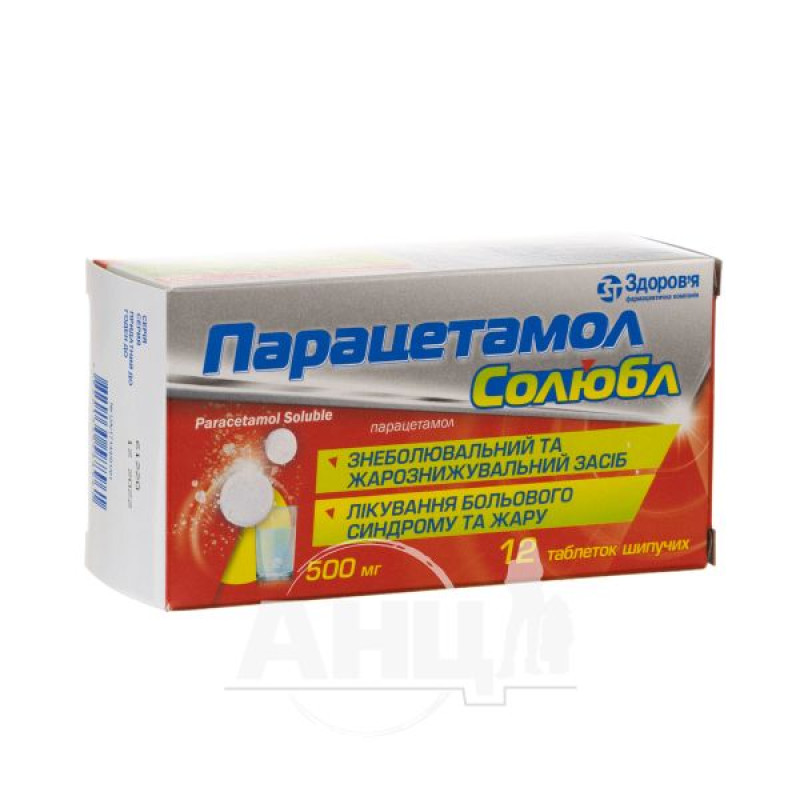
Paracetamol soluble effervescent tablets 500 mg strip No. 12
Paracetamol Soluble effervescent tablets are used for the following indications: treatment of pain syndrome and fever, in particular headache, including migraine and tension headache, back pain, rheumatic pain, osteoarthritis pain, muscle pain, sore throat, period pain in women, neuralgia, toothache, pain after tooth extraction or dental procedures, fever and pain after vaccination, symptoms of colds and flu, such as fever, aches, pain.
Composition
Active ingredient: paracetamol;
1 tablet contains paracetamol 500 mg;
Excipients: sodium bicarbonate, sodium carbonate, citric acid, sorbitol (E 420), sodium saccharin, povidone, sodium lauryl sulfate, dimethicone.
Contraindication
Hypersensitivity to the components of the drug, severe liver and/or kidney dysfunction, congenital hyperbilirubinemia, glucose-6-phosphate dehydrogenase deficiency, alcoholism, blood diseases, Gilbert's syndrome, severe anemia, leukopenia. Age up to 6 years.
Method of application
The drug is intended for oral administration.
Exceeding the recommended dose. The lowest dose of the drug necessary to obtain a therapeutic effect should be used.
The maximum period of use for children without consulting a doctor is 3 days.
You should not take more than 4 doses in 24 hours.
The interval between doses is at least 4 hours.
Application features
Pregnant women
The drug can be prescribed during pregnancy and breastfeeding if the expected benefit to the mother outweighs the potential risk to the fetus or child.
Children
Not recommended for use in children under 6 years of age.
Drivers
Does not affect.
Overdose
Liver damage is possible in adults who have taken 10 g or more of paracetamol, and in children who have taken more than 150 mg/kg of body weight. In patients with risk factors (long-term use of carbamazepine, phenobarbital, phenytoin, primidone, rifampicin, St. John's wort or other drugs that induce liver enzymes, alcohol abuse, insufficiency of the glutathione system, for example: digestive disorders, cystic fibrosis, HIV infection, starvation, cystic fibrosis, cachexia), taking 5 g or more of paracetamol can lead to liver damage.
Side effects
From the blood and lymphatic system: (rare <1/10,000) - thrombocytopenia.
Immune system disorders: (rare <1/10,000) - anaphylaxis, hypersensitivity skin reactions including skin rash, angioedema, Stevens-Johnson syndrome and toxic epidermal necrolysis.
Respiratory, thoracic and mediastinal disorders: (rare <1/10,000) - bronchospasm in patients sensitive to acetylsalicylic acid and other non-steroidal anti-inflammatory drugs.
On the part of the digestive system: (rare <1/10,000) - liver dysfunction.
Also, after taking drugs containing paracetamol, the following side effects are possible: skin itching, erythema multiforme, nausea, epigastric pain; hypoglycemia, up to hypoglycemic coma; agranulocytosis, anemia, sulfhemoglobinemia and methemoglobinemia (cyanosis, shortness of breath, heart pain), hemolytic anemia, bruising or bleeding, increased activity of liver enzymes, usually without the development of jaundice.
Interaction
The rate of absorption of paracetamol may be increased by metoclopramide and domperidone and decreased by cholestyramine. The anticoagulant effect of warfarin and other coumarins with an increased risk of bleeding may be enhanced by concomitant long-term use of paracetamol. Intermittent administration has no significant effect. Barbiturates reduce the antipyretic effect of paracetamol.
Storage conditions
Store in the original packaging at a temperature not exceeding 25 °C.
Keep out of reach of children.
Shelf life - 2 years.
There are no reviews for this product.
There are no reviews for this product, be the first to leave your review.
No questions about this product, be the first and ask your question.