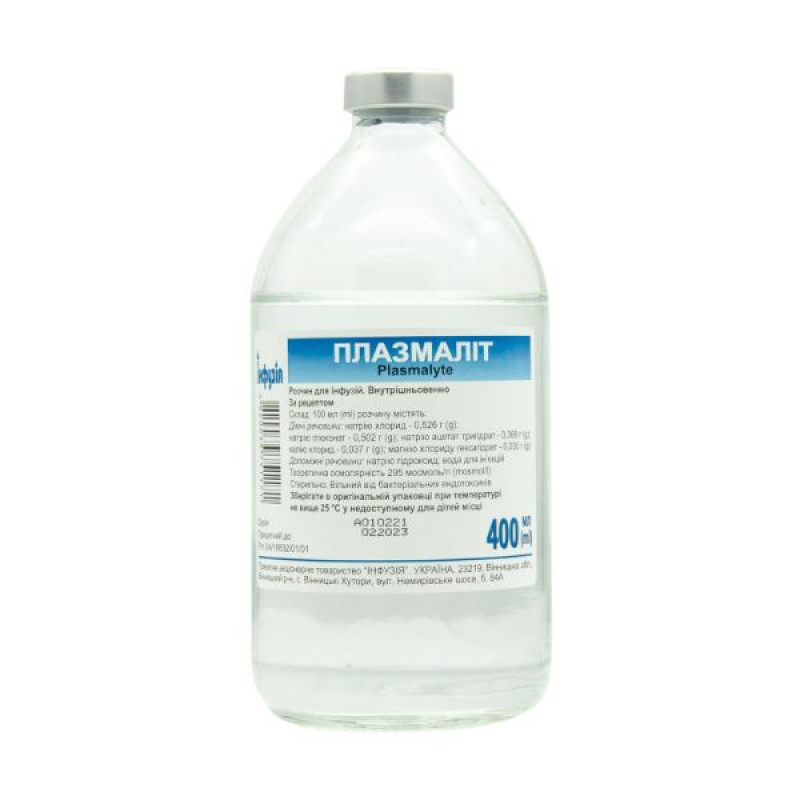
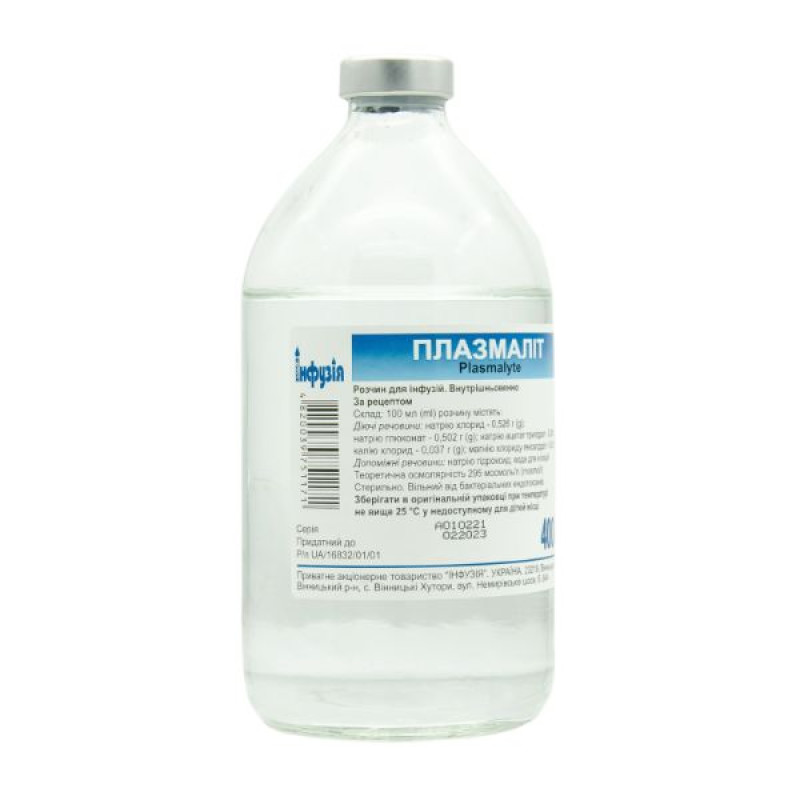
Plasmalite infusion solution is used for the following indications:
to restore lost fluid (e.g., burns, head injuries, fractures, infections, peritoneal irritation); to restore fluid lost during surgery; in hemorrhagic shock and clinical conditions requiring rapid transfusion (compatible with blood); in mild to moderate metabolic acidosis, as well as in cases of impaired lactate metabolism.
Composition
100 ml of solution contain (active ingredients):
sodium chloride - 0.526 g; sodium gluconate - 0.502 g; sodium acetate trihydrate - 0.368 g; potassium chloride - 0.037 g; magnesium chloride hexahydrate - 0.03 g
Excipients: sodium hydroxide, water for injections.
Contraindication
hyperchloremia; hypernatremia; hyperkalemia; renal failure; heart block; metabolic or respiratory alkalosis; hypocalcemia or hypochlorhydria; simultaneous use of potassium-sparing diuretics (amiloride, potassium canreonate, spironolactone, triamterene); hypersensitivity to the components of the drug that make up its composition.
Method of application
Adults, elderly, adolescents, children. The dose and rate of administration depend on the age, body weight, clinical and physiological condition of the patient, concomitant therapy. Recommended dose: from 500 ml to 3 liters / 24 hours.
The infusion rate in adults, the elderly and adolescents is usually 40 ml/kg/24 hours. When used to replace fluid loss during surgery, the infusion rate may be increased to about 15 ml/kg/hour.
Use in pediatrics. Controlled studies to study the safety and efficacy of the drug in children have not been conducted.
The method of administration is intravenous.
The solution should be administered using sterile equipment in compliance with the rules of aseptic technique. The infusion system should be filled with the "Plasmalyt" solution in order to displace air from it.
Plasmalyte solution can be administered before, during, or after blood transfusion.
An isoosmolar solution can be administered through a peripheral vein.
Before use, the solution should be visually inspected for particulate matter or discoloration. Do not use the solution if it is discolored or if the package is not sealed.
The outer transparent plastic bag should be removed immediately before using the solution. The sterility of the solution is ensured by the inner polymer bag. After connecting the infusion system, the drug should be used immediately.
Do not connect polymer bags together, as this may lead to air embolism due to the entry of residual air from one bag before the administration of the drug from the other bag is completed.
Compression of polymer bags to increase the infusion rate may lead to air embolism if air remains in the bag and is not completely removed before the start of drug administration.
Ventilated intravenous systems should not be used with polymer bags with the air supply valve open, as this may lead to air embolism.
Additional medications, if necessary, can be added to the solution before or during infusions through a special port on the infusion system.
Application features
Pregnant women
There is no information on the experience of using the drug in pregnant and breastfeeding women. It can be prescribed to pregnant or breastfeeding women after a thorough assessment of the expected benefit of therapy for the mother and the potential risk to the fetus/child.
Children
Use the drug in children over 12 years of age.
Overdose
Excessive or rapid administration of Plasmalyte solution may lead to hyperhydration and sodium overload with the risk of edema, especially in cases of impaired renal sodium excretion. In such cases, hemodialysis may be necessary.
Side effects
The following cases of adverse reactions are known when using the drug "Plasmalyt", listed in accordance with the medical classification of organs and systems (MedDRA).
On the part of the immune system: hypersensitivity reactions, including anaphylactic reactions, tachycardia, palpitations, chest pain, chest discomfort, shortness of breath, increased breathing rate, flushing, asthenia, deterioration of well-being, piloerection ("goosebumps"), peripheral edema, hyperthermia, urticaria.
Adverse reactions that occur with the use of similar drugs: hypotension, shortness of breath, cold sweat, chills, hyperkalemia.
General metabolic changes: hypervolemia.
Nervous system: convulsions.
Vascular disorders: thrombophlebitis, venous thrombosis.
Skin and subcutaneous tissue disorders: urticaria.
General disorders and administration site conditions: burning sensation; fever; injection site pain; phlebitis, infection, irritation or other injection site reaction; extravasation.
Storage conditions
Store in the original packaging at a temperature not exceeding 25 °C, out of the reach of children.
Shelf life - 2 years.