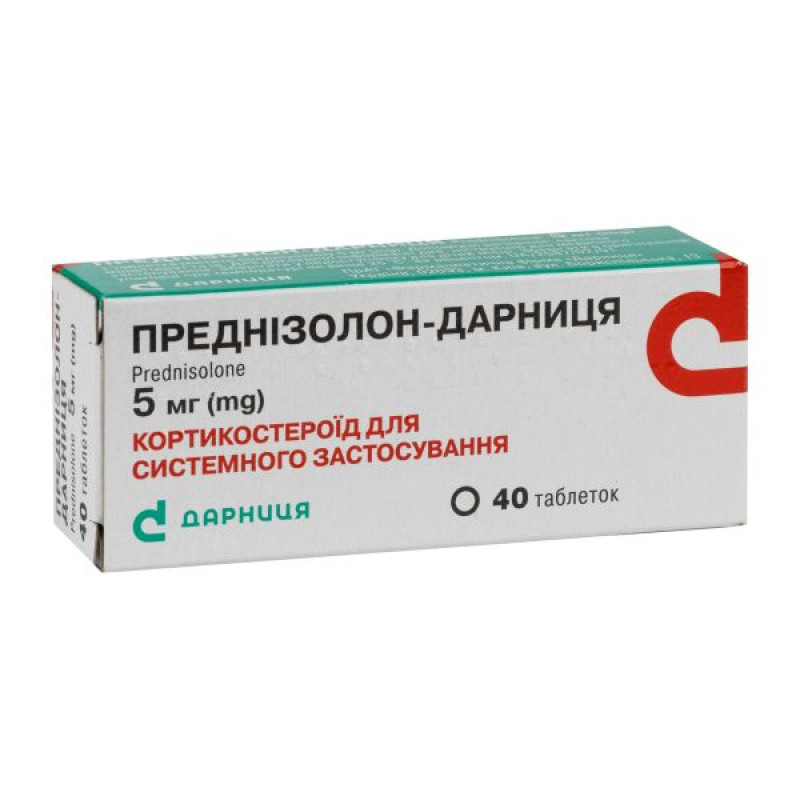
Instructions for use Prednisolone-Darnitsa tablets 5 mg No. 40
Composition
active ingredient: prednisolone;
1 tablet contains 5 mg of prednisolone;
Excipients: lactose monohydrate, potato starch, calcium stearate.
Dosage form
Pills.
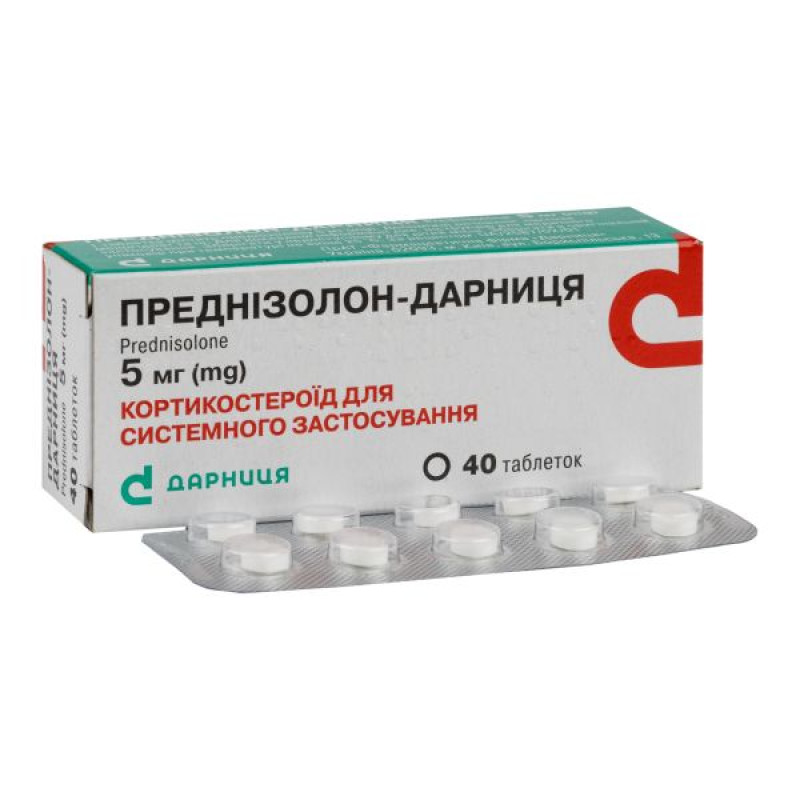
Main physicochemical properties: white tablets, flat-cylindrical in shape with a bevel.
Pharmacotherapeutic group
Hormone preparations for systemic use. Simple corticosteroid preparations for systemic use. Glucocorticoids.
ATX code H02A B06.
Pharmacological properties
Pharmacodynamics.
Prednisolone is a dehydrated analogue of hydrocortisone. It has anti-inflammatory, antiallergic, desensitizing, antishock and immunosuppressive effects. When using prednisolone, the effects of the drug are realized through the stabilization of cell membranes, inhibition of macrophage accumulation, reduction of leukocyte migration, reduction of capillary permeability, which prevents the formation of edema. Prednisolone inhibits phagocytosis, affects the metabolism of arachidonic acid, as well as the synthesis and release of inflammatory mediators. The immunosuppressive effect of prednisolone is due to the inhibition of the activity of T- and B-lymphocytes, a decrease in the content of complement in the blood, as well as inhibition of the production and effects of interleukin-2. It has a catabolic effect, increases the level of glucose in the blood. It exhibits some mineralocorticoid activity, increases the reabsorption of Na+ and water in the renal tubules, increases the excretion of K+ and Ca+, especially when their levels in the blood plasma are elevated. Prednisolone inhibits the synthesis and secretion of adrenocorticotropic hormones by the pituitary gland and secondarily - glucocorticosteroids by the adrenal glands.
Pharmacokinetics.
Rapidly absorbed from the gastrointestinal tract. Has high bioavailability. Time to reach maximum concentration in blood plasma – 1-1.5 hours. A significant part of the drug (90%) binds to cortisone-binding globulin – transcortin and albumin. Metabolized in the liver, kidneys, small intestine, bronchi. Oxidized forms of prednisolone are glucuronized or sulfated. Half-life (T1/2) – 2-4 hours. Excreted by the kidneys mainly in the form of metabolites, up to 20% in unchanged form.
Indication
Rheumatic fever, rheumatic carditis, small chorea.
Systemic connective tissue diseases (systemic lupus erythematosus, scleroderma, periarteritis nodosa, dermatomyositis).
Multiple sclerosis.
Acute and chronic inflammatory diseases of the joints (rheumatoid arthritis, juvenile arthritis, ankylosing spondylitis, gouty and psoriatic arthritis, polyarthritis, shoulder-scapular periarthritis, osteoarthritis (including post-traumatic), Still's syndrome in adults, bursitis, nonspecific tendosynovitis, synovitis, epicondylitis).
Bronchial asthma, asthmatic status.
Interstitial lung diseases (acute alveolitis, pulmonary fibrosis, sarcoidosis of II-III degree), lung cancer (in combination with cytostatics), berylliosis, aspiration pneumonia (in combination with specific therapy), Loeffler's eosinophilic pneumonia, tuberculosis (pulmonary tuberculosis, tuberculous meningitis) - in combination with specific therapy.
Primary and secondary adrenal insufficiency (including conditions after removal of the adrenal glands), congenital adrenal hyperplasia, adrenogenital syndrome, subacute thyroiditis.
Acute and chronic allergic diseases (drug and food allergies, serum sickness, hay fever, atopic dermatitis, contact dermatitis involving a large surface area of the body, urticaria, allergic rhinitis, angioedema, Stevens-Johnson syndrome, toxicoderma).
Hepatitis.
Hypoglycemic states.
Autoimmune diseases (including acute glomerulonephritis).
Nephrotic syndrome.
Inflammatory diseases of the gastrointestinal tract (nonspecific ulcerative colitis, Crohn's disease, local enteritis).
Diseases of the blood and blood-forming organs (agranulocytosis, panmyelopathy, myeloma, acute lympho- and myeloid leukemia, lymphogranulomatosis, thrombocytopenic purpura, secondary thrombocytopenia in adults, autoimmune hemolytic anemia, erythroblastopenia, congenital erythroid hypoplastic anemia).
Autoimmune and other skin diseases (eczema, seborrheic dermatitis, psoriasis, Lyell's syndrome, bullous dermatitis herpetiformis, pemphigus, exfoliative dermatitis).
Postoperative, post-radiation, post-traumatic brain edema, brain tumor (use after parenteral glucocorticosteroids).
Eye diseases, including allergic and autoimmune (sympathetic ophthalmia, allergic forms of conjunctivitis, allergic corneal ulcer, non-purulent keratitis, iridocyclitis, iritis, severe slow anterior and posterior uveitis, choroiditis, optic neuritis).
Prevention of transplant rejection reactions.
Hypercalcemia on the background of cancer.
For the prevention and elimination of nausea and vomiting during cytostatic therapy.
Contraindication
Parasitic and infectious diseases of viral, fungal or bacterial etiology, currently existing or recently transferred: herpes simplex, herpes zoster (viremic phase), chickenpox, measles; amebiasis, strongyloidiasis (established or suspected); systemic mycosis; active or latent tuberculosis.
Post-vaccination period (duration 10 weeks: 8 weeks before and 2 weeks after vaccination), lymphadenitis after BCG vaccination.
Immunodeficiency states caused by HIV infection.
Gastrointestinal tract diseases: gastric and duodenal ulcers, esophagitis, gastritis, acute or latent peptic ulcer, recently created intestinal anastomosis, nonspecific ulcerative colitis with the threat of perforation or abscess formation, diverticulitis.
Cardiovascular system diseases: recent myocardial infarction, decompensated chronic heart failure, arterial hypertension, predisposition to thromboembolic disease.
Endocrine system diseases: diabetes mellitus and impaired carbohydrate tolerance, thyrotoxicosis, hypothyroidism, Itsenko-Cushing's disease.
Severe chronic renal and/or hepatic failure, nephrourolithiasis.
Hypoalbuminemia. Systemic osteoporosis. Myasthenia gravis. Acute psychosis. Obesity (III-IV century). Poliomyelitis (except for the form of bulbar encephalitis). Open- and closed-angle glaucoma.
Interaction with other medicinal products and other types of interactions
When using prednisolone simultaneously with other drugs, it is possible:
with thyroid hormones, inducers of liver enzymes, in particular with barbiturates, phenytoin, pyrimidone, carbamazepine, rifampicin - weakening of the effects of prednisolone due to an increase in its systemic clearance;
with estrogens (including oral contraceptives containing estrogen), cyclosporine, CYP3A4 inhibitors, in particular erythromycin, clarithromycin, ketoconazole, diltiazem, aprepitant, itraconazole, oleandomycin - increased therapeutic and toxic effects of prednisolone;
with antacids – decreased absorption of prednisolone;
with salicylic acid derivatives and other nonsteroidal anti-inflammatory drugs - increased likelihood of gastric mucosal ulcers; prednisolone reduces the level of salicylic acid derivatives in the blood serum, increasing their renal clearance; the drug increases the risk of developing hepatotoxic reactions to paracetamol due to induction of liver enzymes and the formation of its toxic metabolite;
with cardiac glycosides - increased toxicity of the latter, and due to the resulting hypokalemia - increased risk of arrhythmias;
with hypoglycemic agents – inhibition of the hypoglycemic effect of oral hypoglycemic agents and insulin;
with antihypertensive drugs - reduced effectiveness of the latter;
with tricyclic antidepressants – increased signs of depression caused by taking prednisolone and increased intraocular pressure;
with immunosuppressants - increased risk of developing infections and lymphoma or other lymphoproliferative disorders associated with the Epstein-Barr virus;
with diuretics, laxatives, amphotericin B - increased risk of hypokalemia; prednisolone increases the risk of osteoporosis when used simultaneously with amphotericin and carbonic anhydrase inhibitors;
with m-cholinoblockers, antihistamines, nitrates - increased intraocular pressure and reduced effectiveness of antihistamines;
with neuroleptics, carbutamide, azathioprine - increased risk of cataract development;
with estrogens, anabolic drugs, oral contraceptives – manifestations of hirsutism and acne;
with live antiviral vaccines and against the background of other types of immunizations - increased risk of virus activation and development of infections;
with muscle relaxants on the background of hypokalemia - increased severity and duration of muscle blockade on the background of the use of muscle relaxants;
with anticholinesterase agents – the occurrence of muscle weakness in patients with myasthenia (especially in patients with myasthenia gravis);
with mitotane and other inhibitors of adrenal cortex function - may require an increase in the dose of the drug;
with antiemetics – increased antiemetic effect;
with isoniazid, mexiletine, praziquantel - a decrease in their plasma concentrations;
with somatotropin (in high doses) – a decrease in the effect of the latter;
with fluoroquinolones – tendon damage;
with cyclosporine - cases of seizures have been noted. Since the simultaneous administration of these drugs causes mutual inhibition of metabolism, it is likely that seizures and other side effects associated with the use of each of these drugs, both as monotherapy and when used together, may occur more often. Combined use may cause an increase in the concentration of other drugs in the blood plasma.
With long-term therapy, prednisolone increases the content of folic acid.
The drug reduces the effect of vitamin D on the absorption of Ca2+ in the intestinal cavity.
Application features
Before starting treatment, the patient must be examined for possible contraindications. Clinical examination should include examination of the cardiovascular system, X-ray examination of the lungs, examination of the stomach and duodenum, urinary system, and organs of vision. Laboratory examination should include: complete blood count, concentration of glucose in blood and urine, electrolytes in blood plasma.
When treated with glucocorticoids for a long time, it is recommended to regularly monitor blood pressure, determine the level of glucose in urine and blood, conduct a stool test for occult blood, analyze blood clotting parameters, X-ray control of the spine, and ophthalmological examination (once every 3 months).
Treatment with the drug, even at low doses, masks the signs and symptoms of pre-existing infections and those that develop during treatment (including opportunistic infections), making their diagnosis more difficult. During treatment, contact with people with colds or other infections should be avoided.
Children who have been in contact with measles or chickenpox patients during the treatment period should be prescribed specific immunoglobulins as a prophylaxis (within 10 days after contact).
Immunization should not be performed during treatment.
If patients experience unusual stressful situations during glucocorticoid treatment, it is recommended to increase the dose of short-acting corticosteroids before, during, and after the stressful situation.
You should not drink alcohol during treatment with prednisone.
Depending on the duration of treatment and dose, the drug may have a negative effect on calcium metabolism. Prevention of osteoporosis is recommended, which is especially important in patients with risk factors (including family history, advanced age, postmenopause, insufficient protein and calcium intake, excessive smoking, excessive alcohol consumption, and decreased physical activity). Prevention is based on adequate calcium and vitamin D intake, and also includes physical activity.
To reduce the side effects of prednisone therapy, it is justified to prescribe an appropriate diet.
When using high doses of prednisolone for a long period (30 mg per day for at least 4 weeks), reversible disorders of spermatogenesis may occur, which persist for several months after discontinuation of the drug.
In patients who have been receiving supraphysiological doses of prednisolone (approximately 7.5 mg prednisolone or equivalent) for more than 3 weeks, prednisolone treatment should be discontinued gradually. Treatment should be discontinued gradually, even if it has been for less than 3 weeks, in the following groups of patients:
– patients undergoing a repeated course of prednisolone treatment;
– patients who were prescribed a repeated course of treatment within a year after long-term treatment (months, years);
– patients receiving more than 40 mg per day of prednisolone or equivalent;
– patients with adrenal insufficiency not caused by exogenous corticosteroid administration.
After discontinuation of treatment, withdrawal syndrome, adrenal insufficiency, and exacerbation of the disease for which prednisolone was prescribed may occur. If functional adrenal insufficiency is observed after the end of prednisolone treatment, the drug should be resumed immediately, and the dose should be reduced very slowly and with caution (for example, the daily dose should be reduced by 2-3 mg over 7-10 days).
Adrenal cortical atrophy develops with prolonged therapy and may persist for many years after cessation of treatment.
Steroid-induced secondary adrenal insufficiency can be minimized by gradual dose reduction. This type of insufficiency may persist for several months after cessation of therapy, so any stressful situation that occurs during this period should prompt the resumption of corticosteroid therapy.
With sudden withdrawal, especially in the case of previous use of high doses, a withdrawal syndrome occurs, which is manifested by fever, decreased appetite, nausea, vomiting, diarrhea, lethargy, dizziness, generalized musculoskeletal pain, and asthenia.
Due to the risk of developing hypercorticism, a new course of cortisone treatment after previously long-term prednisolone treatment for several months should always be started with low initial doses (except in acute, life-threatening conditions).
In children during the growth period, glucocorticosteroids can be used only for absolute indications and under particularly careful medical supervision.
In case of intercurrent infections, septic conditions, and tuberculosis, simultaneous antibiotic therapy is necessary.
If it is necessary to use prednisolone while taking oral hypoglycemic drugs or anticoagulants, it is necessary to adjust the dosage regimen of the latter.
Use in severe infectious diseases is possible only against the background of specific antimicrobial therapy.
Women during menopause need to be screened for possible osteoporosis.
In Addison's disease, concomitant administration of barbiturates should be avoided due to the risk of acute adrenal insufficiency (Addisonian crisis).
If there is a history of psoriasis or seizures, prednisolone should be used only in the minimum effective doses.
The drug should be used with extreme caution in cases of liver and kidney failure, and migraine.
Special attention should be paid to the use of systemic corticosteroids in patients with existing or a history of severe affective disorders, including depressive, manic-depressive psychosis, and previous steroid psychosis. Patients and/or caregivers should be warned about the possibility of developing serious psychiatric side effects. Symptoms usually appear within a few days or weeks after starting treatment. The risk of these side effects is higher with high doses. Most reactions disappear after reducing the dose or discontinuing the drug, although specific treatment is sometimes necessary. If such symptoms develop, you should consult a doctor. Psychiatric disorders can also occur during glucocorticoid withdrawal.
Use during pregnancy or breastfeeding
Controlled studies in pregnant women have not been conducted. During pregnancy (especially in the 1st trimester) use is possible if the benefit to the mother outweighs the risk to the fetus. When using the drug during breastfeeding, it should be remembered that prednisolone penetrates into breast milk.
Ability to influence reaction speed when driving vehicles or other mechanisms
During the treatment period, caution should be exercised when driving vehicles and engaging in other potentially dangerous activities that require increased concentration and speed of psychomotor reactions.
Method of administration and doses
The dosage is set individually. When prescribing, the circadian rhythm of glucocorticoid secretion should be taken into account: most of the dose (2/3) or the entire dose should be taken in the morning, around 8 a.m., and 1/3 in the evening.
Adults.
In acute conditions and as a replacement therapy, the drug is prescribed at a dose of 20-30 mg per day with a gradual transition to a maintenance daily dose of 5-10 mg. If necessary, the initial dose may be 15-100 mg per day, and the maintenance dose - 5-15 mg per day.
For children.
The initial dose of the drug for children is 1-2 mg/kg per day and is divided into 4-6 doses, and the maintenance dose is 300-600 mcg/kg per day.
The medicine should be taken orally, without chewing and with a small amount of liquid.
Stop treatment slowly, gradually reducing the dose.
Children
The drug can be used in pediatric practice.
Overdose
The risk of overdose increases with prolonged use of the drug, especially in large doses.
Symptoms: increased blood pressure, peripheral edema, increased side effects.
Treatment of acute overdose: immediate gastric lavage or induction of vomiting. There is no specific antidote.
Treatment of chronic overdose: reduce the dose of the drug.
Adverse reactions
The frequency and severity of side effects depend on the duration of use, the dose used, and the ability to adhere to the circadian rhythm of the prescription.
On the part of the organs of vision: glaucoma, optic disc edema, cataract, posterior subcapsular cataract, increased intraocular pressure with possible damage to the optic nerve, tendency to develop secondary bacterial, fungal or viral eye infections, trophic changes in the cornea, exophthalmos.
Gastrointestinal tract: unpleasant taste in the mouth, dyspepsia, esophageal candidiasis, nausea, vomiting, epigastric pain, diarrhea, pancreatitis, "steroid" gastric and duodenal ulcers, erosive esophagitis, bleeding and perforation of the gastrointestinal tract, increased or decreased appetite, flatulence, hiccups. In some cases, increased activity of "liver" transaminases and alkaline phosphatase.
On the part of the kidneys and urinary system: increased risk of urate formation, urolithiasis, increased number of leukocytes and erythrocytes in the urine without existing kidney damage, leukocyturia.
Metabolism and metabolism: mineral and electrolyte imbalance, hypocalcemia, negative nitrogen balance (increased protein breakdown), weight gain. Side effects due to the glucocorticosteroid activity of prednisolone: fluid and Na+ retention (peripheral edema), hypernatremia, hypokalemic syndrome - arrhythmia, myalgia or muscle spasm, unusual weakness and fatigue.
From the nervous system: peripheral neuropathies, paresthesias, autonomic disorders, headache, dizziness, cerebellar pseudotumor, increased intracranial pressure, convulsions.
Psychiatric: irritability, sleep disturbances, euphobia, suicidal tendencies, increased concentration, psychological dependence, mania, exacerbation of schizophrenia, dementia, psychosis, epileptic seizures, cognitive dysfunction (including amnesia and impaired consciousness), delirium, disorientation, euphoria, hallucinations, manic-depressive psychosis, depression, paranoia, nervousness, anxiety, insomnia.
From the cardiovascular system: arterial hypotension, atherosclerosis, thrombosis, vasculitis, peripheral edema, arrhythmia, bradycardia, arterial hypertension, development or increase in manifestations of chronic heart failure, ECG changes characteristic of hypokalemia. In patients with acute and subacute myocardial infarction - spread of the focus of necrosis, slowing down the formation of a scar, which can lead to rupture of the heart muscle.
Blood and lymphatic system disorders: increased total leukocyte count with decreased eosinophils, monocytes and lymphocytes. Lymphoid tissue mass decreases. Leukocyturia, hypercoagulation leading to thrombosis and thromboembolism.
On the part of the immune system: hypersensitivity reactions, including rash, itching, flushing, urticaria, angioedema, anaphylactic shock.
Skin and subcutaneous tissue disorders: skin atrophy, telangiectasias, acne, hirsutism, purpura, post-steroid panniculitis, characterized by the appearance of erythematous, hot subcutaneous thickenings within 2 weeks after discontinuation of the drug, Kaposi's sarcoma, slowing of the regeneration process, petechiae, bruises, hematomas, ecchymoses, striae, thinning of the skin, hyper- or hypopigmentation, acne, tendency to develop pyoderma.
On the part of the musculoskeletal system and connective tissue: growth retardation and ossification processes in children (premature closure of epiphyseal growth zones), osteoporosis, very rarely - pathological bone fractures, aseptic necrosis of the humeral or femoral head, rupture of muscle tendons, "steroid" myopathy, reduction in muscle mass (atrophy).
Infections and invasions: masking of symptoms of bacterial, viral, fungal infections, opportunistic infections, decreased body resistance to infections.
General disorders and administration site conditions: withdrawal syndrome, edema, aphthous ulcers, malaise, persistent hiccups when using the drug in high doses; adrenal insufficiency leading to arterial hypotension; hypoglycemia and fatalities in stressful situations such as surgery, trauma or infection, if the dose of prednisolone is not increased.
With sudden withdrawal of the drug, withdrawal syndrome is possible, the severity of symptoms depends on the degree of adrenal atrophy, headache, nausea, abdominal pain, dizziness, anorexia, weakness, mood swings, lethargy, fever, myalgia, arthralgia, rhinitis, conjunctivitis, painful itching of the skin, weight loss. In more severe cases, severe mental disorders and increased intracranial pressure, steroid pseudorheumatism in patients with rheumatism, fatalities are observed.
Expiration date
3 years.
Storage conditions
Store in original packaging at a temperature not exceeding 25 ° C. Keep out of the reach of children.
Packaging
10 tablets in a blister pack; 4 blister packs in a pack.
Vacation category
According to the recipe.
Producer
PrJSC "Pharmaceutical Company "Darnitsa".
Location of the manufacturer and its business address
Ukraine, 02093, Kyiv, Boryspilska St., 13.