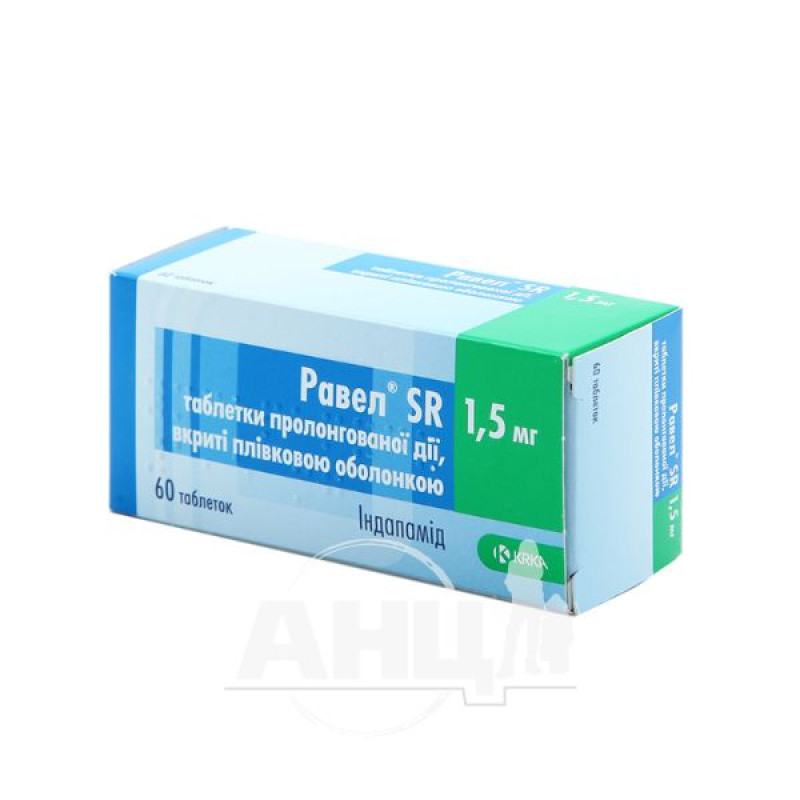
Pharmacological properties
Ravel SR is an antihypertensive agent, a sulfonamide derivative. Pharmacodynamics. In terms of pharmacological properties, Ravel SR is similar to thiazide diuretics. Indapamide acts by inhibiting sodium absorption in the cortical segment of the nephron, increases renal excretion of sodium and chloride ions and increases diuresis. It has a pronounced antihypertensive effect and a slight diuretic effect. The hypotensive effect lasts for 24 hours. Indapamide also affects vascular tone, reducing arteriolar resistance and peripheral resistance. Indapamide reduces left ventricular hypertrophy, the hypotensive effect of indapamide is preserved in patients with AG and impaired renal function.
Indapamide has practically no effect on the concentration of lipids in the blood plasma (total cholesterol, LDL-C, HDL-C, TG). In addition, it has practically no effect on carbohydrate metabolism even in patients with diabetes mellitus and concomitant hypertension. The hypotensive effect of indapamide does not increase with increasing dose, while side effects in this case are more pronounced and more frequent.
Pharmacokinetics. The indapamide fraction is released quickly and is almost completely absorbed in the gastrointestinal tract. Taking the drug with food does not affect the amount of absorbed substance. C max of indapamide in the blood serum is achieved approximately 9.8 hours after taking the drug with food and 12.3 hours - on an empty stomach. With constant use of the drug, C max of indapamide in the blood serum is achieved 11 hours after its oral administration. Stable plasma concentration is achieved after approximately 7 days. Regular use of the drug does not lead to cumulation.
The binding of indapamide to plasma proteins is 79%. T ½ from plasma is 14-24 hours (average - 18 hours). With regular administration of the drug, T ½ is 19.2 hours.
Indapamide is metabolized mainly in the liver. 70% of indapamide is excreted by the kidneys, mainly in the form of metabolites (the fraction of unchanged drug is about 5%). Approximately 20% is excreted in the feces as inactive metabolites. In patients with impaired renal and hepatic function, there is no significant change in pharmacokinetic parameters.
Indication
Ag.
Application
It is recommended to take 1 tablet once a day, preferably in the morning. The maximum daily dose is 1 tablet. The duration of treatment depends on the severity of the disease and is determined individually.
Contraindication
Hypersensitivity to any of the components of the drug or to other sulfonamides; severe renal failure, hepatic encephalopathy or severe liver dysfunction; hypokalemia; pregnancy and breastfeeding; children's age.
Side effects
Hypokalemia may develop. In clinical studies, hypokalemia was observed in 10% of patients (plasma potassium level 3.4 mmol/l) and 4% of patients (plasma potassium level 3.2 mmol/l) after 4-6 weeks of treatment with indapamide. After 12 weeks, the average decrease in plasma potassium concentration was 0.23 mmol/l.
Hyponatremia with hypovolemia may occur, which can lead to dehydration and orthostatic hypotension; compensatory metabolic alkalosis may develop due to concomitant chloride loss.
Hyperuricemia and hyperglycemia may develop, so it should be prescribed with caution to patients with diabetes or gout.
Hypercalcemia, thrombocytopenia, leukopenia, agranulocytosis, bone marrow aplasia, and hemolytic anemia have been reported in isolated cases.
Patients with hepatic insufficiency may develop hepatic encephalopathy.
Allergic reactions (maculopapular rash, purpura) occur mainly in patients with a predisposition to hypersensitivity reactions.
Possible exacerbation of systemic lupus erythematosus.
Dizziness, headache, paresthesia, fatigue, constipation and dry mouth, nausea are rarely noted.
In rare cases, pancreatitis may develop.
Special instructions
In patients with impaired liver function, thiazide diuretics may cause encephalopathy. In this case, the diuretic should be immediately discontinued.
Water and electrolyte balance
Sodium concentration in blood plasma
Prolonged use of diuretics may cause hyponatremia. Plasma sodium concentration should be determined before starting treatment and at regular intervals during treatment. In the elderly and patients with cirrhosis of the liver, plasma sodium concentration should be determined more frequently.
Potassium concentration in blood plasma
In patients with malnutrition, simultaneous administration of several drugs, in the elderly, patients with cirrhosis of the liver and ascites, coronary artery disease and heart failure, patients with an increased QT interval on the ECG, it is necessary to prevent the development of hypokalemia (3.4 mmol / l). In these patients, hypokalemia increases the cardiotoxicity of digitalis drugs and the risk of arrhythmia. Hypokalemia contributes to the development of dangerous arrhythmias, in particular, polymorphic ventricular tachycardia of the "pirouette" type. These patients should monitor the level of potassium in the blood plasma more often.
Thiazide and related diuretics may reduce urinary calcium excretion and cause mild, transient hypercalcemia. Persistent hypercalcemia may be due to the presence of hyperparathyroidism. Therefore, diuretic treatment should be discontinued until parathyroid function is evaluated.
Blood glucose level
In patients with diabetes, blood glucose levels should be monitored, especially in the presence of hypokalemia.
Uric acid
Patients with hyperuricemia may experience gout attacks.
Kidney function and diuretics
Thiazide and related diuretics are most effective in patients with normal or mildly impaired renal function (plasma creatinine level in adults 25 mg/L or 220 μmol/L).
Hypovolemia, which occurs at the beginning of diuretic therapy due to water and sodium loss, can cause a decrease in glomerular filtration. This can lead to an increase in plasma urea and creatinine levels. In patients with normal renal function, such transient functional renal insufficiency resolves without any consequences, but in patients with renal insufficiency noted before treatment, the condition may worsen.
athletes
Ravel SR may cause a positive reaction during doping control in athletes taking this drug.
Use during pregnancy and breastfeeding. The drug should not be prescribed during pregnancy, as it may cause placental ischemia and disrupt fetal development. It is recommended to stop breastfeeding during treatment.
Effects on ability to drive and use machines. Indapamide does not affect the reaction rate, but in some cases, especially at the beginning of treatment or when used simultaneously with other antihypertensive agents, phenomena associated with a decrease in blood pressure may occur. As a result, the ability to drive or use machines may be impaired.
Interactions
It is not recommended to use Ravel SR with lithium preparations (reduces renal lithium excretion), astemizole, bepridil, erythromycin for IV administration, halofantrine, pentamidine and vincamine (increases the risk of arrhythmia, especially with hypokalemia, bradycardia and an increase in the QT interval), NSAIDs for systemic use, especially large doses of salicylates (risk of developing acute heart failure in patients with significant fluid deficiency in the body as a result of reduced glomerular filtration). The risk of hypokalemia (additive effect) increases when using Ravel SR with amphotericin B for IV administration, gluco- and mineralocorticoids for systemic use, tetracosactide, stimulant laxatives. It is prescribed with caution to patients taking digitalis preparations.
Baclofen enhances the hypotensive effect of Ravel SR.
Ravel SR should be used with caution with potassium-sparing diuretics (amiloride, spironolactone, triamterene), especially in patients with renal insufficiency or diabetes mellitus due to the risk of hyperkalemia. It is necessary to monitor the concentration of potassium in the blood plasma and ECG parameters.
When used simultaneously with ACE inhibitors in patients with reduced sodium levels (especially in patients with renal artery stenosis), arterial hypotension and/or acute renal failure may develop.
Class Ia antiarrhythmics (quinidine, hydroquinine, disopyramide), amiodarone, bretylium, sotalol can cause the development of polymorphic ventricular tachycardia of the "pirouette" type, especially in the presence of hypokalemia, bradycardia and an increased QT interval.
In functional renal failure associated with diuretic use, metformin may cause the development of lactic acidosis. Metformin should not be prescribed if the creatinine level in the blood plasma is 15 mg/l (135 μmol/l) in men and 12 mg/l (110 μmol/l) in women.
In patients with dehydration due to diuretic use, the risk of developing acute renal failure increases when iodinated contrast agents are used, especially in high doses.
With simultaneous use of indapamide with tricyclic antidepressants and neuroleptics, the hypotensive effect is enhanced and the risk of developing orthostatic hypotension increases (additive effect); with calcium salts - the risk of developing hypercalcemia increases due to a decrease in calcium excretion by the kidneys; with cyclosporine - the concentration of creatinine in the blood plasma increases; with GCS, estrogens, tetracosactide (with systemic use) - the hypotensive effect may decrease (water and sodium retention in the body).
Overdose
Indapamide in doses up to 40 mg, i.e. approximately 27 times higher than the therapeutic dose, is a non-toxic drug.
Signs of acute poisoning are mainly disturbances of water and electrolyte balance (hyponatremia, hypokalemia), which are manifested by nausea, vomiting, hypotension, convulsions, dizziness, drowsiness, confusion, polyuria, oliguria and anuria (due to hypovolemia).
First aid is the rapid removal of the ingested drug from the body by gastric lavage, the use of activated charcoal, and the restoration of water and electrolyte balance. Symptomatic therapy is as indicated.
Storage conditions
At a temperature not exceeding 25 °C.