







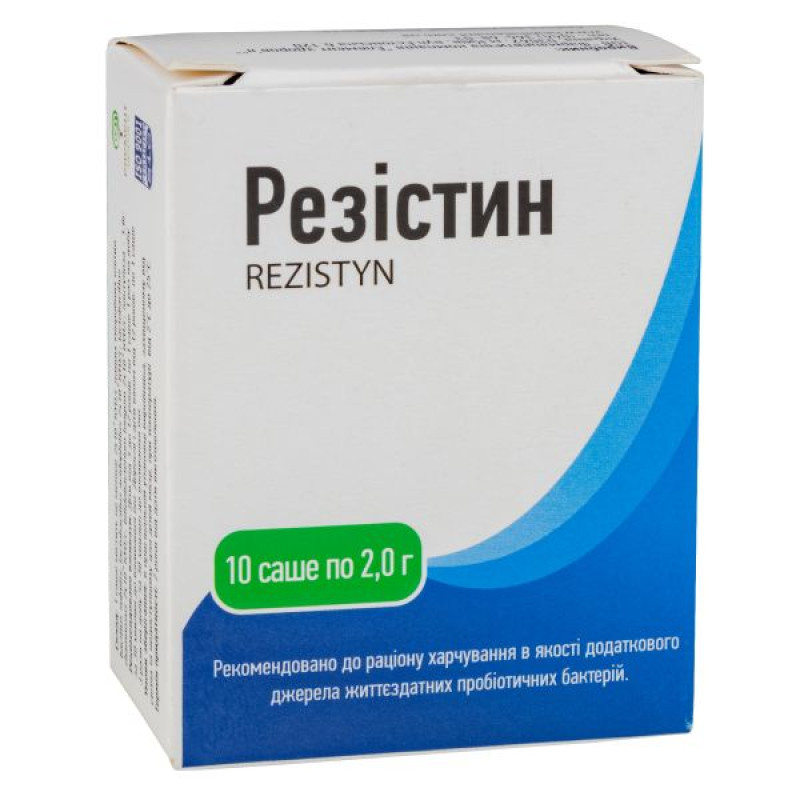
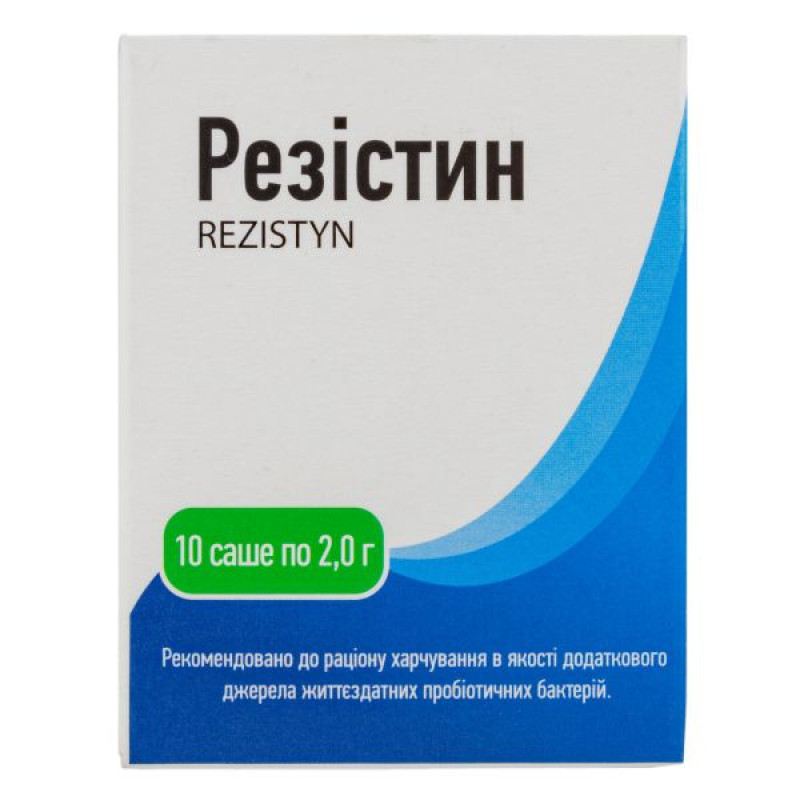
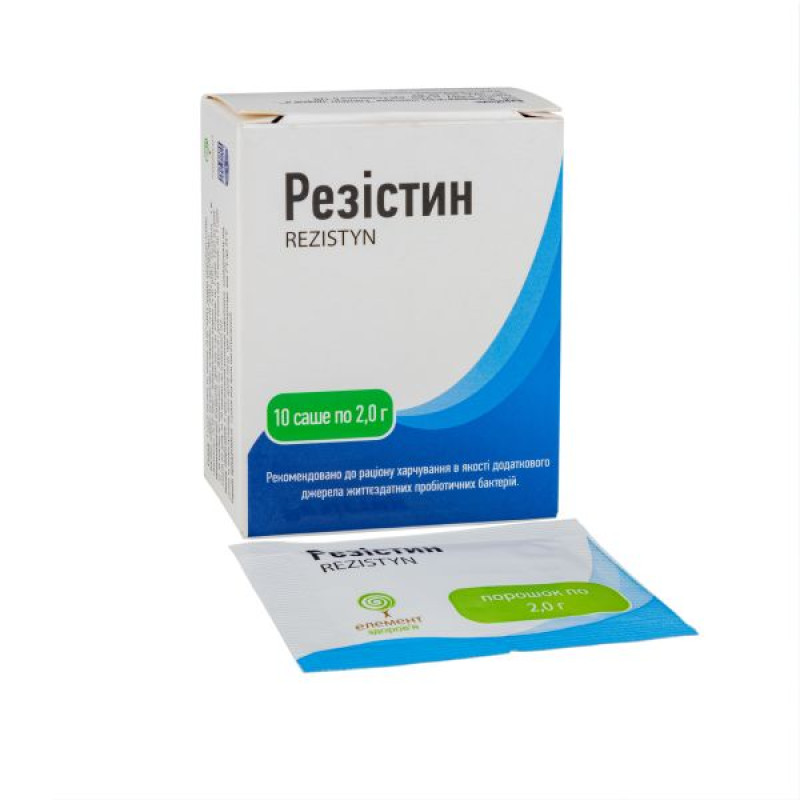
Resistin sachet 2g No. 10
Composition
1 sachet contains:
- bacillus subtilis 2x10⁹ CFU/g (2%);
- lactobacillus acidophillus 2x10⁹ CFU/g (2%);
- lactobacillus rhamnosus 2x10⁹ CFU/g (2%);
- bifidobacterium longum 2x10⁹ CFU/g (4%);
- lactulose (90%).
Properties
Live bacteria Bacillus subtilis have high antagonistic activity against pathogenic and conditionally pathogenic microorganisms (staphylococci, enterobacteria, yeast-like fungi of the genus Candida), and contribute to the normalization of the qualitative and quantitative composition of the intestinal microflora (bifidumbacterium, lactobacilli, Escherichia coli), and are also characterized by antiviral activity due to the synthesis of α-2 interferon. The antagonistic activity against pyogenic flora in Bacillus subtilis is the highest among all known probiotic bacteria.
Lactobacteria are typical representatives of the normal microflora of the human intestine.
These microorganisms are anaerobes, the final product of their metabolism is lactic acid (lactate), from which they get their name. Lactobacteria are involved in the synthesis of a number of important substances in the intestinal lumen, including vitamins. They are most sensitive to adverse environmental factors (antibiotics, pathogenic bacteria), therefore, in dysbiotic conditions, a deficiency of lactobacteria is most often observed. The strain lactobacillus rhamnosus plays a major role in the density of intercellular contacts of enterocytes and prevents the penetration of pathogenic bacteria from the lumen into the submucosal base of the intestine
Bifidobacteria are the most numerous representatives of the normal human microflora. The role of bifidobacteria is most important in childhood. In infants fed with breast milk, their number reaches 99% of the entire microflora. The most typical representatives for humans are ; bifidobacterium bifidum and ; bifidobacterium longum (infantis). The latter is considered the most useful in terms of participation in metabolic processes occurring in the human intestine, food digestion and the formation of nonspecific resistance of the body,
Lactulose in Resistin acts as a prebiotic - a nutrient medium for lacto- and bifidobacteria. It specifically accelerates the growth of lacto- and bifidobacteria specific to the human intestine and enhances their antagonistic properties against conch and other pathogenic flora. Lactulose also normalizes peristalsis and digestion in the intestine.
Method of administration and doses
Children from 3 to 12 years old: 1 sachet once a day 30 minutes before meals.
Adults and children over 12 years of age: 1 sachet 3 times a day 30 minutes before meals.
Dissolve the contents of the sachet in 30-50 ml of boiled, cooled water.
Dissolve the drug until a homogeneous suspension is formed, leave for 15-20 minutes. Drink the resulting suspension with a small amount of water 30-40 minutes before meals. The diluted drug cannot be stored.
Not a medicine. Non-GMO.
Reservation
Individual sensitivity to the product components, women during pregnancy and lactation. Do not exceed the recommended daily intake. Consult a doctor before use.
Release form
Lyophilized powder or porous mass in sachets. 10 sachets per pack, sachet weighing 2.0 g.
Expiration date
2 years from the date of manufacture.
Storage conditions
In the original packaging, protected from light and out of reach of children, at a temperature of 2 °C to 25 °C.
There are no reviews for this product.
There are no reviews for this product, be the first to leave your review.
No questions about this product, be the first and ask your question.
