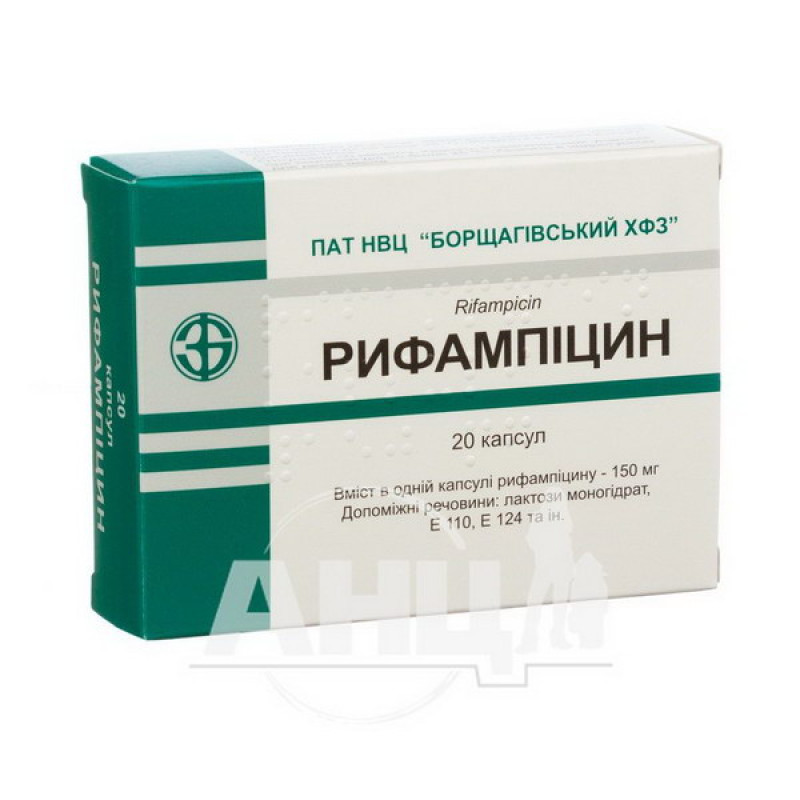
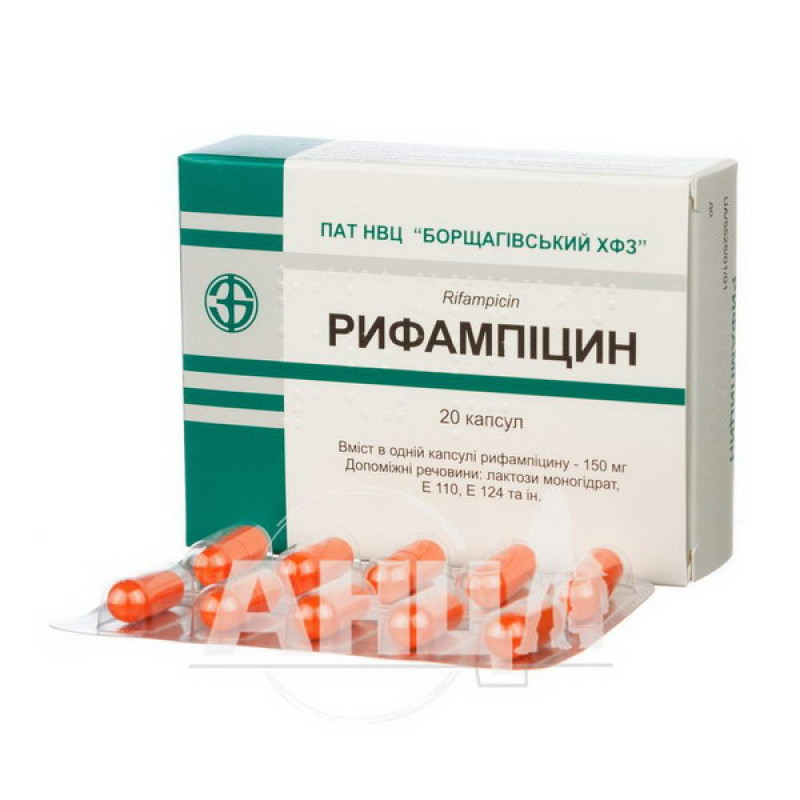
Instructions Rifampicin capsules 150 mg blister No. 20
Composition
active ingredient: rifampicin;
1 capsule contains 150 mg of rifampicin (calculated on 100% dry matter);
excipients: light magnesium carbonate, lactose monohydrate, calcium stearate.
The capsule cap and body contain the dyes sunset yellow FCF (E 110), ponso 4R (E 124) and titanium dioxide (E 171).
Dosage form
Capsules.
Main physicochemical properties: hard capsules with an orange-red cap and body, containing a powder or mass in the form of a partially or fully formed column from pale red to brown-red with white inclusions.
Pharmacotherapeutic group
Antituberculosis drugs. Antibiotics. ATX code J04A B02.
Pharmacological properties
Pharmacodynamics.
Rifampicin is a semi-synthetic antibiotic of the rifamycin group, a first-line antituberculosis drug. It has a bactericidal effect, the mechanism of which is due to the inhibition of the activity of DNA-dependent RNA polymerase by forming complexes with it, which leads to a decrease in the synthesis of RNA in microorganisms.
Rifampicin is a broad-spectrum antibiotic with the most pronounced activity against mycobacteria tuberculosis.
The drug is active against atypical mycobacteria of various species (except M. fortuitum), gram-positive cocci (staphylococci, streptococci), anthrax, clostridia. Gram-negative cocci - N. meningitidis and N. gonorrhoeae (including β-lactamase-producing) are sensitive, but quickly acquire resistance. Active against H. influenzae (including ampicillin- and chloramphenicol-resistant), H. ducreyi, B. pertussis, B. anthracis, L. monocytogenes, F. tularensis, Legionella pneumophila, Rickettsia prowazekii, Mycobacterium leprae. Rifampicin has a virucidal effect against the rabies virus, inhibits the development of rabies encephalitis.
Members of the Enterobacteriaceae family and non-fermenting Gram-negative bacteria (Pseudomonas spp., Acinetobacter spp., Stenothrophomonas spp., etc.) are insensitive. It does not affect anaerobic microorganisms and fungi.
Resistance to rifampicin develops rapidly. Cross-resistance to other anti-TB drugs (except other rifamycins) has not been identified.
Pharmacokinetics.
Rifampicin is well absorbed in the gastrointestinal tract, bioavailability when taken on an empty stomach is 95%. When taken with food, bioavailability decreases. Creates effective concentrations in sputum, saliva, nasal secretions, lungs, pleural and peritoneal exudates, kidneys, liver. Penetrates well into cells. Penetrates the blood-brain barrier, in tuberculous meningitis it is detected in the cerebrospinal fluid
in effective concentrations. Penetrates the placenta and is found in breast milk. It binds to blood plasma proteins by 60-90%, dissolves in lipids. The maximum concentration in the blood is observed 2 hours after taking on an empty stomach, 4 hours after eating. The therapeutic concentration of the drug in the body is maintained for 8-12 hours (for highly sensitive microorganisms - 24 hours). Rifampicin is able to accumulate in the lung tissue and maintain a concentration in the cavities for a long time. It is metabolized in the liver with the formation of an active metabolite. The half-life is 3-5 hours. It is excreted from the body mainly with bile and urine, in small quantities - with feces.
Indication
In complex therapy:
· tuberculosis of various localizations, tuberculous meningitis, as well as atypical mycobacteriosis;
· infectious and inflammatory diseases of a non-tuberculous nature caused by pathogens sensitive to the drug (including severe forms of staphylococcal infection, leprosy, legionellosis, brucellosis);
· asymptomatic carriers of N. meningitidis for elimination of meningococci from the nasopharynx and prevention of meningococcal meningitis.
Contraindication
Hypersensitivity to rifampicin, other rifamycins or to any of the other ingredients of the drug;
· severe liver and kidney dysfunction;
jaundice;
· recent (less than 1 year) infectious hepatitis;
· severe pulmonary and heart failure;
· simultaneous use of saquinavir/ritonavir.
Interaction with other medicinal products and other types of interactions
Rifampicin is a potent inducer of liver microsomal enzymes (cytochrome P450) and may cause potentially dangerous drug interactions. Concomitant use of rifampicin with drugs that are also metabolized by this enzyme system may accelerate the metabolism and reduce the activity of these drugs, therefore, maintaining their optimal therapeutic concentration in the blood requires changing the dosage of these drugs at the beginning of rifampicin use and after its withdrawal.
Rifampicin accelerates the metabolism of:
· antiarrhythmic drugs (e.g. disopyramide, mexiletine, quinidine, propafenone, tocainide);
beta-blockers (e.g. bisoprolol, propranolol);
· calcium channel blockers (e.g. diltiazem, nifedipine, verapamil, nimodipine, isradipine, nicardipine, nisolpidine);
· cardiac glycosides (digitoxin, digoxin);
· psychotropic drugs - antipsychotics (e.g. haloperidol, aripiprazole), tricyclic antidepressants (e.g. amitriptyline, nortriptyline), anxiolytics and hypnotics (e.g. diazepam, benzodiazepines, zopiclone, zolpidem), barbiturates;
· antithrombotic agents (vitamin K antagonists), indirect anticoagulants: it is recommended to monitor prothrombin time daily or as often as necessary to determine the required dose of anticoagulant;
antifungal drugs (e.g. terbinafine, fluconazole, itraconazole, ketoconazole, voriconazole);
· antiviral drugs (e.g. saquinavir, indinavir, efavirenz, amprenavir, nelfinavir, atazanavir, lopinavir, nevirapine);
antibacterial drugs (e.g. chloramphenicol, clarithromycin, dapsone, doxycycline, fluoroquinolones, telithromycin);
· corticosteroids (for systemic use);
· antiestrogens (e.g. tamoxifen, toremifene, gestrinone), systemic hormonal contraceptives, estrogens, progestogens; patients using oral contraceptives should be advised to use alternative, non-hormonal methods of contraception during rifampicin therapy;
thyroid hormones (e.g. levothyroxine);
· clofibrate;
· oral antidiabetic agents (sulfonylureas and their derivatives, e.g. chlorpropamide, tolbutamide, thiazolidinediones);
· immunosuppressive drugs (e.g. cyclosporine, sirolimus, tacrolimus);
· cytostatics (e.g. imatinib, erlotinib, irinotecan);
· losartan;
· methadone, narcotic analgesics;
· praziquantel;
· quinine;
· riluzole;
· selective 5-HT3 receptor antagonists (e.g. ondansetron);
· statins metabolized by CYP 3A4 (e.g. simvastatin);
· theophylline;
Diuretics (e.g. eplerenone).
Other interactions.
When rifampicin is used concomitantly with:
· atovaquone - the concentration of atovaquone decreases and the concentration of rifampicin in the blood serum increases;
· ketoconazole - serum concentrations of both drugs are reduced;
· enalapril - the blood concentration of enalaprilat, the active metabolite of enalapril, decreases. Depending on the clinical condition, the dose of enalapril may be adjusted;
· antacids - possible reduction in the absorption of rifampicin. Rifampicin should be taken at least 1 hour before taking antacids;
probenecid and co-trimoxazole - increased blood levels of rifampicin;
· saquinavir/ritonavir - the risk of hepatotoxicity increases. This combination is contraindicated;
· sulfasalazine - the plasma concentration of sulfapyridine decreases, which may be the result of a disturbance of the intestinal bacterial flora responsible for the conversion of sulfasalazine into sulfapyridine and mesalamine;
· halothane, isoniazid - the risk of hepatotoxicity increases. The simultaneous use of rifampicin and halothane should be avoided. Patients receiving rifampicin and isoniazid should have their liver function carefully monitored;
Pyrazinamide - severe liver injury, including fatal outcomes, has been reported in patients receiving rifampicin and pyrazinamide daily for 2 months; this combination should only be used with close monitoring and if the potential benefit outweighs the risk of hepatotoxicity and fatal outcome.
· clozapine, flecainide - increased toxic effect on the bone marrow;
· para-aminosalicylic acid preparations containing bentonite (aluminum hydrosilicate) - to ensure satisfactory concentrations of these drugs in the blood, the interval between their administration should be at least 4 hours;
· ciprofloxacin, clarithromycin - possible increase in rifampicin concentration in the blood; cases of lupus-like syndrome have been reported with simultaneous administration with rifampicin.
Laboratory and diagnostic tests.
During treatment with rifampicin, the bromsulfalein test should not be used, since rifampicin alters the excretion parameters of bromsulfalein, which may lead to erroneous perceptions of a violation of this indicator. Microbiological methods for determining the concentration of folic acid and vitamin B12 in serum should also not be used.
Cross-reactivity and false-positive results are possible with KIMS-based, quantitative immunoassay screening tests for opiate use; the use of control tests (e.g., gas chromatography/mass spectrometry) is recommended.
Application features
The use of rifampicin requires careful monitoring by a doctor.
In case of relapse, it is not recommended to prescribe the drug without prior bacteriological tests.
Rifampicin monotherapy for tuberculosis often leads to the development of resistant forms of mycobacteria. Therefore, rifampicin should be taken together with isoniazid, ethambutol, pyrazinamide, and other antituberculosis drugs.
Before starting therapy, the level of liver enzymes, bilirubin, creatinine in the blood, and a complete blood count, including the number of platelets, should be determined; with prolonged use, periodic (preferably monthly) blood tests and liver and kidney function are necessary.
Some patients may develop hyperbilirubinemia during the first days of treatment as a result of competition between rifampicin and bilirubin for hepatic excretion.
In the event of the development of a flu-like syndrome, uncomplicated by thrombocytopenia, hemolytic anemia, bronchospasm, dyspnea, shock, and renal failure, in patients treated with the drug according to an intermittent regimen, the possibility of switching to daily use should be considered. In these cases, the dose should be increased gradually: on the first day, 150 mg should be prescribed, reaching the required therapeutic dose in 3-4 days.
Rifampicin should be used with extreme caution, only when clearly needed, and under close medical supervision in patients with liver disease. Severe hepatotoxicity, sometimes fatal, has been reported in patients with impaired liver function or in patients with normal liver function who have been treated concomitantly with other hepatotoxic drugs. In these patients, low doses of rifampicin and close monitoring of liver function are recommended before initiation of treatment, weekly for the first two weeks, and then every two weeks. If signs of hepatocellular injury appear, rifampicin should be discontinued immediately. Rifampicin therapy should also be discontinued if clinically significant changes in liver function occur.
When rifampicin is re-administered after liver function has normalized, liver function should be monitored daily.
Moderate liver dysfunction is usually transient and does not require discontinuation of the drug. It is possible to prescribe allochol, methionine, pyridoxine, vitamin B12.
Particular caution is recommended when administering rifampicin and isoniazid concomitantly to patients with impaired liver function, elderly patients, and patients suffering from malnutrition.
The risk of hepatotoxicity increases when alcohol is consumed during treatment and when used by patients with a history of alcoholism.
If the treatment regimen is violated, if the drug is intentionally or accidentally discontinued, or if the treatment regimen is intermittent (less than 2-3 times a week), the risk of developing serious hypersensitivity reactions and other adverse reactions (anaphylactic shock, flu-like syndrome, hemolytic anemia, acute renal failure, severe skin and digestive system reactions) increases. Patients should be warned about the consequences of discontinuation of treatment.
When resuming treatment, the possibility of switching to daily use of the drug should be considered, starting with a low dose (150 mg/day), gradually increasing it to the necessary therapeutic dose. During this transitional period, the functions of the renal and hematopoietic systems should be carefully monitored. The drug should be discontinued immediately at the first signs of renal failure, thrombocytopenic purpura, hemolytic anemia. Further use of the drug is contraindicated.
Treatment with antibacterial drugs, especially in severe diseases in the elderly, as well as in debilitated patients and children, can lead to the occurrence of antibiotic-associated diarrhea, colitis, including pseudomembranous colitis. Therefore, if diarrhea occurs during or after treatment with rifampicin, these diagnoses, including pseudomembranous colitis, must be excluded. In the absence of appropriate treatment, toxic megacolon, peritonitis, and shock may develop.
Prolonged use of antibacterial drugs can lead to excessive growth of insensitive microorganisms, fungi and the development of superinfection, which requires appropriate measures.
During treatment with rifampicin, women of reproductive age should use reliable methods of contraception, since taking rifampicin reduces the reliability of hormonal contraceptives (it is recommended to additionally use non-hormonal contraceptives).
In gonorrhea, rifampicin, unlike penicillin, does not mask syphilis in the case of mixed infection, and serum tests for syphilis remain positive.
Rifampicin has enzyme inducer properties (including delta-aminolevulinic acid synthetase), which can lead to increased metabolism of endogenous substrates, including adrenal hormones, thyroid hormones, and vitamin D. There have been isolated reports of exacerbations of porphyria associated with rifampicin therapy.
In some cases, there was a decrease in circulating vitamin D metabolites, accompanied by a decrease in calcium and phosphate, as well as an increase in serum parathyroid hormone levels.
During treatment with rifampicin, the skin, sputum, sweat, feces, tears, and urine acquire an orange-red color. Permanent staining of soft contact lenses is possible.
During treatment, you should not use:
- a test with bromsulfalein loading, since rifampicin competitively disrupts its excretion;
-microbiological methods for determining the concentration of folic acid and vitamin B12 in blood serum;
The drug contains the excipient lactose monohydrate, therefore patients with rare hereditary forms of galactose intolerance, lactase deficiency, or glucose-galactose malabsorption syndrome should not use this drug.
Use during pregnancy or breastfeeding
Use during pregnancy is possible in exceptional cases for vital indications, if the expected benefit to the woman outweighs the potential risk to the fetus. Taking rifampicin in the last weeks of pregnancy increases the risk of bleeding in newborns and mothers in the postpartum period.
Rifampicin passes into breast milk. If necessary, breastfeeding should be discontinued.
Ability to influence reaction speed when driving vehicles or other mechanisms
During treatment with rifampicin, you should refrain from driving or operating other mechanisms, given that during treatment, impaired coordination of movements, decreased concentration of attention, and visual impairment may occur.
Method of administration and doses
Rifampicin should be taken orally 30 minutes before or 2 hours after meals, with sufficient water.
Tuberculosis:
Adults should be prescribed at a dose of 8-12 mg/kg of body weight per day. Patients with a body weight of less than 50 kg - 450 mg/day, 50 kg and more - 600 mg/day;
children aged 6 to 12 years - 10-20 mg/kg of body weight per day; the maximum daily dose should not exceed 600 mg.
The duration of anti-tuberculosis therapy is individual, determined by the therapeutic effect and can be 1 year or more. To avoid the development of mycobacterial resistance to rifampicin, the drug should be prescribed, as a rule, together with other first- and second-line anti-tuberculosis drugs in their usual doses.
Infectious and inflammatory diseases of a non-tuberculous nature caused by pathogens sensitive to the drug - brucellosis, legionellosis, severe forms of staphylococcal infection (together with another appropriate antibiotic to prevent the emergence of resistant strains):
Adults should be prescribed 900-1200 mg per day in 2-3 doses, the maximum daily dose is 1200 mg. After the symptoms of the disease disappear, the drug should be taken for another 2-3 days.
Leprosy: the drug (in combination with immunostimulating agents) is administered orally at a dose of 600 mg per day in 1-2 doses for 3-6 months (repeated courses with an interval of 1 month are possible). According to another scheme (against the background of combined anti-leprosy therapy), the drug is administered in a daily dose of 450 mg, divided into 3 doses for 2-3 weeks with an interval of 2-3 months for 1-2 years.
N. meningitidis carriage: Rifampicin should be administered for 4 days. Daily dose for adults is 600 mg; for children, 10-12 mg/kg body weight.
Hepatic impairment: The daily dose should not exceed 8 mg/kg for patients with hepatic impairment.
Use in elderly patients: In elderly patients, renal excretion of rifampicin decreases in proportion to the decrease in physiological renal function, and hepatic excretion of the drug increases compensatorily. Caution should be exercised when prescribing rifampicin to patients of this age, especially if there are signs of impaired liver function.
Children
The drug in this dosage form should not be used in children under 6 years of age.
Overdose
Symptoms: nausea, vomiting, abdominal pain, headache, increased fatigue, increasing drowsiness, allergic reactions, increased body temperature, shortness of breath, fever, leukopenia, thrombocytopenia, acute hemolytic anemia, renal failure, skin reactions, itching, which may occur within a short time after taking the drug.
Transient increase in bilirubin, hepatic transaminases, liver enlargement, jaundice, loss of consciousness in severe liver dysfunction are possible. A characteristic reddish tint of the skin, urine, sweat, saliva, tears and feces, the intensity of which is proportional to the amount of the drug taken, is characteristic.
There have been reports of facial or periorbital edema, usually in children.
Hypotension, sinus tachycardia, ventricular arrhythmia, seizures, and cardiac arrest have been reported in some fatal cases.
Treatment: drug withdrawal, gastric lavage during the first 2-3 hours, administration of activated charcoal, symptomatic therapy. In severe cases - forced diuresis, possibly - hemodialysis, intensive supportive therapy and monitoring of hematological, renal, and hepatic functions until the patient's condition stabilizes. There is no specific antidote.
Adverse reactions
Hepatobiliary system: Transient increases in hepatic transaminases, alkaline phosphatase, and plasma bilirubin, jaundice with evidence of hepatocellular injury, hepatitis, and potentially fatal severe hepatotoxicity (e.g., shock-like syndrome), usually in patients with impaired liver function or in patients with normal liver function who have been concomitantly treated with other hepatotoxic drugs. Baseline and periodic liver function tests are recommended for all patients receiving long-term rifampicin therapy.
Hematopoietic system. Transient leukopenia, neutropenia, thrombocytopenia with/without purpura (more often with intermittent high-dose therapy or after resumption of interrupted therapy, with combined treatment with ethambutol), eosinophilia, decreased hemoglobin, hemolytic anemia, agranulocytosis, red cell aplasia, methemoglobinemia, hemolysis, disseminated intravascular coagulation syndrome, hemorrhage. At the first manifestations of purpura, rifampicin therapy should be discontinued, since there have been reports of cerebral hemorrhages (including cerebral hemorrhages) and fatal outcomes with continued or resumed rifampicin therapy after the development of purpura.
Nervous system: Headache, dizziness, paresthesia, weakness, asthenia, confusion, drowsiness, increased fatigue, ataxia, changes in behavior, decreased concentration, impaired coordination of movements, disorientation, myopathy, muscle weakness, pain in the extremities, generalized numbness.
Mental disorders. Psychoses.
Immune system. If the drug regimen is violated or treatment is resumed after a temporary break, with an intermittent treatment regimen, a flu-like syndrome is possible (petechiae, myalgia, arthralgia, episodes of fever, chills, nausea, vomiting, feeling of malaise).
Dyspnea, bronchospasm, anaphylactic reactions, including anaphylactic shock, other hypersensitivity reactions, including pruritus, urticaria, angioedema, skin flushing, rash (including exanthema), pemphigoid reaction, exfoliative dermatitis, erythema multiforme, Stevens-Johnson syndrome, toxic epidermal necrolysis, vasculitis (including leukocytoclastic), stomatitis, glossitis, conjunctivitis have been reported.
Urinary system. Renal dysfunction (transient increases in blood urea nitrogen, hyperuricemia). Hemoglobinuria, hematuria, interstitial nephritis, glomerulonephritis, acute tubular necrosis, renal failure, including acute renal failure. These reactions may be manifestations of hypersensitivity reactions, usually occur with irregular administration of the drug or when treatment is resumed after a break, with an intermittent treatment regimen, and are usually reversible upon discontinuation of rifampicin therapy and appropriate treatment.
Others. Decrease in blood pressure (associated with hypersensitivity reactions), hot flashes, swelling of the face and extremities, adrenal insufficiency in patients with impaired adrenal function, menstrual disorders (breakthrough bleeding, spotting, amenorrhea, lengthening of the menstrual cycle), visual impairment, orange-red discoloration of the skin, urine, feces, saliva, sputum, sweat, mucus, induction of porphyria, exacerbation of gout, lacrimation, herpes, wheezing.
Expiration date
2 years.
Storage conditions
In the original packaging at a temperature not exceeding 25 °C.
Keep out of reach of children.
Packaging
10 capsules in a blister, 2 blisters in a pack; 90 capsules in a container, 1 container in a pack; 1000 capsules in a container.
Vacation category
According to the recipe.
Producer
Public Joint Stock Company "Research and Production Center "Borshchagov Chemical and Pharmaceutical Plant".
Location of the manufacturer and its business address
Ukraine, 03134, Kyiv, Myru St., 17.