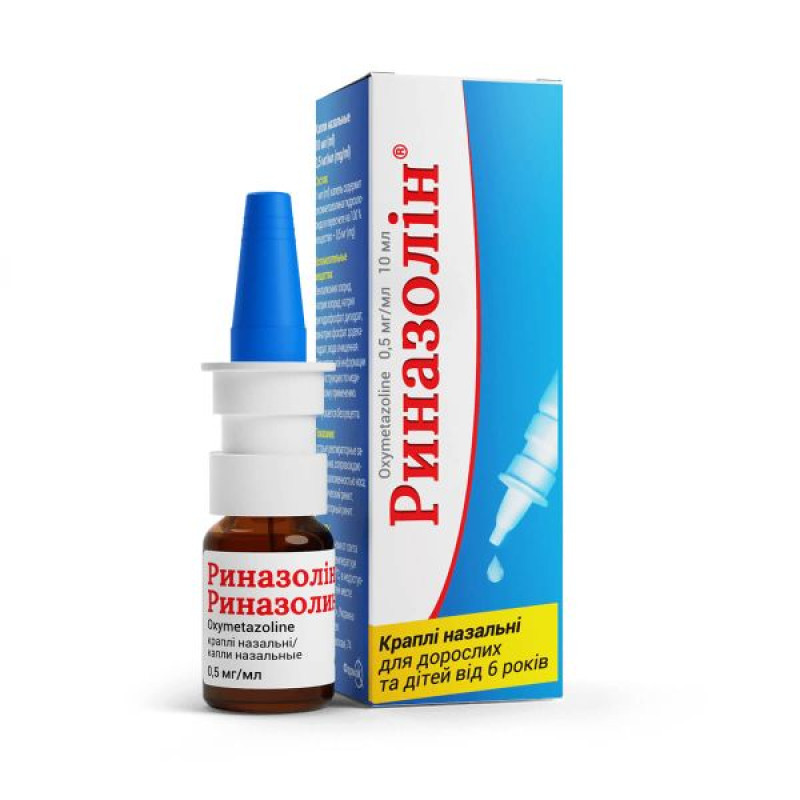
Instructions Rinazolin nasal drops 0.5 mg/ml glass bottle 10 ml
Composition
active ingredient: oxymetazoline;
1 ml of drops contains oxymetazoline hydrochloride in terms of 100% substance 0.25 mg or 0.5 mg;
Excipients: benzalkonium chloride, sodium chloride, sodium dihydrogen phosphate dihydrate, disodium phosphate dodecahydrate, purified water.
Dosage form
Nasal drops.
Main physicochemical properties: clear colorless liquid.
Pharmacotherapeutic group
Anti-edematous and other drugs for local use in diseases of the nasal cavity. Sympathomimetics, simple drugs. Oxymetazoline.
ATX code R01A A05.
Pharmacological properties
Pharmacodynamics.
Rinazolin belongs to the group of local vasoconstrictors. Oxymetazoline has a sympathomimetic and vasoconstrictor effect, eliminating swelling of the nasal mucosa. Narrows the vessels at the site of application, reduces swelling of the nasal mucosa and upper respiratory tract, reduces nasal discharge. Restores nasal breathing. Elimination of swelling of the nasal mucosa contributes to the restoration of aeration of the paranasal sinuses, middle ear cavity, which prevents the development of bacterial complications.
Oxymetazoline has antiviral, anti-inflammatory, immunomodulatory and antioxidant effects. Thanks to this combined mechanism of action, clinical studies have proven a faster and more effective elimination of symptoms of acute rhinitis (nasal congestion, rhinorrhea, sneezing, malaise).
Pharmacokinetics.
When applied topically to the nose in therapeutic concentrations, it does not irritate the nasal mucosa or cause hyperemia. The elimination half-life is approximately 35 hours after administration. 2.1% of the drug is excreted by the kidneys, approximately 1.1% in the feces.
The duration of action of the drug is up to 12 hours.
Indication
- Acute respiratory diseases accompanied by nasal congestion.
- Allergic rhinitis.
- Vasomotor rhinitis.
- To restore drainage and nasal breathing in diseases of the paranasal sinuses of the nasal cavity, eustachitis.
- To eliminate swelling before diagnostic manipulations in the nasal passages.
Contraindication
Hypersensitivity to the components of the drug.
Atrophic rhinitis.
Do not use after transsphenoidal hypophysectomy or other surgical procedures involving exposure of the meninges.
When using monoamine oxidase inhibitors (MAOIs) and within 2 weeks after stopping treatment with MAO inhibitors, as well as other drugs that contribute to an increase in blood pressure.
With increased intraocular pressure, especially with angle-closure glaucoma.
In severe forms of cardiovascular diseases (e.g. ischemic heart disease, arterial hypertension).
Pheochromocytoma.
Metabolic disorders (hyperthyroidism, diabetes mellitus).
Prostatic hyperplasia.
Porphyria.
Interaction with other medicinal products and other types of interactions
Concomitant use of oxymetazoline with MAO inhibitors of the tranylcypromine type, tricyclic antidepressants, and antihypertensives may increase blood pressure. Therefore, these drugs should not be used together.
Application features
Long-term use and overdose of the drug should be avoided. Long-term use of a nasal decongestant may lead to a weakening of the drug's effect. Abuse of this drug may cause mucosal atrophy and reactive hyperemia with rhinitis medicamentosa. Doses higher than recommended should be used only under medical supervision.
The presence of benzalkonium chloride in the composition of the drug in an amount of 10 mcg in a single dose may cause bronchospasm.
Use during pregnancy or breastfeeding
Pregnancy.
During pregnancy and breastfeeding, the drug is used with extreme caution. The recommended dosage should not be exceeded.
Breast-feeding.
Data on the penetration of oxymetazoline into breast milk are unknown. The drug should be used during breastfeeding only if the benefit-risk ratio is carefully assessed. During breastfeeding, the recommended dosage should not be exceeded, as an overdose may reduce the amount of breast milk in the mother.
Ability to influence reaction speed when driving vehicles or other mechanisms
After prolonged use of the drug in doses exceeding the recommended ones, a general effect on the cardiovascular system cannot be excluded. In such cases, the ability to drive may be impaired.
Method of administration and doses
Immediately before using the drug, the bottle should be held in the palm of your hand to warm it to body temperature. Before administering the drug, it is necessary to thoroughly clean the nose. Unscrew the cap, remove it and, slightly pressing on the bottle body, drip 1–2 drops of the solution into the nose.
Rinazolin 0.025%, 0.05%, drops, are prescribed for use in the nose.
Adults and children aged 6 and over.
Children aged 1 to 6 years.
Apply the drug Rinazolin 0.025%, 1–2 drops in each nasal passage 2–3 times a day.
Rinazolin 0.025%, 0.05% is used for no longer than 5–7 days. The drug can be used again only after a few days.
Children. Rinazolin 0.025% should not be used in children under 1 year of age; Rinazolin 0.05% should not be used in children under 6 years of age.
Overdose
After a significant overdose or accidental ingestion, the following symptoms may occur: mydriasis, nausea, vomiting, cyanosis, fever, cramps, tachycardia, palpitations, arrhythmia, cardiovascular failure, cardiac arrest, increased sweating, agitation, convulsions, arterial hypertension, pulmonary edema, respiratory disorders, pallor, miosis, hyposmia, mental disorders.
In addition, central nervous system depression may occur, manifested by drowsiness, decreased body temperature, bradycardia, hypotension, apnea, and possible development of coma.
Therapeutic measures in case of overdose: gastric lavage, administration of activated charcoal, ventilation of the lungs. Phentolamine is used to reduce blood pressure. Vasopressors should not be taken. If necessary, anticonvulsant therapy is indicated.
Adverse reactions
Adverse reactions are classified by frequency of occurrence into the following categories: very common (≥ 10%), common (≥ 1% and < 10%), uncommon (≥ 0.1% and < 1%), rare (≥ 0.01% and < 0.1%), very rare (< 0.01%).
From the nervous system.
Very rare: restlessness, insomnia, increased fatigue (drowsiness, sedation), headache, hallucinations (especially in children).
From the cardiovascular system.
Rare: palpitations, tachycardia, hypertension.
Very rare: arrhythmias.
On the part of the respiratory system.
Common: nasal discomfort (e.g. burning) or dryness of the nasal mucosa, sneezing.
Uncommon: after the effect of using Rinazolin wears off, there is a feeling of severe nasal congestion, nosebleeds.
Very rare: Apnoea in infants and newborns.
On the part of the musculoskeletal system.
Very rare: convulsions (especially in children).
From the immune system.
Uncommon: hypersensitivity reactions (angioedema, rash, itching).
Expiration date
3 years.
Do not use the drug after the expiration date indicated on the package.
Storage conditions
Store in a place protected from light at a temperature not exceeding 25 ºС.
Keep out of reach of children.
Packaging
10 ml in a polyethylene bottle. Or 10 ml in a glass bottle. 1 bottle in a pack.
Vacation category
Without a prescription.
Producer
JSC "Farmak".
Location of the manufacturer and its business address.
Ukraine, 04080, Kyiv, Kyrylivska St., 74.