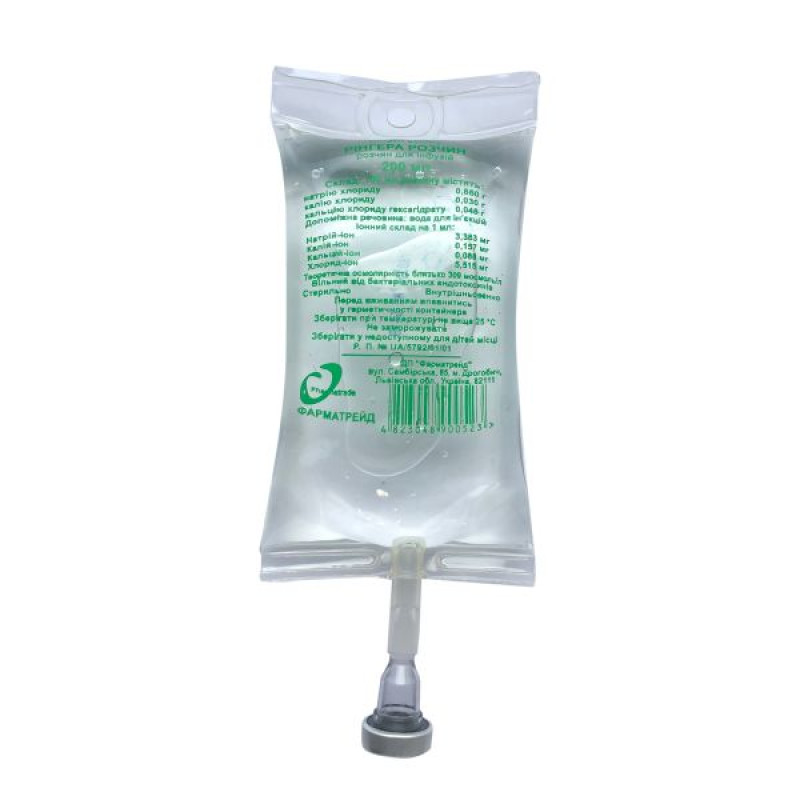
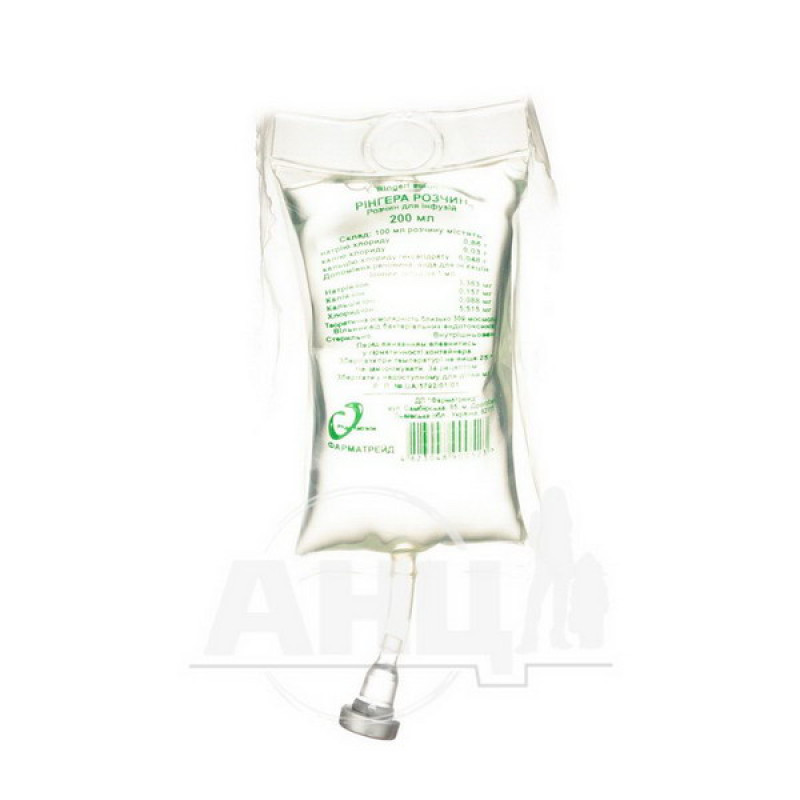
Ringer's solution for infusion is used for hypovolemia and extracellular dehydration due to prolonged vomiting, diarrhea, significant burns, frostbite, peritonitis, severe infectious diseases, shock, collapse; during surgery and in the postoperative period. It is used to dilute concentrated electrolyte solutions.
Composition
100 ml of solution contain (active ingredients):
sodium chloride - 0.86 g; potassium chloride - 0.03 g; calcium chloride hexahydrate - 0.048 g
The excipient is water for injection.
Molar composition, mmol per 1000 ml of the drug:
Na + - 147.15 mmol; K + - 4.0 mmol; Ca ++ - 2.2 mmol; Cl - - 155.6 mmol.
Contraindication
extracellular hyperhydration or hypervolemia; hypertensive dehydration; hypernatremia; hyperkalemia; hypercalcemia; hyperchloremia; hypercoagulation; thrombophlebitis; metabolic alkalosis; severe renal failure (with oliguria/anuria); decompensated heart failure; severe arterial hypertension; generalized edema (including pulmonary edema, brain edema) and ascites caused by liver cirrhosis; simultaneous use with digitalis glycosides.
Method of application
The mixture is intended for intravenous use only.
The dose is prescribed by a doctor and depends on the patient's age, body weight, clinical condition and laboratory parameters.
The usual dose for an adult is up to 1-2 liters per day; the maximum dose depends on the state of water and electrolyte balance, cardiovascular system and kidneys.
The infusion rate for adults is 60-80 drops/minute or jet.
The solution should be prescribed based on the estimated maintenance or replacement fluid requirements for each patient.
Parenteral products should be inspected visually for particulate matter and discoloration prior to administration.
Application features
Pregnant women
Studies on the use of this solution in pregnant women have not been conducted.
It is not known whether this drug is excreted in human milk. Because most drugs are excreted in human milk, caution should be exercised when Ringer's solution is administered to a nursing mother.
Children
Studies on the use of this solution in children have not been conducted.
Drivers
Data are missing due to the use of the drug exclusively in a hospital setting.
Overdose
Administering too much solution may lead to fluid and electrolyte imbalance (hypervolemia).
Overdose or too rapid administration of water and sodium may lead to edema, especially in cases of impaired renal sodium excretion.
Treatment of hypervolemia. At the first symptoms of hypervolemia, it is necessary to stop the administration of the drug and apply hemodialysis.
Excessive potassium intake can lead to hyperkalemia, especially in patients with renal insufficiency. Symptoms include paresthesias of the extremities, muscle weakness, paralysis, cardiac arrhythmias, heart block, cardiac arrest, and confusion.
Treatment of hyperkalemia. At the first symptoms, it is necessary to stop the administration of the drug and start the administration of calcium, insulin (with glucose), sodium bicarbonate. Effective use of ion exchange resins or hemodialysis.
Excessive administration of calcium salts can lead to hypercalcemia. Symptoms of hypercalcemia may include loss of appetite, nausea, vomiting, constipation, abdominal pain, muscle weakness, mental disorders, polydipsia, polyuria, nephrocalcinosis, kidney stones, and in severe cases, cardiac arrhythmias and coma. If calcium salts are administered too rapidly, many of the symptoms of hypercalcemia may occur, as well as flushing and peripheral vasodilation.
Treatment of hypercalcemia. At the first symptoms of hypercalcemia, the drug should be discontinued. Mild asymptomatic hypercalcemia usually resolves after discontinuation of calcium and other drugs that contribute to its development, such as vitamin D. In case of serious manifestations, urgent treatment aimed at increasing diuresis is necessary (for example, the use of loop diuretics, hemodialysis, calcitonin, bisphosphonates, trisodium edetate).
Excessive administration of chlorides can lead to loss of bicarbonate with the effect of acidosis.
Treatment: Appropriate symptomatic and supportive measures should be taken as necessary.
Side effects
Electrolyte metabolism disorders (potassium, calcium, sodium, chlorides), chloride acidosis, and hyperhydration are possible.
In case of adverse reactions, the administration of the solution should be stopped, the patient's condition should be assessed and appropriate assistance should be provided.
The following adverse reactions were frequently observed when using this solution:
hyperhydration, heart failure in patients with cardiac disorders, pulmonary edema; electrolyte disturbances.
Interaction
Other drugs can be added to this preparation only if they are soluble and stable in it, and also have a similar pH.
Calcium salts are known to be incompatible with a wide range of medicinal products. They may form complexes that result in precipitation. The following is a list of medicinal products known to be incompatible with Ringer's solution and should not be mixed (this list is not exhaustive):
amphotericin B; cortisone; erythromycin lactobionate; etamivan; ethyl alcohol; sodium thiopental; disodium edetate.
Store at a temperature not exceeding 25 °C, out of the reach of children. Do not freeze.
Shelf life - 2 years.