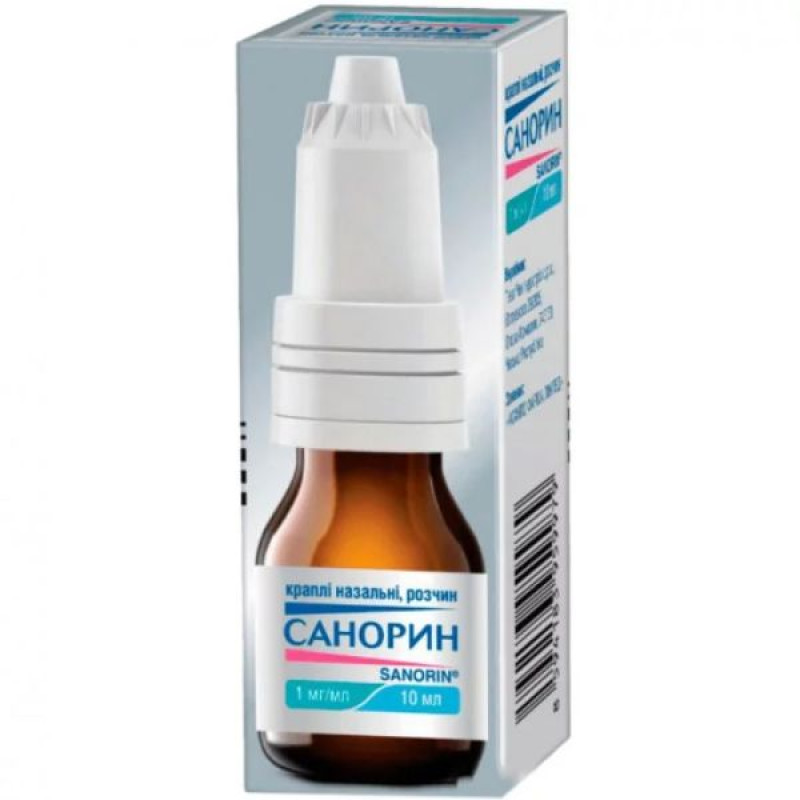
Instructions for Sanorin nasal drops 1 mg/ml bottle 10 ml
Composition
active ingredient: naphazoline nitrate;
1 ml of solution contains naphazoline nitrate 1 mg;
excipients: boric acid, ethylenediamine, methylparaben (E 218), purified water.
Dosage form
Nasal drops, solution.
Main physicochemical properties: transparent, colorless, odorless solution.
Pharmacotherapeutic group
Anti-edematous and other drugs for local use in diseases of the nasal cavity. Sympathomimetics. ATX code R01A A08.
Pharmacological properties
Pharmacodynamics
Naphazoline is a drug that stimulates the sympathetic nervous system and acts on -adrenoreceptors, has a minimal effect on β-adrenoreceptors. Due to the vasoconstrictor effect, edema, hyperemia, exudation are reduced, which facilitates nasal breathing in rhinitis. Naphazoline helps to open and expand the outlet ducts of the paranasal sinuses and Eustachian tubes, which improves the outflow of secretions and prevents the deposition of bacteria.
The therapeutic effect of intranasal administration occurs within 5 minutes and lasts for 4–6 hours.
Pharmacokinetics
When applied topically, naphazoline is completely absorbed.
Indication
Acute rhinitis. As an adjunct in inflammation of the paranasal sinuses and middle ear. To reduce swelling of the mucous membrane during diagnostic procedures.
Contraindication
Hypersensitivity to the active substance or to any component of the drug. Dry inflammation of the nasal mucosa. Do not use in children under 15 years of age.
Interaction with other medicinal products and other types of interactions
The use of Sanorin simultaneously with monoamine oxidase inhibitors (MAOIs), tricyclic antidepressants, maprotiline or within a few days after their withdrawal may cause an increase in blood pressure (even several days after use).
Application features
The drug should be used with great caution in severe diseases of the cardiovascular system (arterial hypertension, ischemic heart disease), diabetes mellitus, hyperthyroidism, pheochromocytoma, concomitant use of MAO inhibitors or other drugs that may have a hypertensive effect.
Caution is required during general anesthesia with anesthetics that increase myocardial sensitivity to sympathomimetics (e.g., halothane), in bronchial asthma, and during pregnancy and breastfeeding.
When using high doses of the drug, the development of such side effects from the cardiovascular and nervous systems is possible, such as palpitations, arterial hypertension, arrhythmia, headache, dizziness, drowsiness or insomnia.
It is important to avoid long-term use and overdose, especially in children. Long-term use of medications intended to relieve nasal congestion can lead to nasal congestion and subsequent atrophy of the nasal mucosa.
This medicine contains methylparaben which may cause allergic reactions (possibly delayed).
Ability to influence reaction speed when driving vehicles or other mechanisms
The use of the drug Sanorin in recommended doses has no or little effect on the ability to drive vehicles or use machines.
Use during pregnancy or breastfeeding
There is no data on the ability of naphazoline to penetrate the placental barrier or into breast milk. Therefore, before prescribing the drug to women during pregnancy or breastfeeding, all possible risks and benefits of treatment should be carefully considered and the drug should be prescribed only if absolutely necessary.
Method of administration and doses
Adults and children over 15 years of age should instill 1–3 drops into each nasal passage 3 times a day with an interval of at least 4 hours.
It is not recommended for use in adults for longer than 5 days.
If nasal breathing becomes easier, use can be stopped earlier.
Sanorin can be re-applied only after a few days.
For diagnostic purposes during nasal endoscopy (e.g., for the diagnosis and treatment of nasal polyps), instill 3–4 drops into each nasal passage after cleaning the nose.
The drug should be instilled into each nasal passage, tilting the head slightly back. When instilling into the left nasal passage, the head should be slightly tilted to the left, and when instilling into the right nasal passage, the head should be tilted to the right.
Children
Apply to children over 15 years of age.
Overdose
Overdose or accidental ingestion of the drug may cause systemic side effects: nervousness, increased sweating, headache, tremor, tachycardia, palpitations, arterial hypertension. Cyanosis, nausea, fever, cramps, cardiac arrest, pulmonary edema, respiratory and mental disorders, pallor of the skin, heart attack may occur.
The depressing effect on the central nervous system is manifested by symptoms such as decreased body temperature; bradycardia; increased sweating; drowsiness; shock similar to hypotensive; apnea; coma.
Treatment is symptomatic.
Adverse reactions
When used in recommended doses, Sanorin is usually well tolerated. In patients with hypersensitivity, the drug may occasionally cause burning and dryness of the nasal mucosa. In some cases, a feeling of severe nasal congestion may occur.
Only in rare cases does a systemic side effect occur (most often with overdose):
On the part of the immune system: allergic reactions, including angioedema, burning sensation.
From the nervous system: nervousness, headache, tremor.
From the side of the cardiac system: tachycardia, feeling of palpitations.
From the vascular system: arterial hypertension.
Skin and subcutaneous tissue disorders: increased sweating.
Prolonged (more than 5 days for adults and more than 3 days for children) or frequent use of the drug may lead to the development of addiction - sanorinism, which is accompanied by intense swelling of the nasal mucosa, which occurs after a relatively short period of time after use. Long-term use of the drug may lead to damage to the mucosal epithelium, inhibition of the activity of the epithelial cilia and cause irreversible damage to the mucosa and the development of dry rhinitis.
Expiration date
4 years.
After first opening, store the drug for no more than 28 days at a temperature of 25 °C.
Storage conditions
Store in the original packaging at a temperature not exceeding 25 °C, protected from light and out of the reach of children. Do not freeze.
Packaging
10 ml of solution in a bottle; 1 bottle with a dropper cap in a box.
Vacation category
Without a prescription.
Producer
Teva Czech Industries s.r.o.
Location of the manufacturer and its business address
Ostravska 29/305, Opava-Komarov, 747 70, Czech Republic.