Pharmacological properties
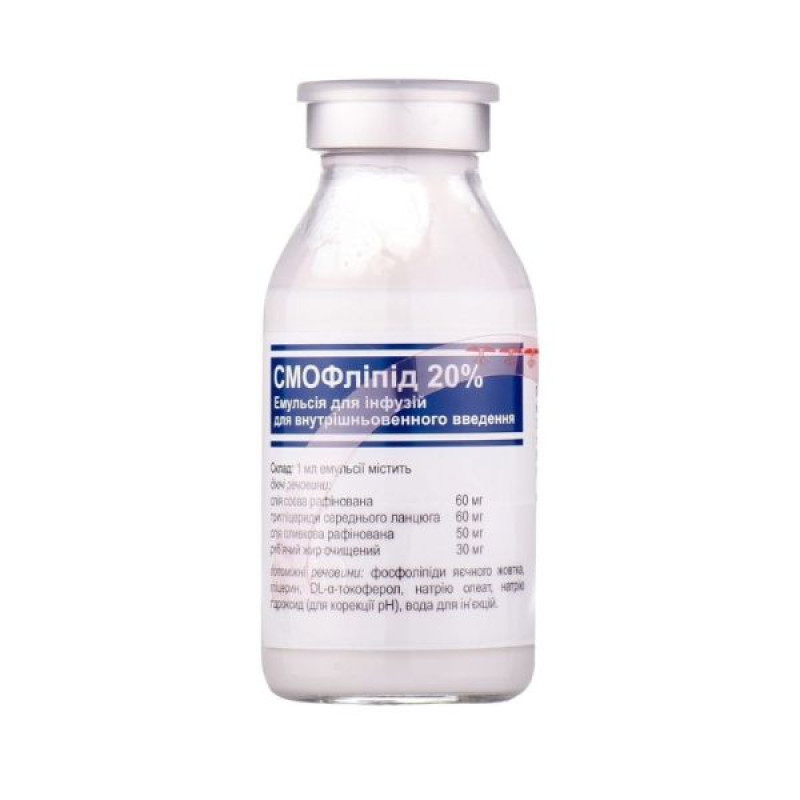
Pharmacodynamics. The fat emulsion particles have a size and biological properties similar to endogenous chylomicrons. Smoflipid 20% is a source of energy. Soybean oil is characterized by a high content of essential fatty acids. Omega-6 fatty acids and linoleic acid make up the largest share (55-60%). Alpha-linoleic acid and omega-3 fatty acids make up almost 8%. This part of Smoflipid 20% provides the necessary amount of essential fatty acids, which are rapidly oxidized and provide the body with energy. Olive oil provides mainly energy in the form of monounsaturated fatty acids, which are less susceptible to peroxidation than the corresponding amount of polyunsaturated fatty acids. Fish oil is characterized by a high content of eicosapentaenoic acid (EPA) and docosahexaenoic acid (DHA). DHA is an important structural component of cell membranes, while EPA is a precursor to eicosanoids (prostaglandins, thromboxanes, and leukotrienes).
Vitamin E protects unsaturated fatty acids from lipid peroxidation.
Pharmacokinetics. Individual TGs have different elimination rates, but SMOFlipid 20% as a mixture is eliminated faster than long-chain TGs (LCTs) during infusion. Olive oil has the slowest elimination rate, in contrast to the other components (slightly slower than LCTs), and medium-chain TGs (MCTs) have a high rate. Fish oil in a mixture with LCTs has the same elimination rate as when used separately.
Indication
Smoflipid is a source of energy, essential fatty acids and omega-3 fatty acids for patients on parenteral nutrition when oral or enteral nutrition is impossible, insufficient or contraindicated.
Application
Intravenous infusion into a central or peripheral vein.
Adults. The standard dose is 1-2 g of fat / kg of body weight / day, which corresponds to 5-10 ml of the drug / kg / day.
The recommended infusion rate is 0.125 g fat/kg body weight/h, corresponding to 0.63 ml SMOFlipid 20%/kg/h. The infusion rate should not exceed 0.15 g fat/kg/h, corresponding to 0.75 ml SMOFlipid 20%/kg/h.
Neonates. The initial dose should be 0.5-1.0 g fat/kg/day with subsequent dose increases of 0.5-1.0 g fat/kg/day.
It is not recommended to exceed the daily dose of 3 g of fat / kg / day, which corresponds to 15 ml of SMOFlipid 20% / kg / day.
The infusion rate should not exceed 0.125 g fat/kg/h.
In premature and low birth weight newborns, SMOFlipid should be administered continuously for 24 hours.
Children. It is not recommended to exceed a dose of 3 g fat/kg/day, which corresponds to 15 ml of SMOFlipid 20%/kg/day.
The daily dose should be increased gradually during the 1st week of administration.
The infusion rate should not exceed 0.15 g fat/kg/h.
Contraindication
Hypersensitivity to fish, egg, soy protein or any of the active or excipients; severe hyperlipidemia; severe hepatic insufficiency; severe blood clotting disorders; severe renal insufficiency without hemofiltration or dialysis; acute shock; general contraindications to infusion therapy: acute pulmonary edema, hyperhydration, decompensated heart failure; unstable condition (e.g. after severe trauma, decompensated diabetes mellitus, acute myocardial infarction, stroke, embolism, metabolic acidosis, severe sepsis and hypotonic dehydration).
Side effects
After using the drug, adverse reactions were noted with the following frequency: very common (1/10;) common (1/100, 1/10); uncommon (1/1000, 1/100); rare (1/10,000, 1/1000); very rare (1/10,000).
On the part of the respiratory system: rarely - shortness of breath.
On the part of the digestive system: infrequently - lack of appetite, nausea, vomiting.
From the vascular system: rarely - arterial hypotension, arterial hypertension.
General adverse reactions and reactions at the injection site: often - a slight increase in body temperature; infrequently - a feeling of cold; rarely - hypersensitivity reactions (anaphylactic reactions, rash, urticaria, flushing, headache), feeling of heat or cold, pallor, cyanosis, pain in the neck, back, bones, chest and lower back.
From the reproductive system: very rarely - priapism.
In case of adverse reactions, the infusion of SMOFlipid 20% should be discontinued or continued at a reduced dose.
If the TG level during infusion rises above 3 mmol/l, the administration of SMOFlipid 20% should be discontinued or, if necessary, continued at a reduced dose. When treated with amino acids and glucose, SMOFlipid 20% should always be part of a comprehensive parenteral nutrition regimen. Nausea, vomiting and hyperglycemia are symptoms that are associated with parenteral nutrition conditions.
It is recommended to monitor triglyceride and blood glucose levels to avoid elevated levels, which can be dangerous.
Fat overload syndrome is characterized by hyperlipidemia, fever, fatty infiltration, hepatomegaly, including jaundice, splenomegaly, anemia, leukopenia, thrombocytopenia, coagulation disorders, hemolysis and reticulocytosis, liver dysfunction, and coma.
If signs of fat overload syndrome occur, the infusion should be discontinued.
Special instructions
The potential for fat elimination is individual, and therefore medical control of TG levels is required. Particular caution should be used in patients with a pronounced risk of hyperlipidemia (e.g. patients with a high lipid dose, severe sepsis, newborns with low birth weight). The concentration of TG in the blood plasma usually does not exceed 3 mmol / l during infusion. Dose reduction or discontinuation of the fat emulsion should be considered if the concentration of TG in the blood serum or plasma during or after infusion exceeds 3 mmol / l. Overdose may cause fat overload syndrome. This medicinal product contains soybean oil, fish oil and egg yolk phospholipids, which may rarely cause allergic reactions. Cross-allergic reactions have been observed between soybeans and peanuts.
SMOFlipid 20% should be used with caution in conditions of impaired lipid metabolism, which may occur in patients with hepatic insufficiency, diabetes mellitus, pancreatitis, impaired liver function, hypothyroidism and sepsis. Clinical data on patients with diabetes mellitus or with hepatic insufficiency are limited.
The use of medium-chain fatty acids can lead to metabolic acidosis. This risk is largely eliminated by the simultaneous administration of long-chain fatty acids included in SMOFlipid 20%. The simultaneous administration of carbohydrates helps to eliminate this threat.
Therefore, simultaneous administration of carbohydrates containing amino acids is recommended. Laboratory tests, mainly related to monitoring of IV nutrition, should be performed regularly. They include monitoring of blood glucose levels, liver function, acid-base metabolism, fluid balance, complete blood count and electrolytes. In case of any manifestation of an anaphylactic reaction (e.g. high body temperature, chills, rash, shortness of breath), the infusion should be stopped immediately. SMOFlipid 20% should be used with caution in newborns and premature infants, newborns with hyperbilirubinemia and in cases of pulmonary hypertension. In newborns, especially premature infants, who are on long-term parenteral nutrition, blood counts for platelets, liver function tests and plasma TG tests should be checked.
High levels of lipids in blood plasma can affect some laboratory blood tests, such as hemoglobin levels.
The use of other medicinal substances alongside SMOFlipid 20% should generally be avoided, except in cases where compatibility is known.
Use during pregnancy and breastfeeding. There is no data on the effect of SMOFlipid 20% during pregnancy and breastfeeding. No reproductive toxicity studies have been conducted. SMOFlipid 20% should be used in pregnant and breastfeeding women after careful examination. The drug should be prescribed only when the expected beneficial effect for the mother outweighs the potential risk to the fetus.
Children. Used in pediatric practice (see Method of administration).
The ability to influence the reaction speed when driving vehicles or working with other mechanisms. Does not affect.
Interactions
The use of heparin in therapeutic doses causes a transient increase in the amount of lipoproteins in the blood. Initially, this can lead to a temporary increase in plasma lipolysis, and then to a decrease in the level of TG.
SMOFlipid 20%, under aseptic conditions, can be mixed with amino acid, glucose and electrolyte solutions, preparing a solution for total parenteral nutrition "All in One".
Incompatibility: The drug should not be mixed with other drugs, except those mentioned above.
Overdose
Overdose may cause fat overload syndrome in case of too rapid infusion or prolonged infusion at the recommended rate due to changes in the clinical condition of the patients, for example, the occurrence of liver failure or infection. Overdose may lead to the appearance of side effects. In these cases, lipid infusion should be stopped or, if necessary, continued, reducing the dose.
Storage conditions
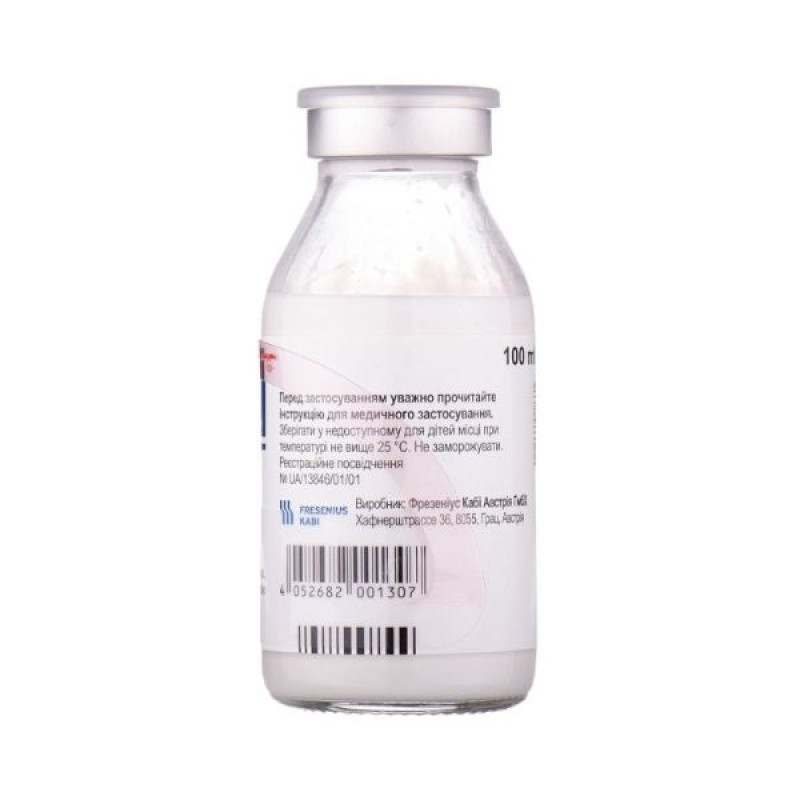
At a temperature not exceeding 25 °C. Do not freeze! The shelf life after first opening the bottle is no more than 24 hours at a temperature of 2-8 °C.