







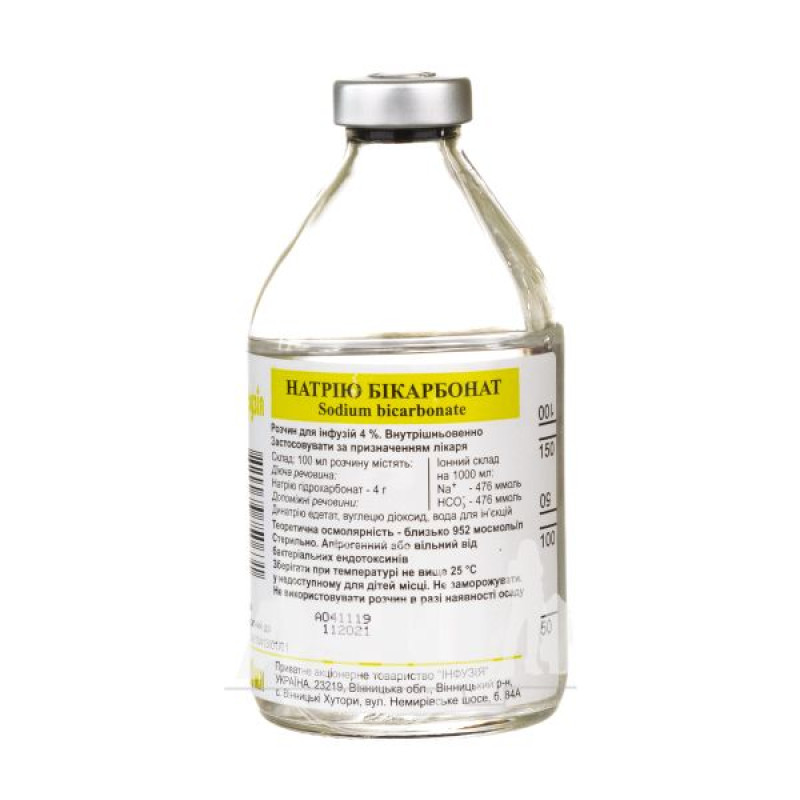
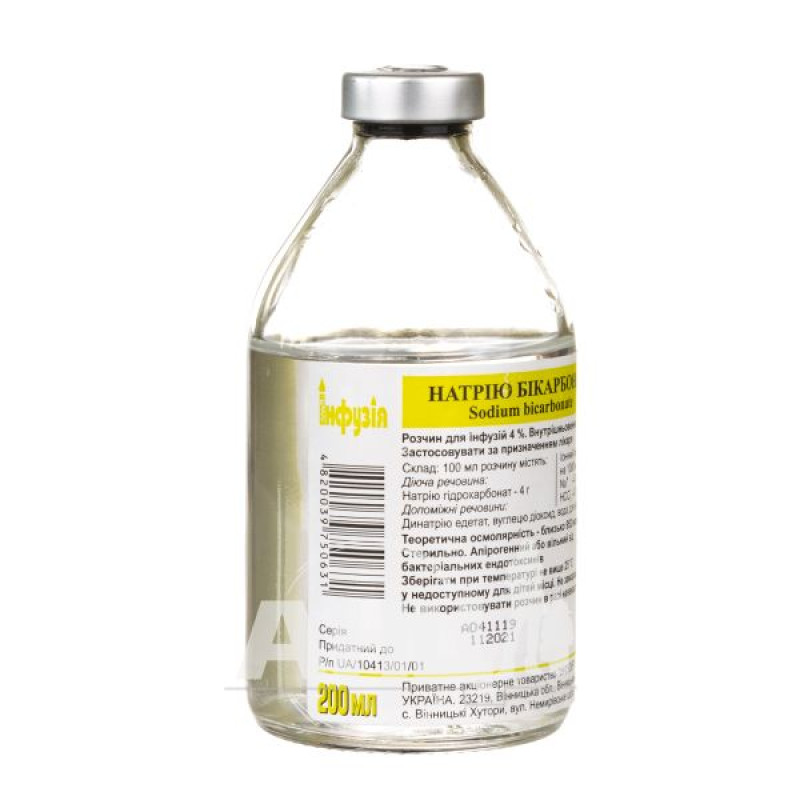
Sodium bicarbonate solution for infusion 4% bottle 200 ml
Sodium bicarbonate infusion solution is used for the following indications: uncompensated metabolic acidosis, which can occur in intoxications of various etiologies, severe postoperative period, major burns, shock, diabetic coma, prolonged diarrhea, uncontrollable vomiting, acute massive blood loss, severe liver and kidney damage, prolonged febrile conditions, severe hypoxia of newborns. An absolute indication is a decrease in blood pH below 7.2 (normal 7.37-7.42).
Composition
The active substance is sodium bicarbonate (100 ml of solution contains 4 g of sodium bicarbonate).
Excipients: disodium edetate, carbon dioxide, water for injections.
Ionic composition per 1000 ml of the drug: Na + - 476 mmol, HCO 3 - - 476 mmol.
Contraindication
metabolic or respiratory alkalosis; hypokalemia; hypernatremia.Method of application
The solution should be used while monitoring the acid-base balance of the blood. Administer to adults intravenously or rectally by drip; to children intravenously by drip. Depending on the severity of the acidosis, the drug should be used undiluted or diluted with 5% glucose solution in a ratio of 1:1.
Adults should be administered intravenously at a rate of approximately 60 drops per minute, up to 200 ml per day. The frequency of administration of the drug depends on the indicators of acid-base balance.
Newborns should be administered at a dose of 4-5 ml per 1 kg of body weight, children of other age groups - at a dose of 5-7 ml per 1 kg of body weight. The next administration of the drug is determined by the indicators of acid-base balance. The maximum dose of the drug for adults is 200 ml per day. The duration of treatment is determined by the doctor depending on the indicators of acid-base balance.
Application features
Pregnant women
There is no experience of using the drug during pregnancy or breastfeeding. Prescribe when the expected benefit to the mother outweighs the potential risk to the fetus. Use of the drug during breastfeeding is possible only for vital indications.
Children
The drug can be used in pediatric practice.
Drivers
There is no data on the ability of the drug to affect the reaction rate when driving vehicles or other mechanisms due to the use of the drug exclusively in a hospital setting.
Overdose
If the dose of the drug is exceeded, the development of hyperalkalosis, hypernatremia and hyperosmia, tetanic convulsions is possible. If signs of alkalosis appear (convulsions, including with manifestations of tetany, agitation, decreased potassium and calcium levels and increased sodium levels in the blood, increased pH), stop administering the drug, if necessary, administer isotonic sodium chloride solution or 5% glucose solution. If there is a risk of tetany, administer 1-3 g of calcium gluconate intravenously to adults.
Side effects
Nausea, vomiting, anorexia, stomach pain, headache, anxiety, hypertension, convulsions, alkalosis.
Interaction
Acidic substances (ascorbic, nicotinic and other acids), alkaloids (atropine, apomorphine, caffeine, theobromine, papaverine), cardiac glycosides, salts of calcium, magnesium, heavy metals (iron, copper, zinc) cannot be dissolved in sodium bicarbonate solution, because precipitation or hydrolysis of organic compounds occurs. Do not mix with phosphate-containing solutions.
Storage conditions
Store at a temperature not exceeding 25 °C, out of the reach of children. Do not freeze. Do not use the solution if there is a precipitate.
Shelf life - 2 years.
There are no reviews for this product.
There are no reviews for this product, be the first to leave your review.
No questions about this product, be the first and ask your question.
