Pharmacological properties
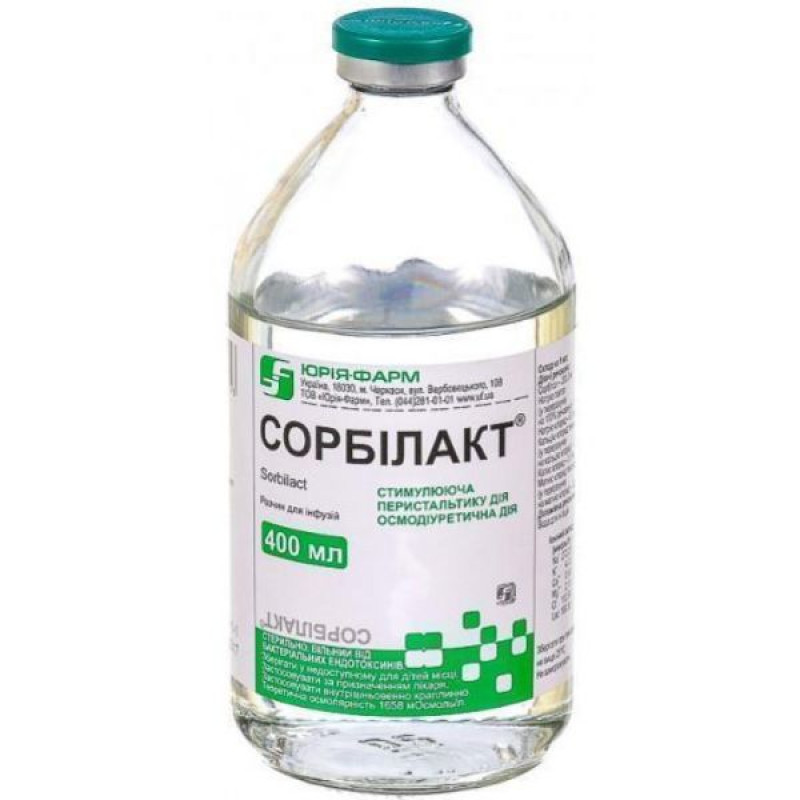
Plasma replacement solution. has anti-shock, energetic, detoxification, diuretic and intestinal stimulating effects; helps eliminate metabolic acidosis. The main pharmacologically active substances of the drug are sorbitol (in hypertonic concentration) and sodium lactate (in isotonic concentration).
Sorbitol is quickly included in the metabolism, 80-90% of it is utilized in the liver and accumulates in the form of glycogen, 5% is deposited in the brain tissue, myocardium and skeletal muscles, 6-12% is excreted in the urine. In the liver, sorbitol is first converted into fructose, which is subsequently transformed into glucose, and then into glycogen. Part of sorbitol is consumed for emergency energy needs, the rest is deposited in the form of glycogen. Hypertonic sorbitol solution has osmotic properties and a pronounced ability to enhance diuresis.
When sodium lactate is injected into the vascular bed, sodium, CO 2 and H 2 O are released, forming sodium bicarbonate, which leads to an increase in the alkaline reserve of the blood. Unlike bicarbonate solution, correction of metabolic acidosis when using sodium lactate occurs gradually as it is incorporated into the metabolism; there are no sharp fluctuations in pH. Pharmacological activity is shown only by 50% of the injected sodium lactate (L-isomer), the second half of the drug (D-isomer) is not metabolized and is excreted in the urine. The effect of sodium lactate is manifested 20-30 minutes after injection.
Indication
For detoxification, improvement of microcirculation, correction of the cortex, improvement of hemodynamics in traumatic, surgical, hemolytic and burn shock (taking into account the osmolarity of blood and urine), in the postoperative period (after abdominal operations, in postoperative intestinal paresis for prophylactic and therapeutic purposes); in acute hepatic and renal failure (in the early stage), chronic pyelonephritis in the acute stage, chronic hepatitis, with increased intracranial pressure in case of cerebral edema.
Application
In / in jet or drip (at a rate of 60-80 drops per minute). with traumatic, burn, postoperative, hemolytic shock - 200-400-600 ml (3-10 ml per 1 kg of the patient's body weight), first jet, then drip; if necessary, re-inject. with chronic hepatitis, 200 ml (3.5 ml per 1 kg of body weight) is administered drip once and repeatedly, daily or every other day. with acute blood loss - 1500-1800 ml (up to 25 ml per 1 kg of body weight). in the preoperative period and after surgical interventions at a dose of 400 ml (6-7 ml per 1 kg of body weight) drip, once or repeatedly, daily for 3-5 days. in case of obliterating diseases of blood vessels, it is administered at the rate of 8-10 ml per 1 kg of body weight intravenously drip every other day; for the course of treatment - 10 infusions. in case of acute liver and kidney failure, at a dose of 200-400 ml (2.5-6.5 ml per 1 kg of body weight) intravenously drip or jet (repeatedly after 8-12 hours). for the prevention of postoperative intestinal paresis - 150-300 ml (2.5-5 ml per 1 kg of body weight) once drip; repeated infusions of the drug are possible every 12 hours during the first 2-3 days after surgery. for the treatment of postoperative paresis - at a dose of 200-400 ml (3.5-6.5 ml per 1 kg of body weight) drip, every 8 hours until intestinal motility normalizes. with cerebral edema - first jet, then drip (60-80 drops / min) at a dose of 5-10 ml per 1 kg of body weight. with significant dehydration, sorbilact is administered only drip (no more than 200 ml of solution per day).
Contraindication
Alkalosis, conditions when fluid intake is limited (stroke, thromboembolism, decompensated heart failure, grade III acute renal failure).
Side effects
Alkalosis or dehydration (due to hyperosmolarity of the solution).
Special instructions
The drug is used, controlling the osmolarity of blood and urine, and the correct administration of sorbilact to patients with diabetes mellitus must be carried out under the control of blood glucose levels.
Interactions
Do not mix with phosphate and carbonate-containing solutions.
Overdose
Manifested by alkalosis and dehydration; drug administration is stopped immediately.
Storage conditions
At a temperature of 2-24 °C in a dry place, protected from light.