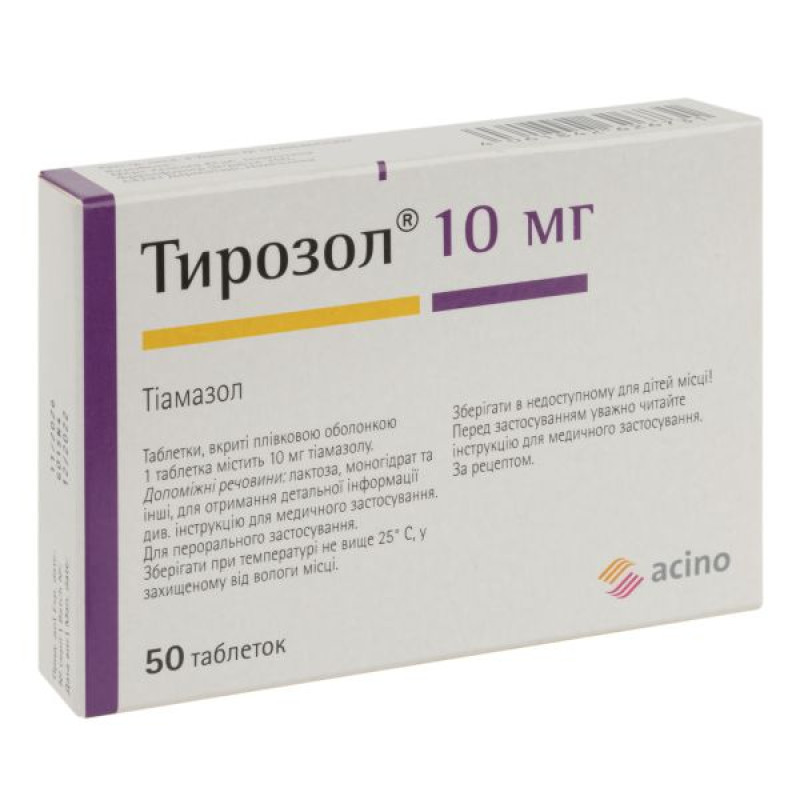
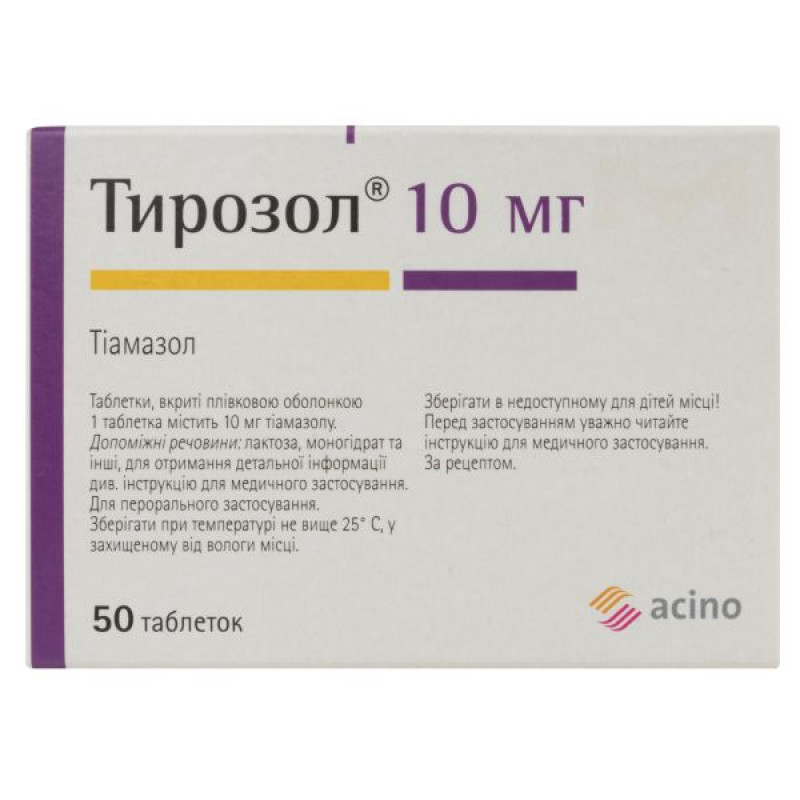
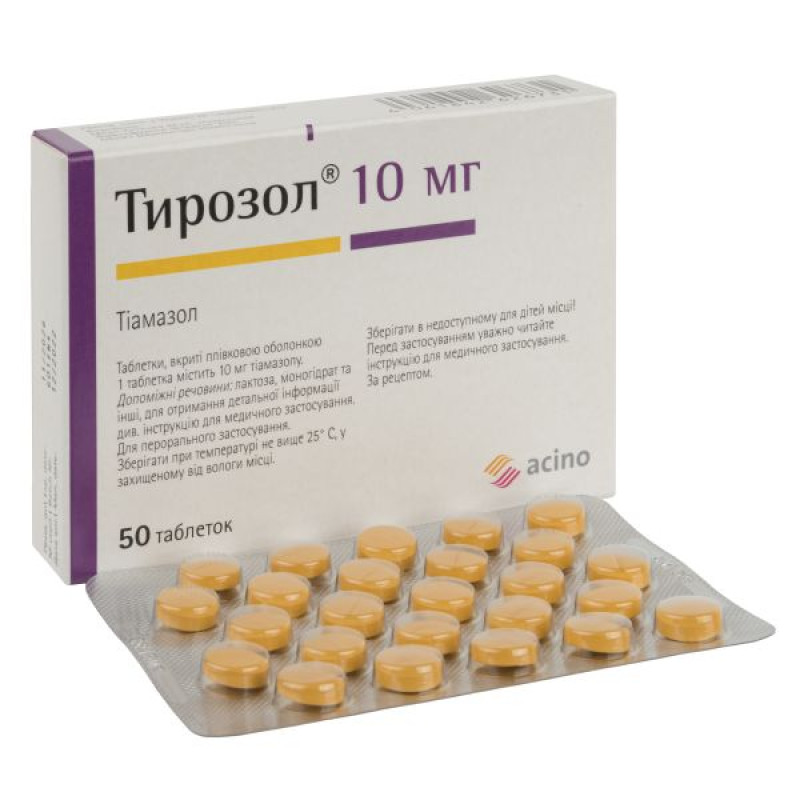
Instructions for use: Tirozol film-coated tablets 10 mg No. 50
Composition
active ingredient: thiamazole;
1 tablet contains thiamazole 10 mg;
excipients: lactose monohydrate; corn starch; powdered cellulose; talc; hypromellose 2910/15; magnesium stearate VS; sodium starch glycolate (type C); colloidal anhydrous silicon dioxide;
film coating for 10 mg tablets: dimethicone 100, macrogol 400, titanium dioxide E 171, iron oxide yellow E 172, hypromellose 2910/15; iron oxide red E 172.
Dosage form
Film-coated tablets.
Main physicochemical properties: 10 mg tablets: gray-orange, round, biconvex, film-coated tablets with a breakline on both sides.
Pharmacotherapeutic group
Antithyroid drugs. Sulfur-containing imidazole derivatives. ATX code H03B B02.
Pharmacological properties
Pharmacodynamics
Thiamazole, depending on its dosage, inhibits the incorporation of iodine into tyrosine, and therefore inhibits the neosynthesis of thyroid hormones. This property makes it possible to carry out symptomatic treatment of hyperthyroidism regardless of its etiology. Whether thiamazole also affects the natural course of the disease in immunologically determined form of hyperthyroidism (Graves' disease), i.e. whether it suppresses the immunopathogenetic process underlying the disease, has not yet been determined.
Thiamazole does not affect the secretion of previously synthesized thyroid hormones, which explains in some cases the different duration of the latent period of the drug's action before the normalization of the concentration of thyroxine and triiodothyronine in the blood serum, and as a result - to the improvement of the clinical picture. The drug also does not affect hyperthyroidism, which developed as a result of the release of hormones after the destruction of thyroid cells (after treatment with radioactive iodine or with thyroiditis).
Pharmacokinetics
Thiamazole is rapidly and completely absorbed from the gastrointestinal tract. After oral administration, the maximum concentration in the blood plasma is reached within 0.4–1.2 hours. It binds to plasma proteins to a very small extent. Thiamazole accumulates in the thyroid gland and is slowly metabolized there. Despite fluctuations in serum levels, the accumulation of thiamazole in the thyroid gland still leads to the formation of a concentration plateau, as a result of which the duration of action persists for approximately 24 hours after taking a single dose of the drug. According to recent data, the kinetics of thiamazole metabolism does not depend on thyroid function. The half-life of the drug is about 3–6 hours. In patients with liver failure, it is longer. Thiamazole is excreted in the urine and bile, to a small extent in the feces, which indicates enterohepatic circulation. It is excreted in the urine (70% within 24 hours). Only a small amount of thiamazole is excreted unchanged. There is currently no experience with the pharmacological activity of the metabolites. Limited data are available on the pharmacokinetics of thiamazole in patients with renal and hepatic impairment (see section 4.2). No data are available on repeated dosing (see section 4.2).
Indication
Treatment of hyperthyroidism, including:
Conservative treatment of hyperthyroidism, especially with no or small goiter; Preparation for surgical treatment in all forms of hyperthyroidism; Preparation for radioactive iodine treatment, especially in patients with severe hyperthyroidism; Interim therapy after radioactive iodine treatment; Prophylactic treatment of patients with subclinical hyperthyroidism, autonomous adenomas or a history of thyrotoxicosis who require exposure to iodine (e.g., diagnostics using iodinated contrast agents).
Contraindication
Hypersensitivity to thiamazole, other thionamide derivatives or to any component of the drug.
Moderate and severe disorders of the quantitative composition of the blood (granulocytopenia).
Cholestasis before treatment, not caused by thyrotoxicosis.
Bone marrow damage during previous therapy with thiamazole or carbimazole.
History of acute pancreatitis after taking thiamazole or carbimazole prodrugs.
Concomitant therapy with thiamazole and thyroid hormones during pregnancy is contraindicated (see section "Use during pregnancy or breastfeeding").
Interaction with other medicinal products and other types of interactions
Iodine deficiency increases the susceptibility of the thyroid gland to thiamazole, and iodine excess reduces it. Direct interactions with other drugs are unknown. However, it should be taken into account that the metabolism and excretion of other drugs may increase in hyperthyroidism. These indicators normalize when thyroid function is restored. If necessary, the dosage of the drug should be adjusted. In addition, correction of hyperthyroidism may normalize the increased activity of anticoagulants in patients with hyperthyroidism.
Drug interaction studies have not been conducted in pediatric patients.
Application features
The drug Tirozol is not recommended for use in patients with a history of moderate hypersensitivity reactions (e.g., allergic rash, itching).
Patients with very large goiters and tracheal narrowing should use Tirozol® for the shortest possible period and under close medical supervision due to the risk of goiter growth.
Myelotoxicity.
Agranulocytosis has been reported in approximately 0.3–0.6% of cases. Before starting treatment, patients should be informed about the associated symptoms of agranulocytosis (stomatitis, pharyngitis, fever). Symptoms usually occur during the first weeks of treatment, but may occur after several months or during a repeated course of treatment. It is recommended to carefully monitor blood counts before and after starting therapy, especially in patients with moderate granulocytopenia. If any of the above symptoms develop, especially during the first weeks of treatment, you should immediately consult a doctor for a blood test.
If agranulocytosis is confirmed, further therapy with the drug should be discontinued.
When using the drug in recommended doses, adverse reactions due to bone marrow toxicity occurred rarely. The development of such reactions was often reported when taking very high doses of thiamazole (about 120 mg per day). Such doses are prescribed for special indications (severe forms of the disease, thyrotoxic crisis). If symptoms of bone marrow toxicity appear during treatment with thiamazole, further use of the drug should be discontinued and, if necessary, switch to an antithyroid drug of another group.
Acute pancreatitis.
In the post-marketing period, acute pancreatitis has been reported in patients taking thiamazole or carbimazole prodrugs. Patients who develop acute pancreatitis should immediately discontinue thiamazole. Thiamazole should not be prescribed to patients who have previously experienced acute pancreatitis while taking thiamazole or carbimazole prodrugs. Re-administration may lead to a recurrence of acute pancreatitis, with a reduced time to recurrence.
Women of reproductive age and pregnant women.
Women of childbearing potential are advised to use effective contraception during thiamazole therapy. Thiamazole should be administered to pregnant women only after careful benefit/risk assessment and only in the lowest effective doses without additional thyroid hormone administration. If administered during pregnancy, the condition of the woman, the fetus and the newborn should be carefully monitored (see section "Use during pregnancy or breastfeeding").
Control of hyperthyroidism.
Excess of the drug in the body after taking very high doses can lead to the development of subclinical or clinical hypothyroidism or goiter growth due to an increase in the level of thyroid-stimulating hormone secretion. In this regard, the dose of thiamazole should be reduced immediately after the restoration of normal thyroid function, and if necessary, levothyroxine is additionally prescribed. It is inappropriate to completely stop treatment with thiamazole and use only levothyroxine. An increase in goiter during therapy with the drug Tirozol®, despite the suppression of thyroid-stimulating hormone secretion, occurs as a result of the disease itself and cannot be prevented by additional levothyroxine. Ensuring a normal level of thyroid-stimulating hormone secretion is important to minimize the risk of developing or worsening endocrine ophthalmopathy. However, this pathology often does not depend on the course of the thyroid disease. Such complications are not a reason to change the adequate treatment regimen and are not a side effect with the correct course of treatment.
In rare cases, after a course of antithyroid therapy without additional surgical intervention, the development of late hypothyroidism was observed. Presumably, this is not an adverse reaction to the drug, but the result of inflammatory and destructive processes in the thyroid parenchyma caused by the underlying disease. Due to the reduction of pathologically increased energy expenditure in hyperthyroidism, body weight may increase during treatment with thiamazole. Patients should be informed that the improvement of the clinical picture indicates the normalization of energy expenditure.
Excipients.
Tyrosol contains lactose, therefore patients with rare hereditary diseases such as galactose intolerance, lactase deficiency, Lapp lactase deficiency or glucose-galactose malabsorption should not take this medicine.
Tyrozol contains less than 1 mmol sodium (23 mg) per tablet, which is not clinically significant.
Ability to influence reaction speed when driving vehicles or other mechanisms
Thiamazole does not affect the reaction rate when driving or working with other mechanisms.
Use during pregnancy or breastfeeding
Adequate treatment of hyperthyroidism in pregnant women is necessary to prevent serious complications in the pregnant woman and the fetus. Thiamazole can penetrate the placental barrier. Analysis of information obtained from studies and spontaneous reports has revealed a pattern of congenital anomalies as a result of taking high doses of thiamazole, especially in the first trimester of pregnancy.
The most common congenital malformations are scalp aplasia in newborns whose mothers received thiamazole during pregnancy, craniofacial malformations (choanal atresia, facial dysmorphism), exomphalos, esophageal atresia, omphalomesenteric duct anomaly, and ventricular septal defect.
Thiamazole should be administered during pregnancy only after careful benefit/risk assessment at the lowest effective dose without additional thyroid hormone administration. If thiamazole is used during pregnancy, careful monitoring of the condition of the pregnant woman, the fetus and the newborn is recommended.
Breast-feeding.
Thiamazole penetrates into breast milk, where its concentration reaches the level of concentration in the mother's blood serum, which causes the risk of developing hypothyroidism in the child.
During breastfeeding, thiamazole should be prescribed in the lowest effective doses, not exceeding 10 mg per day, without additional hormone administration.
It is necessary to regularly monitor thyroid function in newborns.
Method of administration and doses
Thiamazole is the active metabolite of carbimazole, however 1 mg of thiamazole is not equivalent to 1 mg of carbimazole. This should be taken into account when starting treatment with thiamazole or when switching from carbimazole to thiamazole. The dosage recommendations given should be followed.
The daily dose should be administered as a single dose or divided into several doses during the day. At the beginning of treatment, single doses should be taken at equal intervals throughout the day. The maintenance dose should be taken as a single dose during or after breakfast.
Take the tablets without chewing, with sufficient liquid.
If one dose of the drug was missed, there is no need to increase the dose at the next dose.
General dosage recommendations.
Adults.
Depending on the severity of the disease and the intake of iodine into the body, the recommended dose for adults is 10–40 mg per day. In many cases, suppression of thyroid hormone production is achieved by taking 20–30 mg of the drug Tirozol® per day. In case of mild disease, the drug should be prescribed in a lower dosage, in case of severe disease, Tirozol® should be used in an initial dose of 40 mg per day.
Dose adjustment should be carried out individually, taking into account the activity of metabolic processes caused by the level of thyroid hormone production.
The following dosage is recommended for maintenance therapy:
maintenance dose of the drug Tirozol® – 5-20 mg per day in combination with levothyroxine for the prevention of hypothyroidism; as monotherapy, 2.5-10 mg of the drug Tirozol per day.
In case of thyrotoxicosis caused by elevated iodine content, the drug may be used in higher doses.
Conservative treatment of thyrotoxicosis.
The goal of therapy is to achieve a euthyroid state of the gland and a long-term remission after a limited duration of treatment. Depending on the selection of the treated patients, remission can be achieved in up to 50% of patients one year after therapy. It has been found that the time to achieve remission varies significantly depending on the initial parameters. Likely influencing factors are the type of hyperthyroidism (immunogenic or non-immunogenic), the duration of treatment, the dosage of thiamazole, and the source of iodine: dietary or iatrogenic.
In conservative treatment of hyperthyroidism, the duration of therapy with Tirozol is from 6 months to 2 years (on average - within 1 year). The possibility of prolonging the remission period depends on the duration of therapy.
If remission cannot be achieved and other therapeutic measures are not possible, Tirozol® can be used for long-term therapy in the lowest effective doses without the addition of or in combination with a low dose of levothyroxine.
Patients with tracheal stenosis and very large goiters should receive Tirozol for a short period. Long-term therapy may lead to goiter growth.
Preparation for surgical treatment for all forms of hyperthyroidism.
Short-term preparatory therapy (for 3-4 weeks, in some cases the drug can be used longer) helps restore the euthyroid state, thereby reducing the risks associated with surgical intervention.
Surgery is performed immediately after achieving a euthyroid state. If such surgery is not performed, levothyroxine should be used. Therapy with the drug can be stopped the day before surgery.
The increased fragility and bleeding tendency of thyroid tissue caused by thiamazole can be compensated by additional preoperative administration of high doses of iodine 10 days before surgery (Plummer's iodine therapy).
The drug should be used to achieve a euthyroid state before starting radioactive iodine therapy. Pretreatment with Tyrozol is especially necessary for patients with severe thyrotoxicosis, as isolated cases of thyrotoxic crisis have been observed after iodine treatment without prior therapy with Tyrozol.
Note: It should be borne in mind that thionamide derivatives may reduce the sensitivity of thyroid tissue to radiotherapy. When carrying out planned therapy with radioactive iodine in connection with autonomous adenomas, it is necessary to conduct preliminary therapy with the drug Tirozol® to prevent activation of paranodular tissue.
Therapy during the latent period of radioactive iodine exposure.
The duration of therapy and the dose of the drug Tirozol are selected individually, depending on the severity of the disease, as well as taking into account the period before the onset of action of radioactive iodine (approximately 4–6 months).
Preventive treatment of patients at risk of developing hyperthyroidism as a result of the administration of iodine preparations for diagnostic purposes.
The usual recommended dose is 10-20 mg of Tirozol per day and/or 1 g of perchlorate daily for 10 days (e.g., if a renally excreted X-ray contrast agent is required). The duration of prophylactic treatment is determined by the duration of the period during which the iodine preparations are in the body.
Special patient groups.
Patients with liver dysfunction.
In patients with impaired liver function, the rate of thiamazole excretion is reduced. In this regard, the drug is recommended to be used in the lowest effective doses, and the patient's condition should be monitored during therapy with the drug.
Patients with renal failure.
Individual dose adjustment and constant monitoring are recommended for patients with renal insufficiency, as there is insufficient data on the pharmacokinetic properties of the drug in this group of patients.
Elderly patients.
Elderly patients are recommended individual dose adjustment and constant monitoring, there is no data on the accumulation of the drug in the body. The drug is recommended to be used in the lowest effective doses.
Children
Children and adolescents (3–17 years)
The initial dose for the treatment of children and adolescents (3–17 years) is calculated according to the patient's body weight.
Treatment is usually initiated at 0.5 mg/kg given in two or three equally divided doses per day. The maintenance dose may be reduced depending on the individual patient's response to therapy and given once daily. Additional levothyroxine may be required to prevent hypothyroidism. The total daily dose should not exceed 40 mg of thiamazole.
Children under 2 years old.
The safety and efficacy of thiamazole in children under 2 years of age have not been studied.
The use of thiamazole in children under 2 years of age is not recommended.
Overdose
Overdose leads to the development of hypothyroidism with corresponding symptoms of metabolic slowdown and, through a feedback mechanism, to activation of the adenohypophysis with subsequent growth of the goiter.
This can be avoided by reducing the dose of the drug until a euthyroid state is achieved and, if necessary, additionally prescribing levothyroxine preparations. The negative consequences of accidental ingestion of high doses of thiamazole are unknown.
Adverse reactions
Adverse effects are classified according to the frequency of occurrence into the following categories:
very common (> 1/10), common (> 1/100, < 1/10), uncommon (> 1/1000, < 1/100), rare (> 1/10000, < 1/1000), very rare (1/10000), unknown (cannot be determined based on available data).
From the blood and lymphatic system.
Uncommon: agranulocytosis (occurs in approximately 0.3-0.6% of cases). It may also occur weeks or months after the start of treatment, requiring discontinuation of the drug. In most cases, agranulocytosis resolves spontaneously.
Very rare: thrombocytopenia, pancytopenia, generalized lymphadenopathy.
From the endocrine system.
Very rare: insulin autoimmune syndrome (with pronounced decrease in blood glucose levels).
From the nervous system.
Rare: taste disturbances (dysgeusia, ageusia) occur rarely, which resolve spontaneously after discontinuation of the drug. However, taste sensations may return after several weeks.
Very rare: neuritis, polyneuropathy.
From the digestive tract.
Very rare: acute inflammation of the salivary glands.
Not known: acute pancreatitis.
On the part of the hepatobiliary system.
Very rare: isolated cases of cholestatic jaundice or toxic hepatitis have been described. Symptoms usually disappear after discontinuation of the drug. Clinically subtle symptoms of biliary stasis during treatment should be distinguished from dysfunctions caused by hyperthyroidism, such as increased levels of γ-glutamyl transferase and alkaline phosphatase or increased levels of the specific bone isoenzyme of alkaline phosphatase.
On the skin and subcutaneous tissue.
Very rare: severe allergic skin reactions, including generalized dermatitis; alopecia; drug-induced lupus erythematosus.
Musculoskeletal and connective tissue disorders.
Common: arthralgia, may develop gradually and occur even after several months of therapy.
General disorders.
Rare: drug fever.
Children: The frequency, type and severity of adverse reactions in children are expected to be similar to those observed in adult patients.
Serious skin hypersensitivity reactions, such as generalised dermatitis, including Stevens-Johnson syndrome, have been reported very rarely in adult patients and children.
Expiration date
4 years. Do not use after the expiration date.
Storage conditions
Store at a temperature not exceeding 25 °C, in a place protected from moisture. Keep out of the reach of children!
Packaging
10 tablets in a blister. 5 blisters in a cardboard box.
Vacation category
According to the recipe.
Producer
Merck Helskea KGaA.
Location of the manufacturer and its business address
Frankfurter Strasse 250, 64293 Darmstadt, Germany.