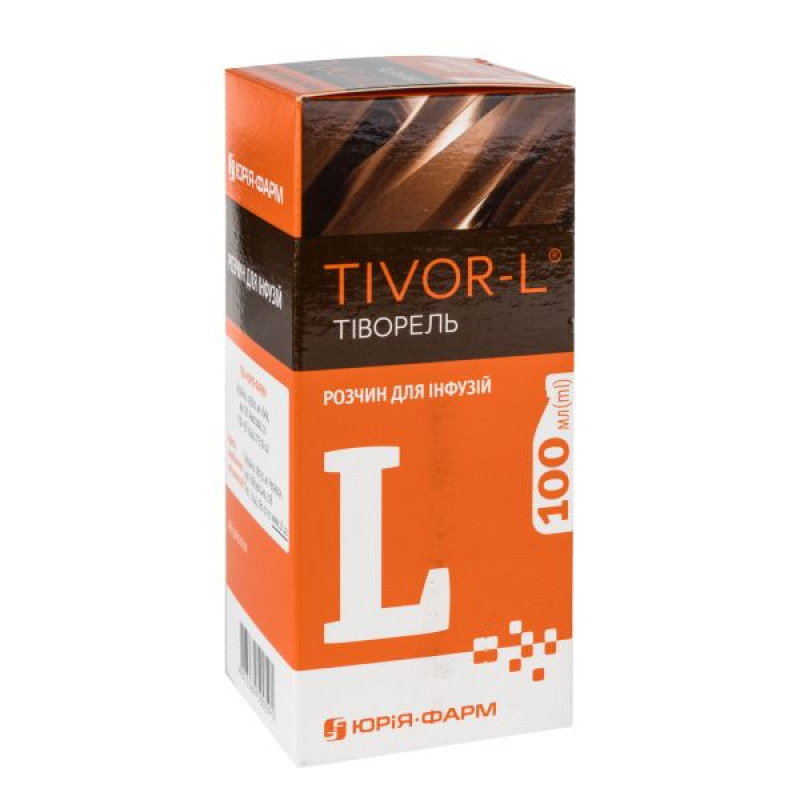
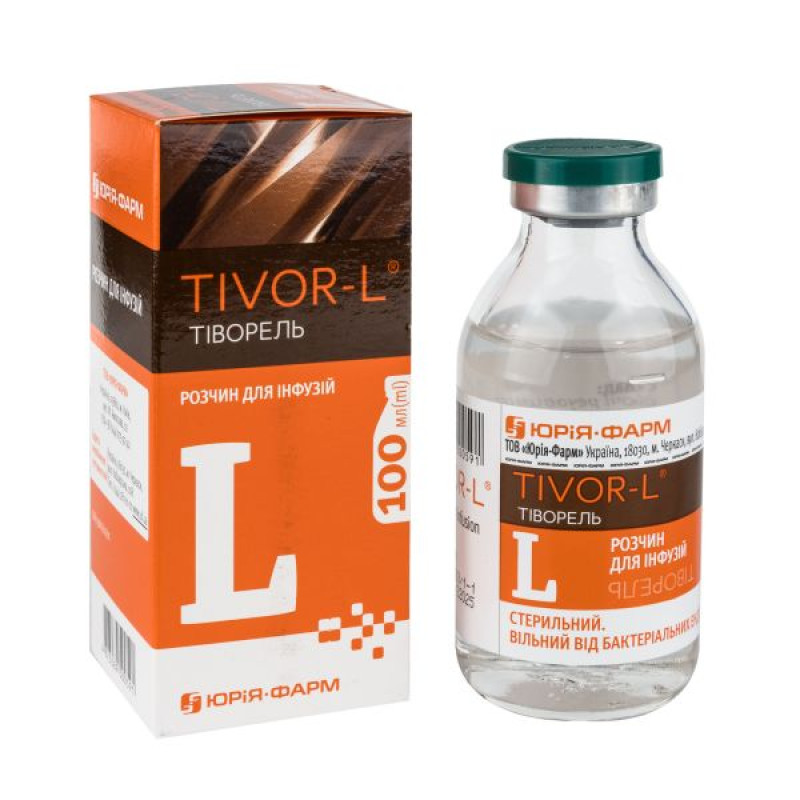
Instructions for Tivorel solution for infusion, bottle 100 ml No. 1
Composition
active ingredients: levocarnitine and arginine hydrochloride;
1 ml of solution contains 42 mg of arginine hydrochloride and 20 mg of levocarnitine;
excipient: water for injections.
Dosage form
Solution for infusion.
Main physicochemical properties: clear, colorless or slightly yellowish liquid.
Pharmacotherapeutic group
Additional solutions for intravenous administration. Amino acids. ATX code B05X B.
Pharmacological properties
Pharmacodynamics
Tivorel contains the amino acids levocarnitine and arginine hydrochloride as active ingredients.
Arginine (a-amino-d-guanidinovaleric acid) is an amino acid that belongs to the class of conditionally essential amino acids and is an active and versatile cellular regulator of numerous vital functions of the body, exerting important protective effects in critical conditions of the body.
Arginine has antihypoxic, membrane-stabilizing, cytoprotective, antioxidant, antiradical, detoxifying effects, manifests itself as an active regulator of intermediate metabolism and energy supply processes, plays a certain role in maintaining hormonal balance in the body. It is known that arginine increases the blood content of insulin, glucagon, somatotropic hormone and prolactin, participates in the synthesis of proline, polyamine, agmatine, is included in the processes of fibrinogenolysis, spermatogenesis, and has a membrane depolarizing effect.
Arginine is one of the main substrates in the urea synthesis cycle in the liver. The hypoammonemic effect of the drug is realized by activating the conversion of ammonia into urea. It has a hepatoprotective effect due to its antioxidant, antihypoxic and membrane-stabilizing activity, and has a positive effect on the processes of energy supply in hepatocytes.
Arginine is a substrate for NO synthase, an enzyme that catalyzes the synthesis of nitric oxide in endothelial cells. The drug activates guanylate cyclase and increases the level of cyclic guanosine monophosphate (cGMP) in the vascular endothelium, reduces the activation and adhesion of leukocytes and platelets to the vascular endothelium, inhibits the synthesis of adhesion proteins VCAM-1 and MCP-1, thus preventing the formation and development of atherosclerotic plaques, inhibits the synthesis of endothelin-1, which is a powerful vasoconstrictor and stimulator of proliferation and migration of smooth myocytes of the vascular wall. Arginine also inhibits the synthesis of asymmetric dimethylarginine, a powerful endogenous stimulator of oxidative stress. The drug stimulates the activity of the thymus gland, which produces T-cells, regulates the content of glucose in the blood during physical exertion. It has an acid-forming effect and helps correct acid-base balance.
Levocarnitine is a natural substance involved in energy metabolism, as well as the metabolism of ketone bodies. Only the L-isomer of carnitine is biologically active.
Levocarnitine is necessary for the transport of long-chain fatty acids into the mitochondria for their subsequent beta-oxidation and energy production. Fatty acids are used as an energy substrate by all tissues, except the brain. In skeletal muscle and myocardium, fatty acids are the main substrate for energy production.
Levocarnitine plays an important role in cardiac metabolism, since the oxidation of fatty acids depends on the presence of sufficient amounts of this substance. Experimental studies have shown that under certain conditions, such as stress, acute ischemia, myocarditis, a decrease in the level of levocarnitine in myocardial tissue is possible. A large number of animal studies have been conducted, which confirmed the positive effect of levocarnitine in various induced cardiac disorders: acute and chronic ischemia, cardiac decompensation, heart failure as a result of myocarditis, drug cardiotoxicity (taxanes, adriamycin, etc.).
By releasing coenzyme-A from complex thioesters, levocarnitine also enhances the oxidation of carbohydrates in the Krebs tricarboxylic acid cycle, stimulates the activity of the key enzyme of glycolysis - pyruvate dehydrogenase, and in skeletal muscles - the oxidation of branched-chain amino acids. Thus, levocarnitine directly or indirectly participates in most energy processes, its presence is mandatory for the oxidation of fatty acids, amino acids, carbohydrates and ketone bodies.
In humans, physiological needs for carnitine are met through the consumption of foods containing carnitine (primarily meat) and through endogenous synthesis in the liver from trimethyllysine. The highest concentration of levocarnitine is found in muscle tissue, in the myocardium and liver.
Primary systemic carnitine deficiency is characterized by low concentrations of levocarnitine in plasma, erythrocytes, and/or tissues. Secondary carnitine deficiency may result from congenital disorders of carnitine metabolism or iatrogenic interventions such as hemodialysis.
Pharmacokinetics
Levocarnitine is absorbed by the cells of the small intestinal mucosa and enters the bloodstream relatively slowly; absorption is probably due to an active transluminal mechanism. Absorption after oral administration is limited (< 10%) and variable.
Absorbed levocarnitine is transported to various organs via the blood; the erythrocyte transport system is thought to be involved in the transport process.
Levocarnitine is excreted mainly in the urine. The rate of excretion is directly proportional to the concentration of carnitine in the blood.
Levocarnitine is practically not metabolized in the body.
Indication
As part of the complex treatment of ischemic heart disease.
Contraindication
Hypersensitivity to the drug. Severe renal dysfunction; hyperchloremic acidosis; history of allergic reactions; use of potassium-sparing diuretics, as well as spironolactone. Myocardial infarction (including history).
Interaction with other medicinal products and other types of interactions
When using the drug Tivorel, it is necessary to take into account that the drug can cause severe and persistent hyperkalemia against the background of renal failure in patients who are taking or have taken spironolactone. Previous use of potassium-sparing diuretics can also contribute to an increase in the level of potassium concentration in the blood. When used simultaneously with aminophylline, an increase in insulin levels in the blood is possible.
Simultaneous use of glucocorticoids leads to the accumulation of levocarnitine in body tissues (except the liver). Other anabolic agents enhance the effect of the drug.
Very rare cases of increased international normalized ratio (INR) have been observed in patients receiving coumarin anticoagulants concomitantly with levocarnitine (see section 4.4). INR or other appropriate coagulation test should be performed weekly until stable, and monthly thereafter, in patients receiving such anticoagulants concomitantly with levocarnitine.
Concomitant use of levocarnitine with agents that induce hypocarnitineemia by increasing renal excretion of carnitine (e.g. valproic acid, prodrugs containing pivalonic acid, cephalosporins, cisplatin, carboplatin, ifosfamide) may reduce its levels.
The drug is incompatible with thiopental.
Application features
In patients with renal insufficiency, diuresis and plasma potassium levels should be checked before starting the infusion, as the drug may contribute to the development of hyperkalemia.
The drug should be used with caution in cases of endocrine gland dysfunction. The drug may stimulate the secretion of insulin and growth hormone.
If dry mouth occurs, it is necessary to check your blood sugar level.
It should be used with caution in cases of electrolyte imbalance and kidney disease. If symptoms of asthenia develop while taking the drug, treatment should be discontinued.
The drug should be used with caution in patients with angina pectoris.
Levocarnitine improves glucose absorption, so the use of Tivorel in patients with diabetes mellitus who are treated with hypoglycemic drugs may lead to hypoglycemia. The level of glucose in the blood plasma in such cases must be regularly monitored for timely correction of therapy.
Very rare cases of increased international normalized ratio have been observed in patients receiving levocarnitine and coumarin anticoagulants concomitantly (see section 4.5). Appropriate monitoring is required when coumarin anticoagulants are used concomitantly.
Seizures have been reported in patients with a history of seizure activity, but it is not yet clear whether levocarnitine increases the frequency and/or severity of seizures. In cases where levocarnitine is suspected of causing seizures, discontinuation of the drug should be considered.
Ability to influence reaction speed when driving vehicles or other mechanisms
In some cases, some adverse reactions from the central nervous system may affect the ability to drive or operate complex machinery.
Use during pregnancy or breastfeeding
There are no data on the use of Tivorel in pregnant women. Data on the excretion of the drug into breast milk and its effect on the fetus are unknown. Therefore, during pregnancy or breastfeeding, the drug is prescribed only if the expected benefit to the woman outweighs the potential risk to the fetus.
Method of administration and doses
The drug is administered intravenously by drip at a rate of 10 drops per minute for the first 10–15 minutes, then the rate of administration can be increased to 30 drops per minute.
The daily dose of the drug is 100 ml of solution.
Children
There are no data on the use of the drug in children.
Overdose
Treatment. In case of overdose, the infusion of the drug should be stopped. It is necessary to monitor physiological reactions and maintain the vital functions of the body. If necessary, alkalizing agents and agents for establishing diuresis (saluretics), electrolyte solutions (0.9% sodium chloride solution), 5% glucose solution are administered. Therapy is symptomatic.
Adverse reactions
Musculoskeletal system: joint pain.
On the part of the digestive tract: dry mouth, nausea, vomiting, abdominal pain, diarrhea.
Skin and subcutaneous tissue disorders: changes at the injection site, including hyperemia, itching, skin pallor, up to acrocyanosis.
Immune system disorders: anaphylactic shock, hypersensitivity reactions including rash, urticaria, angioedema.
Respiratory, thoracic and mediastinal disorders: dyspnea.
Cardiovascular system: fluctuations in blood pressure, changes in heart rhythm, pain in the heart area.
From the nervous system: headache, dizziness, feeling of fear, weakness, convulsions, tremor, more often when the rate of administration is exceeded.
General disorders: hyperthermia, feeling hot, body aches.
Laboratory indicators: hyperkalemia.
Expiration date
2 years.
Storage conditions
Store at a temperature not exceeding 30 °C in the original packaging.
Keep out of reach of children.
Packaging
100 ml in a bottle; 1 bottle in a pack.
Vacation category
According to the recipe.
Producer
LLC "Yuria-Pharm".
Location of the manufacturer and its business address
Ukraine, 18030, Cherkasy region, Cherkasy city, Kobzarska st., 108. Tel.: (044) 281-01-01.