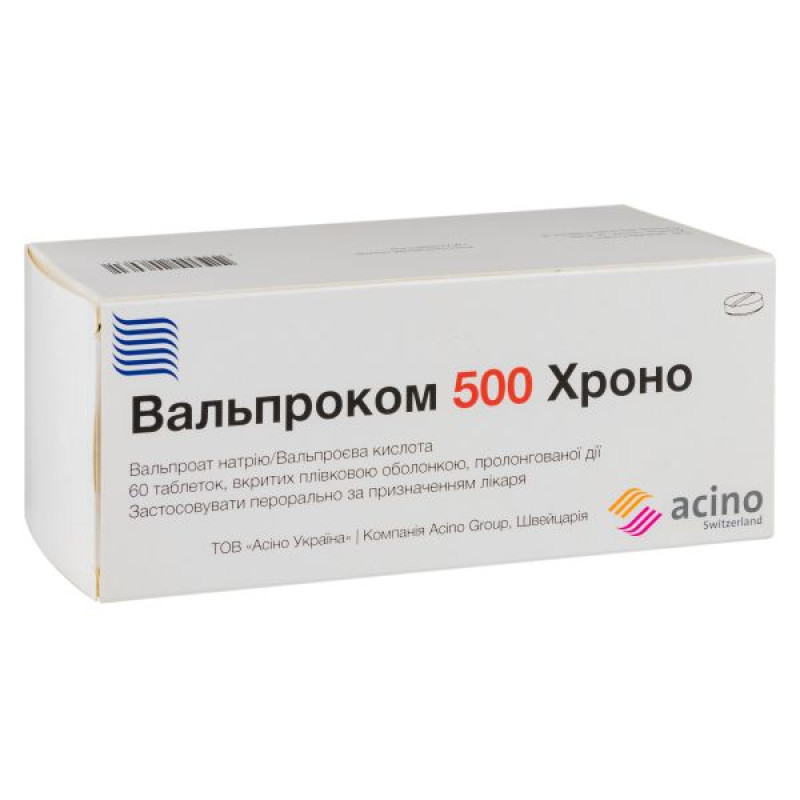
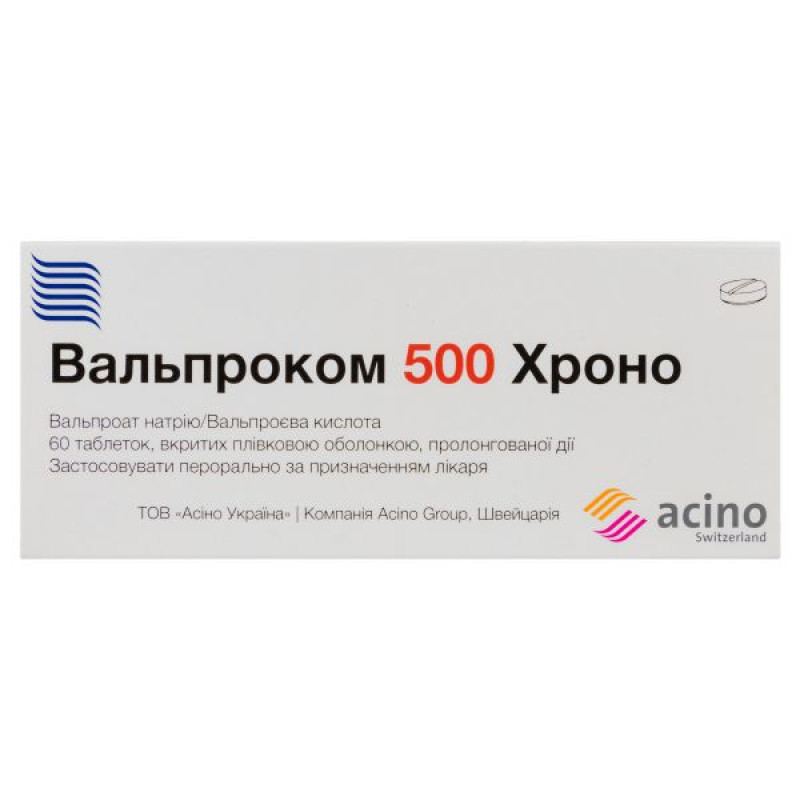
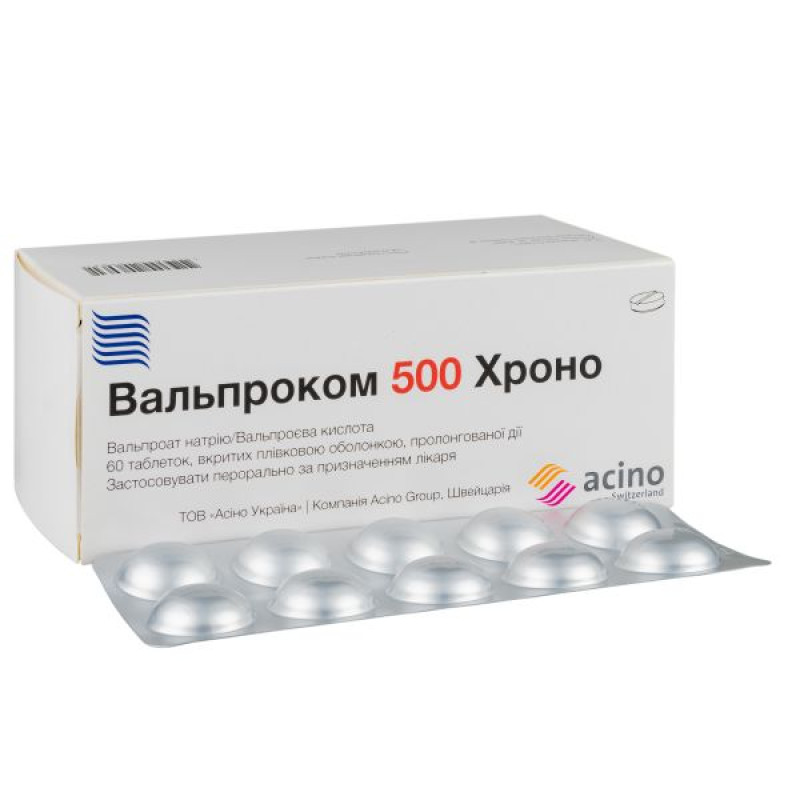
Instructions for Valproate chrono tablets 500 mg No. 60
Composition
active ingredients: sodium valproate/valproic acid;
1 tablet of Valprocom 500 Chrono contains 333 mg of sodium valproate and 145 mg of valproic acid (corresponding to 500 mg of sodium valproate per 1 tablet);
excipients: ethylcellulose, ammonium methacrylate copolymer (type B), colloidal anhydrous silicon dioxide, coating for coating (hypromellose, glycerin, ammonium methacrylate copolymer (type A), polyacrylate dispersion, polyethylene glycol 1500, talc).
Dosage form
Film-coated tablets, prolonged-release.
Main physicochemical properties: round tablets, with a biconvex surface, with a score on one side, covered with a white film coating.
Pharmacotherapeutic group
Antiepileptic drugs. Fatty acid derivatives.
ATX code N03A G01.
Pharmacological properties
Pharmacodynamics
The pharmacological activity of valproate is primarily directed at the central nervous system. It exhibits anticonvulsant properties against a wide range of seizures in animals and epilepsy in humans.
Experimental and clinical studies have identified 2 mechanisms of anticonvulsant action of valproate.
The first is a direct pharmacological effect, which depends on the concentration of valproate in blood plasma and brain tissues.
The second is indirect – possibly related to valproate metabolites that remain in the brain, or to modifications of neurotransmitters, or to a direct effect on the membrane.
The most likely hypothesis is that after valproate administration, the level of gamma-aminobutyric acid (GABA) increases.
In pharmacological studies in animals, sodium valproate has been shown to have anticonvulsant properties in various models of experimental epilepsy (with generalized and focal seizures). In addition, studies have shown that sodium valproate has an antiepileptic effect in various forms of epilepsy in humans.
This action is presumably based on GABAergic (gamma-aminobutyric acid-mediated) activity, which prevents or limits the diffusion of discharges. The active form of sodium valproate, which is administered intravenously or orally, is valproic acid.
Some in vitro studies have shown that sodium valproate can stimulate HIV-1 replication, but this effect is weak and has not been reproducible in most studies. The clinical implications of this effect for patients infected with HIV-1 are unknown.
When using sodium valproate in patients infected with HIV-1, this information should be taken into account for the correct interpretation of the results of the viral load analysis. Valproate reduces the duration of intermediate sleep phases with a simultaneous increase in the slow-wave sleep phase.
Pharmacokinetics
Various pharmacokinetic studies conducted with valproate have shown the following results.
After oral administration of the drug, its bioavailability in blood plasma approaches 100%. The drug Valprocom 500 Chrono is present in blood plasma in the form of valproic acid.
The absorption of Valprocom 500 Chrono prolonged-release in the gastrointestinal tract occurs immediately and continues, having a uniform and prolonged character. This results in the absence of peaks in the plasma concentration of the active substance and better maintenance of therapeutic concentrations of valproic acid over time.
Distribution.
The volume of distribution of valproic acid is mainly limited to the blood and rapidly renewing extracellular fluid. Valproate penetrates into the cerebrospinal fluid and brain tissue.
Valproate crosses the placental barrier in both animals and humans:
- in animals, valproate penetrates the placental barrier to the same extent as in humans;
- Several publications have evaluated the concentration of valproate in the umbilical cord blood of newborns during human delivery: the concentration of valproate in the serum of the umbilical cord blood was the same or slightly higher than that in the maternal serum.
The half-life is 15–17 hours.
Binding to blood proteins occurs mainly with albumin and is dose-dependent and saturable. At a total plasma concentration of valproic acid of 40–100 mg/l, the proportion of its free fraction is usually 6–15%. In patients with renal failure, there is a tendency for the proportion of the unbound fraction to increase due to a decrease in albumin levels and, consequently, the number of available binding sites.
The concentration of valproic acid in the cerebrospinal fluid is similar to the concentration of its free fraction in blood plasma (about 10%).
Valproic acid is removed by dialysis, but the volume of the removed fraction is significantly reduced due to its binding to albumin (about 10%).
Sodium valproate crosses the placental barrier. Valproic acid is excreted in breast milk (1-10% of the total serum concentration) of women who received Valprocom 500 Chrono during lactation.
After the start of long-term valproate therapy, the equilibrium concentration of valproic acid in the blood serum is reached after approximately 3–4 days, in some cases after a longer period.
The minimum serum concentration of valproate required for therapeutic effect is usually 40–50 mg/l. Therapeutic plasma concentrations of valproic acid are usually in the range of 40–100 mg/l (278–694 μmol/l). If higher concentrations are required, the expected benefit should be weighed against the potential for adverse effects, particularly dose-related ones. If the total plasma concentration of valproic acid is maintained above 150 mg/l (1040 μmol/l), the daily dose should be reduced.
Metabolism.
The metabolism of Valproate 500 Chrono mainly occurs in the liver. The main metabolic pathways are glucuronidation and beta-oxidation. Unlike most other antiepileptic drugs, sodium valproate does not accelerate either its own breakdown or the breakdown of other substances, such as estrogen and progesterone. This property indicates that it does not induce enzymes that are part of the cytochrome P 450 metabolic system.
There are more than 10 known metabolites, some of which have demonstrated anticonvulsant properties in animal studies. The main route of metabolism of valproate is glucuronidation (approximately 40%), which occurs mainly with the participation of the enzymes UGT1A6, UGT1A9 and UGT2B7. Enterohepatic circulation is present.
Breeding.
With continuous use of valproic acid, its average plasma half-life in adults is 10.6 hours (although it can range from 5 to 20 hours), which is why the daily dose must be divided into two doses. The drug is excreted mainly by the kidneys after metabolism by conjugation with glucuronic acid and beta-oxidation: 70% - in the form of glucuronide and ± 7% - in the form of unchanged valproic acid. The remainder of the substance is excreted through the respiratory tract and with feces. The half-life in premature newborns is significantly increased, reaching 30–70 hours depending on the degree of prematurity (while in full-term newborns and infants during the first month of life it is 20–30 hours), but later gradually reaches the indicators characteristic of children and adults, i.e. 8–22 hours with an average of 12 hours.
The valproate molecule is dialyzable, but hemodialysis is effective only against the free fraction of valproate in the blood (approximately 10%). Valproate does not induce enzymes of the cytochrome P450 metabolic system; therefore, unlike most other antiepileptic drugs, it does not accelerate its own degradation or the degradation of other substances, such as estrogen-progestogen agents and oral anticoagulants.
Valproic acid is excreted mainly by the kidneys. A small portion is excreted unchanged, and most of the administered dose is excreted in the form of metabolites.
Kinetics in certain groups of patients.
Renal failure. The degree of binding to albumin decreases. It is necessary to remember about the possibility of increasing the serum concentration of the free fraction of valproic acid. In the event of such an increase, the dose of the drug should be reduced accordingly.
Elderly: Changes in pharmacokinetic parameters have been observed, but they were not particularly significant. Therefore, the dose should be determined based on clinical response (i.e. seizure control).
Compared to the gastro-resistant form of valproate, this extended-release dosage form at equivalent doses demonstrates the following characteristics:
disappearance of the absorption delay time;
longer absorption;
identical bioavailability;
lower total maximum plasma concentration (Cmax) and free fraction plasma concentration (Cmax approximately 25% lower with a relatively stable plateau 4–14 hours after drug administration); this “peak smoothing” effect provides more stable and more evenly distributed valproic acid concentrations over a 24-hour period: when the drug is taken twice a day at the same dose, the severity of plasma concentration fluctuations is halved;
a more linear correlation between dose and total plasma concentration and free plasma concentration.
Preclinical safety data.
In vitro, valproate was not mutagenic in bacteria or mouse lymphoma models and did not induce DNA repair activity in primary rat hepatocyte cultures. However, in vivo, conflicting results were obtained at teratogenic doses, depending on the route of administration. After oral administration, which is the preferred route of administration in humans, valproate did not induce chromosomal aberrations in rat bone marrow or predominant lethal effects in mice. Intraperitoneal injection of valproate increased DNA strand breaks and chromosomal aberrations in rodents. In addition, published studies have reported increased sister chromatid exchange in epileptic patients exposed to valproate compared with healthy subjects not treated with such treatment. However, when comparing data from epileptic patients treated with valproate with data from untreated epileptic patients, the results were contradictory. The clinical relevance of these DNA/chromosomal findings is unknown.
Preclinical data from conventional carcinogenicity studies did not reveal any special risk to humans.
Reproductive toxicity
Valproate caused teratogenic effects (malformations of multiple organ systems) in mice, rats, and rabbits.
Behavioral abnormalities have been reported in the first generation of offspring of mice and rats following in utero exposure to valproate. In mice, some behavioral changes were also observed in the 2nd and 3rd generations, which were less pronounced in the 3rd generation, after acute in utero exposure of the first generation to teratogenic doses of valproate. The underlying mechanisms and clinical significance of these findings are unknown.
It is known that in repeated dose toxicity studies with valproate, testicular degeneration/atrophy or spermatogenic abnormalities and decreased testicular weight were reported in adult rats and dogs after oral administration at doses of 1250 mg/kg/day and 150 mg/kg/day, respectively.
In juvenile rats, a decrease in testicular weight was observed only at doses exceeding the maximum tolerated dose (from 240 mg/kg/day intraperitoneally or intravenously), without associated histopathological changes. At tolerated doses (up to 90 mg/kg/day) no effects on male reproductive organs were observed. In view of these data, the effects on the testicles of juvenile animals were not considered to be more pronounced than in adults. The outcome of the sensitivity of the testicles to the effects of valproate for the pediatric population is unknown.
In a fertility study in rats, valproate at doses up to 350 mg/kg/day did not affect male reproductive function. However, male infertility has been identified as an adverse reaction in humans (see sections “Use during pregnancy or lactation. Pregnancy. Lactation. Fertility” and “Adverse reactions”).
Indication
The main indication for the use of Valproate 500 Chrono, preferably as monotherapy, is primary generalized epilepsy: petit mal seizures/absence epilepsy, massive bilateral myoclonic seizures, grand mal seizures with or without myoclonus, photosensitive forms of epilepsy.
Also as monotherapy or in combination with other antiepileptic drugs it is effective in the following diseases:
- secondary generalized epilepsy, especially West syndrome (convulsions in young children) and Lennox-Gastaut syndrome;
- partial epilepsy with simple or complex symptoms (psychosensory forms, psychomotor forms);
- mixed forms of epilepsy (generalized and partial).
Treatment of manic episodes associated with bipolar affective disorders. Prevention of recurrence of dysthymic episodes in adult patients with bipolar disorder who have responded to valproate in the treatment of manic episodes.
Contraindication
Pregnancy, except in cases where other treatments are ineffective (see sections "Special warnings and precautions for use" and "Use during pregnancy or breastfeeding").
Women of reproductive age, unless the conditions of the “Pregnancy Prevention Program” are met (see sections “Special instructions for use” and “Use during pregnancy or breastfeeding”).
History of hypersensitivity to valproate, semisodium valproate, divalproate, valpromide or any of the components of the drug.
Acute hepatitis.
Chronic hepatitis.
Severe hepatitis in the patient's individual or family history, especially caused by drugs.
Hepatic porphyria.
Combination with mefloquine and St. John's wort extract (see section "Interaction with other medicinal products and other types of interactions").
Valproate is contraindicated in patients with known mitochondrial disorders caused by mutations in the gene encoding the mitochondrial enzyme polymerase gamma, such as Alpers-Huttenlocher syndrome, in children under two years of age suspected of having a polymerase gamma-related disorder, and in patients with a history of ornithine cycle disorders (see section 4.4).
Urea cycle enzyme deficiency (see section "Special warnings and precautions for use").
Patients with known systemic primary carnitine deficiency with uncorrected hypocarnitinemia (see section "Special warnings and precautions for use").
Interaction with other medicinal products and other types of interactions
Contraindicated combinations.
St. John's wort. Risk of decreased plasma concentrations and reduced efficacy of the antiepileptic drug.
Not recommended combinations.
Lamotrigine: Increased risk of serious skin reactions (toxic epidermal necrolysis). In addition, plasma concentrations of lamotrigine may be increased (reduction of its hepatic metabolism by sodium valproate).
If concomitant use of these drugs cannot be avoided, careful clinical monitoring of the patient's condition is required.
Penems (carbapenems): Risk of convulsions due to rapid decrease in plasma valproic acid concentrations, which may reach levels below the detection threshold.
Concomitant use of valproic acid and carbapenems has been shown to decrease plasma valproic acid concentrations by approximately 60–100% within approximately two days. Due to the rapid onset of these changes and the extent of the decrease in plasma concentrations, concomitant use with carbapenems should be avoided in patients stabilized on valproic acid who cannot be monitored (see section 4.4).
Combinations that require special precautions for use.
Acetazolamide. Possible exacerbation of hyperammonemia with increased risk of encephalopathy. Regular monitoring of clinical and laboratory parameters is indicated.
Aztreonam. Risk of seizures due to decreased plasma valproic acid concentrations. Clinical monitoring of the patient, determination of plasma drug concentrations, and possible dose adjustment of the anticonvulsant during treatment with the antibacterial drug and after its withdrawal is necessary.
Carbamazepine. Possible increase in plasma concentrations of the active metabolite of carbamazepine with signs of overdose. In addition, a decrease in plasma concentrations of valproic acid due to increased hepatic metabolism by carbamazepine. Clinical monitoring, determination of plasma concentrations of the drug and dose adjustment of both anticonvulsants are indicated.
Felbamate: Possible increase in serum valproic acid concentrations with risk of overdose. Clinical monitoring, monitoring of laboratory parameters and possible dose adjustment of valproate are indicated during and after felbamate therapy.
Estrogen-containing drugs, including hormonal contraceptives containing estrogens. Estrogens are inducers of UDP-glucuronyltransferase (UGT) isoforms involved in the glucuronidation of valproate and may increase the clearance of valproate, which is thought to lead to decreased serum valproate concentrations and may reduce the efficacy of valproate (see section 4.4). Monitoring of serum valproate levels should be considered. In contrast, valproate does not induce enzymes; consequently, valproate does not reduce the efficacy of estrogen-progestogen hormonal contraceptives in women.
Metamizole: When used in antiepileptic therapy, metamizole may reduce serum valproate concentrations when used concomitantly, which may lead to a potential reduction in the clinical efficacy of valproate.
Clinical response (seizure or mood control) should be monitored and, if necessary, serum valproate concentrations should be considered when co-administered with metamizole.
Methotrexate: There is evidence of a significant decrease in serum valproate levels after methotrexate administration with the onset of seizures. Prescribers should monitor clinical response (seizure control or mood control) and consider monitoring serum valproate levels as appropriate.
Nimodipine (oral and, by extrapolation, parenteral). Risk of increasing plasma concentrations of nimodipine by 50%. Therefore, the dose of nimodipine should be reduced in patients with arterial hypertension.
Phenobarbital and, by extrapolation, primidone. Possible exacerbation of hyperammonemia with increased risk of encephalopathy. Regular monitoring of clinical and laboratory parameters is indicated.
Phenytoin and, by extrapolation, fosphenytoin. Possible exacerbation of hyperammonemia with increased risk of encephalopathy. Regular monitoring of clinical and laboratory parameters is indicated.
Propofol: Possible increase in propofol blood levels. When used concomitantly with valproate, a reduction in the propofol dose should be considered.
Rifampicin: Risk of seizures due to increased hepatic metabolism of valproate. Clinical monitoring, laboratory monitoring, and possible dose adjustment of the anticonvulsant are indicated during and after rifampicin therapy.
Rufinamide: Increased rufinamide concentrations may occur, especially in children weighing less than 30 kg. For children weighing less than 30 kg, after titration, the total dose should not exceed 600 mg/day.
Zidovudine. Risk of increased adverse reactions of zidovudine, especially hematological, due to a decrease in its metabolism by valproic acid. Regular monitoring of clinical and laboratory parameters is indicated. During the first two months of combined treatment, a complete blood count should be performed to check for anemia.
Zonisamide: Increased hyperammonemia with increased risk of encephalopathy. Regular monitoring of clinical and laboratory parameters is indicated.
Pivalate-conjugated medicinal products. Concomitant use of valproate-conjugated medicinal products that lower carnitine levels (such as cefditoren pivoxil, adefovir dipivoxil, pivamecillinam and pivampicillin) may lead to hypocarnitinaemia (see section 4.4. Patients at risk of hypocarnitinaemia). Concomitant use of these medicinal products with valproate is not recommended. Patients in whom concomitant use cannot be avoided should be closely monitored for signs and symptoms of hypocarnitinaemia.
Other types of interaction.
Oral contraceptives: Since valproate does not induce enzymes, it does not reduce the effectiveness of estrogen-progestogen hormonal contraception in women.
Lithium. Valproate 500 Chrono does not affect serum lithium levels.
Risk of liver damage.
Concomitant administration of valproate and salicylates should be avoided in children under 3 years of age due to the risk of liver toxicity (see section "Special warnings and precautions for use").
Concomitant use of valproate and multicomponent anticonvulsant therapy increases the risk of liver damage, especially in young children (see section "Special warnings and precautions for use").
In patients of all ages receiving concomitant cannabidiol at doses of 10 to 25 mg/kg and valproate, ALT elevations greater than 3 times the upper limit of normal were reported in 19% of patients in clinical trials. Appropriate liver monitoring should be performed when valproate is co-administered with other anticonvulsants with potential hepatotoxicity, including cannabidiol, and dose reduction or discontinuation should be considered in the event of significant abnormalities in liver function tests (see section 4.4).
Application features
Pregnancy prevention program.
Due to the high teratogenic potential and the high risk of congenital malformations and disorders of the nervous system development of infants exposed to valproate in utero, Valprocom 500 Chrono should not be used in female children and adolescents, women of reproductive age and pregnant women, except in cases where other treatments are ineffective or intolerable. If treatment with other drugs is not possible, valproate is prescribed in accordance with the requirements of the Pregnancy Prevention Program (see sections "Contraindications" and "Use during pregnancy or breastfeeding").
The drug Valproate 500 Chrono is contraindicated:
During pregnancy, except in cases where other treatments are ineffective (see sections "Contraindications" and "Use during pregnancy or breastfeeding").
Women of reproductive age, unless the conditions of the Pregnancy Prevention Program are met (see sections “Contraindications” and “Use during pregnancy or breastfeeding”).
Pregnancy Prevention Program Terms.
The doctor who prescribes the drug must:
in each case, assess individual circumstances, involve the patient in the discussion, ensure her involvement, discuss treatment options, and ensure understanding of the risks and measures needed to minimize the risks;
assess the possibility of pregnancy in all patients;
ensure that the patient understands and is aware of the risks of congenital malformations and neurodevelopmental disorders, in particular the significance of these risks for children exposed to valproate in utero;
ensure that the patient understands the need for pregnancy testing before starting treatment and during treatment, if necessary;
Advise the patient to use contraception and verify the patient's ability to adhere to recommendations for continued use of effective contraception (see the Contraception section of this boxed warning for further information) throughout the course of valproate treatment;
ensure that the patient understands the need for regular (at least annual) treatment review by a specialist experienced in the treatment of epilepsy;
make sure that the patient understands the need to consult a doctor if she is planning a pregnancy, for timely discussion of this issue and transition to alternative treatment methods before conception and before discontinuing contraceptive methods;
make sure that the patient understands the need to urgently contact her doctor in the event of pregnancy;
issue an information booklet for the patient;
These conditions also apply to women who are not currently sexually active, except in cases where, in the opinion of a doctor, there are compelling reasons to assert the absence of risk during pregnancy.
Female children.
The prescribing physician should ensure that parents/guardians of female children understand the need to seek medical attention immediately after a female child taking valproate begins menstruating.
The prescribing physician should ensure that parents/guardians of female children are fully informed about the risks of congenital malformations and neurodevelopmental disorders, including the extent of these risks for children exposed to valproate during their intrauterine development.
In patients who have already started menstruating, the prescribing physician should reassess the need for valproate treatment annually and consider alternative treatments. If valproate is the only acceptable treatment, the need for effective contraception and all other terms of the Pregnancy Prevention Program should be discussed. The physician should make every effort to transfer female children to alternative treatments before they reach puberty or adulthood.
Pregnancy test. Pregnancy should be ruled out before starting valproate therapy. Valproate treatment should not be initiated in women of childbearing potential who have not had a negative pregnancy test using a plasma sample with a sensitivity of at least 25 mIU/ml, approved by a healthcare professional, to rule out unintended use during pregnancy. This pregnancy test should be repeated at regular intervals during treatment.
Contraception. Women of childbearing potential who are prescribed valproate should use effective contraception continuously throughout the duration of valproate treatment. These patients should be given comprehensive information on pregnancy prevention and referred for contraceptive advice if they are not using effective contraception. At least one effective method of contraception (preferably a user-independent form such as an intrauterine device or implant) or two complementary methods of contraception should be used, one of which should be a barrier method. When choosing a contraceptive method, the individual circumstances should be assessed in each case, with the patient's active participation and adherence to the chosen precautions. Even if the patient is amenorrhoeic, she should follow all recommendations for effective contraception.
Estrogen-containing drugs. Concomitant use of Valproate 500 Chrono with estrogen-containing drugs, including estrogen-containing hormonal contraceptives, may reduce the effectiveness of valproate (see section "Interaction with other medicinal products and other types of interactions"). Physicians prescribing Valproate 500 Chrono should monitor clinical response (seizure control) when initiating and discontinuing estrogen-containing drugs. However, valproate does not reduce the effectiveness of hormonal contraceptives.
Annual review of treatment by a specialist. The specialist should reassess at least annually whether valproate is the most appropriate treatment for the patient. The specialist should discuss the Annual Risk Disclosure Form at the start of treatment and at each annual review of treatment and ensure that the patient understands the information provided. The Annual Risk Disclosure Form should be duly completed and signed by the prescribing physician and the patient (or her legal representative).
Pregnancy planning. If a woman is planning to become pregnant, a specialist experienced in the management of epilepsy should re-evaluate valproate treatment and consider alternative treatments. Every effort should be made to switch the patient to acceptable alternative treatments before conception and before stopping contraception (see section "Use during pregnancy or breastfeeding"). If such a switch is not possible, the woman should receive further advice on the risks of valproate to the unborn child, in order to provide her with adequate information to make an informed decision about family planning.
Pregnancy: If a woman taking valproate becomes pregnant, she should be referred immediately to a specialist to re-evaluate valproate treatment and consider alternative treatments. Pregnant patients who have received valproate during pregnancy and their partners should be referred to a specialist with experience in teratology for evaluation and advice on treatment with the drug during pregnancy (see section “Use during pregnancy or lactation”).
The pharmacist must ensure that:
Patients are advised not to stop taking valproate and to consult a specialist immediately in case of planned or suspected pregnancy.
Educational materials: To assist healthcare professionals and patients in avoiding the use of valproate during pregnancy, the marketing authorisation holder shall provide educational materials to draw additional attention to the warnings regarding the teratogenicity (potential to cause birth defects) and fetotoxicity (potential to cause developmental disorders of the nervous system) of valproate and to provide instructions on the use of valproate in women of childbearing potential and detailed information on the requirements of the Pregnancy Prevention Programme. A patient information leaflet and a patient card should be provided to all women of childbearing potential taking valproate.
The Annual Risk Disclosure Form must be used and duly completed and signed at the time of initiation of treatment and at each annual review of valproate treatment by the specialist and the patient (or her legal representative).
Increased seizures. As with any antiepileptic drug, valproate may lead to a reversible increase in the frequency and severity of seizures (including status epilepticus) or the emergence of a new type of seizure, rather than an improvement in the condition. Patients should be advised to contact their doctor immediately if seizures worsen (see section 4.8).
These seizures must be differentiated from those that may be due to pharmacokinetic interactions (see section "Interaction with other medicinal products and other types of interactions"), toxicity (liver damage or encephalopathy, see sections "Special warnings and precautions for use" and "Adverse reactions") or overdose.
Since this drug is metabolized to valproic acid, it should not be combined with other drugs that undergo the same transformation to avoid valproic acid overdose (e.g. with semisodium valproate, valpromide).
Risk of liver damage.
Conditions of occurrence.
Exceptional cases of severe liver damage, sometimes fatal, have been reported. Experience shows that the highest risk, especially in the case of concomitant use of other antiepileptic drugs, is observed in infants and children under 3 years of age with severe epilepsy, in particular those with brain damage, mental retardation and/or congenital metabolic disorders, in particular mitochondrial disorders such as carnitine deficiency, urea cycle disorders, POLG mutations (see section "Special instructions") or degenerative diseases.
In children aged 3 years and older, the risk is significantly reduced and progressively decreases with age.
In most cases, such liver damage occurred within the first 6 months of treatment, usually within 2–12 weeks, and most often with complex antiepileptic therapy.
Signs to look out for.
Clinical symptoms are important for early diagnosis. In particular, two conditions that may precede jaundice should be considered, especially in patients at risk (see “Precipitating conditions” above):
nonspecific symptoms that usually appear suddenly, such as asthenia, anorexia, lethargy, drowsiness, sometimes accompanied by repeated episodes of vomiting and abdominal pain;
in patients with epilepsy - recurrence of epileptic seizures, despite proper adherence to therapy recommendations.
The patient (or their relatives if the patient is a child) should be informed of the need to seek immediate medical attention if such symptoms occur. The patient should be promptly evaluated, including clinical examination and laboratory tests of liver function.
Detection. Liver function tests should be performed before starting therapy and then regularly during the first 6 months of treatment, especially in patients at high risk. In case of a change in concomitant treatment known to be toxic to the liver (dose increase or new treatment), liver function tests should be repeated (see also section “Interaction with other medicinal products and other forms of interaction” regarding the risk of liver damage with salicylates, other anticonvulsants, including cannabidiol). In addition to conventional tests, tests that reflect protein synthesis, especially prothrombin time, are most informative. In the