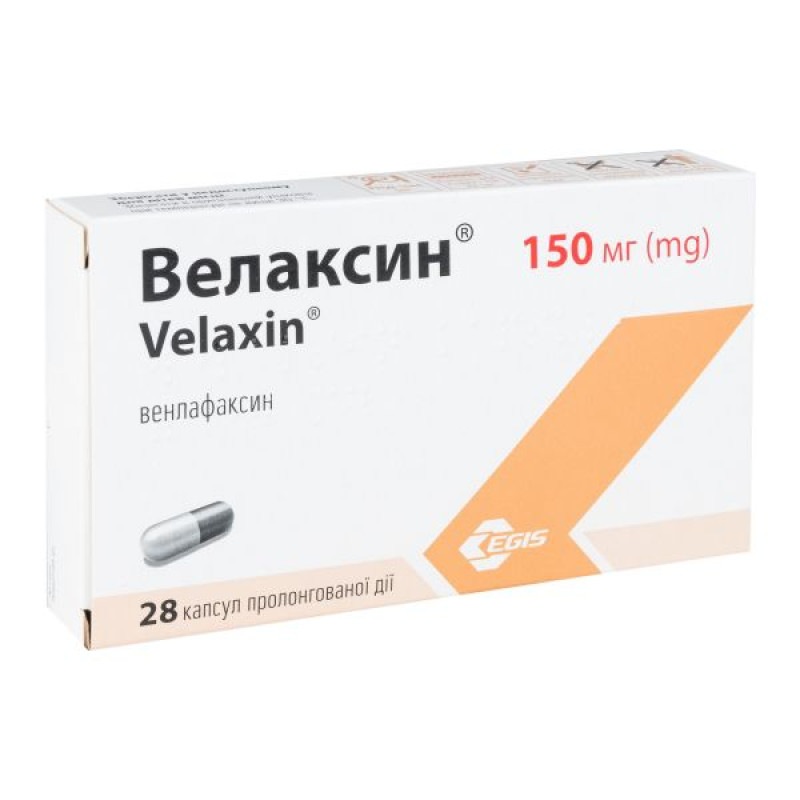
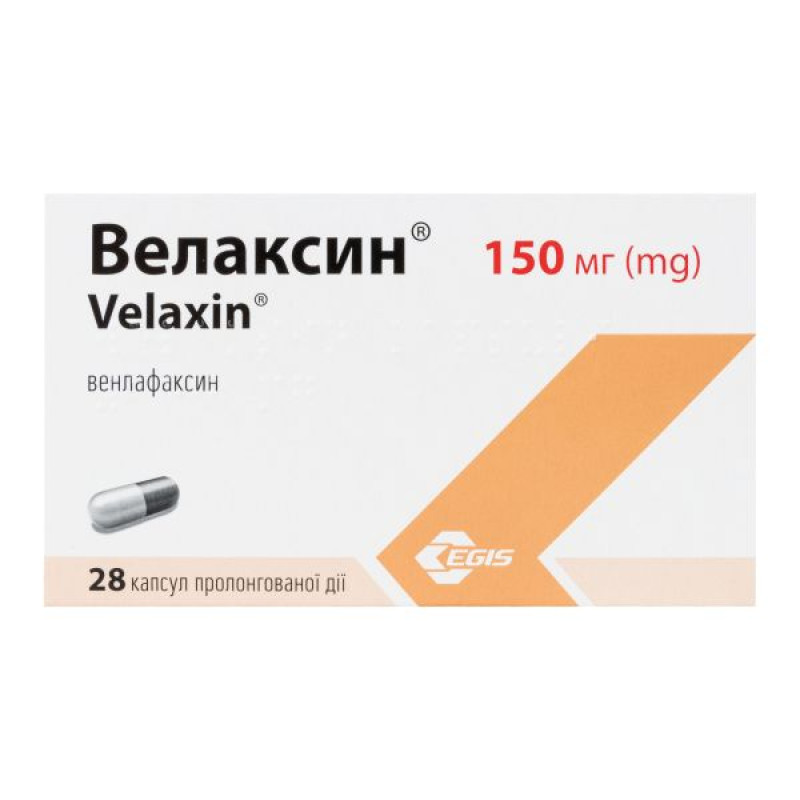
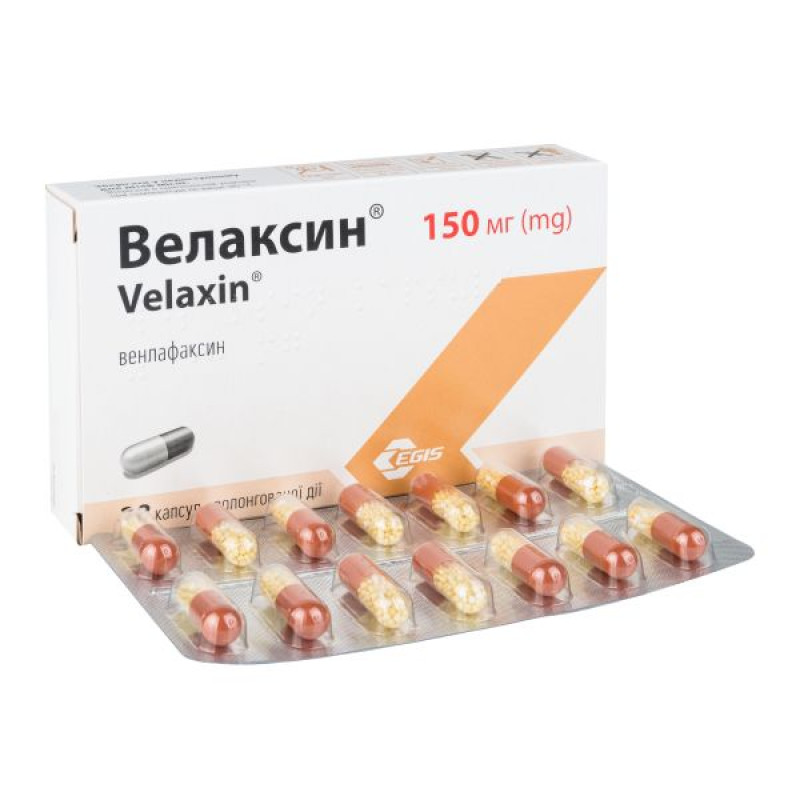
Instructions for Velaxin extended-release capsules 150 mg blister No. 28
Composition
active ingredient: venlafaxine;
1 capsule contains 37.5 mg or 75 mg or 150 mg of venlafaxine (corresponding to 42.42 mg or 84.84 mg or 169.68 mg of venlafaxine hydrochloride);
excipients: microcrystalline cellulose, sodium chloride, colloidal anhydrous silicon dioxide, ethylcellulose, talc, dimethicone, potassium chloride, copovidone, xanthan gum, yellow iron oxide (E 172);
composition of gelatin capsule (37.5 mg): erythrosine (E 127), indigo carmine (E 132), titanium dioxide (E 171), iron oxide yellow (E 172), gelatin;
composition of gelatin capsule (75 mg and 150 mg): red iron oxide (E 172), titanium dioxide (E 171), yellow iron oxide (E 172), gelatin.
Dosage form
Extended-release capsules.
Main physicochemical properties:
37.5 mg capsules – hard gelatin capsules CONI–SNAP 3, self-closing, with a colorless transparent body 43000 and a light orange cap L 530, unmarked;
75 mg capsules – hard gelatin capsules CONI–SNAP 2, self-sealing, with a colorless transparent body 43000 and an orange-brown cap L 570, unmarked;
150 mg capsules – self-sealing hard gelatin capsules CONI-SNAP 0EL, with a colorless transparent body 43000 and an orange-brown cap L 570, without marking.
Pharmacotherapeutic group
Antidepressants. ATX code N06A X16.
Pharmacological properties
Pharmacodynamics
The antidepressant effect of venlafaxine is associated with increased neurotransmitter activity in the central nervous system.
Venlafaxine and its major metabolite O-desmethylvenlafaxine (ODV) are potent aspartate reuptake inhibitors of serotonin and norepinephrine, and they also inhibit neuronal dopamine reuptake.
Venlafaxine and ODV, when administered once or multiple times, reduce beta-adrenergic responses. They are equally effective in affecting neurotransmitter reuptake. Venlafaxine does not inhibit MAO activity.
Venlafaxine has no affinity for opiate, benzodiazepine, phencyclidine, or N-methyl-d-aspartate (NMDA) receptors, nor does it affect the release of norepinephrine from brain tissue.
Pharmacokinetics
Absorption
At least 92% of a single oral dose of venlafaxine is absorbed. After administration of venlafaxine extended-release capsules, peak plasma concentrations of venlafaxine and ODV are achieved between 6.0 ± 1.5 and 8.8 ± 2.2 hours, respectively.
The rate of absorption of venlafaxine from venlafaxine extended-release capsules is slower than its rate of elimination. Thus, the true elimination half-life after administration of venlafaxine extended-release capsules (15±6 hours) is actually the half-life of absorption, rather than the true half-life (5±2 hours) observed after administration of immediate-release tablets.
After administration of equal daily doses of venlafaxine as immediate-release tablets or extended-release capsules, the exposure to both venlafaxine and ODV was similar for the two dosage forms, and plasma concentration fluctuations were slightly lower after treatment with venlafaxine extended-release capsules. Thus, venlafaxine extended-release capsules provide a slower rate of absorption but the same extent of absorption as the immediate-release tablets.
Metabolism
Venlafaxine and its metabolites are excreted from the body mainly by the kidneys.
Approximately 87% of venlafaxine is excreted in the urine within 48 hours as unchanged venlafaxine, unconjugated ODV, conjugated ODV, or other minor metabolites. Half-lives of venlafaxine and its active metabolite
O-desmethylvenlafaxine levels are increased in patients with renal and hepatic insufficiency.
Taking the extended-release capsules with food did not affect the absorption of venlafaxine or the subsequent formation of ODV.
Special patient groups.
The patient's age and gender do not affect the pharmacokinetics of the drug.
In patients with cirrhosis, the half-life of venlafaxine was prolonged by approximately 30% and clearance was reduced by approximately 50%, and the half-life of ODV was prolonged by approximately 60% and clearance was reduced by approximately 30%.
In these patients with renal insufficiency, the half-life of venlafaxine after oral administration was prolonged by approximately 50%, and clearance was reduced by approximately 24% (in patients with impaired renal function with a glomerular filtration rate of 10-70 ml/min). In patients on dialysis, the half-life of venlafaxine was prolonged by approximately 180%, and clearance was reduced by approximately 57%.
Similarly, the half-life of ODV was prolonged by approximately 40%, although clearance was unchanged in patients with renal impairment (10-70 mL/min). In patients on dialysis, the half-life of ODV was prolonged by approximately 142%, and clearance was reduced by approximately 56%. Dose adjustment is required in such patients.
Indication
- Treatment of major depressive episodes.
- Prevention of major depressive episodes.
- Generalized anxiety disorders (GAD).
- Social anxiety disorders (social phobia).
Contraindication
Hypersensitivity to any component of the drug.
Severe arterial hypertension (BP 180/115 and above before the start of therapy).
Angle-closure glaucoma.
Urination disorders due to insufficient urine outflow (for example, prostate disease).
Severe hepatic or renal failure.
Concomitant use with irreversible monoamine oxidase inhibitors (MAOIs) is contraindicated due to the risk of serotonin syndrome, accompanied by symptoms such as agitation, tremor, and hyperthermia.
Interaction with other medicinal products and other types of interactions
Monoamine oxidase inhibitors (MAOIs)
Irreversible non-selective MAO inhibitors
Venlafaxine should not be used in combination with irreversible non-selective MAO inhibitors. Venlafaxine should not be started earlier than 14 days after the end of therapy with irreversible non-selective MAO inhibitors. After discontinuation of venlafaxine, at least 7 days should be allowed before starting therapy with irreversible non-selective MAO inhibitors.
Reversible selective MAO-A inhibitors (moclobemide)
Due to the risk of serotonin syndrome, the combination of venlafaxine with reversible selective MAO inhibitors, such as moclobemide, is contraindicated. Venlafaxine should not be started earlier than 14 days after the end of therapy with reversible MAO inhibitors. After discontinuation of venlafaxine, at least 7 days should be allowed before starting therapy with reversible MAO inhibitors.
Reversible non-selective MAO inhibitors (linezolid)
Concomitant use of the antibiotic linezolid (a weak reversible non-selective MAO inhibitor) with venlafaxine is contraindicated.
Serious adverse reactions have been reported in patients who have recently discontinued MAOI therapy and are starting venlafaxine therapy or who have discontinued venlafaxine therapy shortly before starting MAOI therapy. These reactions have included tremor, myoclonus, hyperhidrosis, nausea, vomiting, flushing, dizziness, and hyperthermia with features resembling neuroleptic malignant syndrome (NMS), convulsions, and death.
Serotonin syndrome
Serotonin syndrome may develop during treatment with venlafaxine, particularly when used concomitantly with medicinal products that affect the serotonergic neurotransmitter system (including triptans, selective serotonin reuptake inhibitors (SSRIs), selective serotonin and norepinephrine reuptake inhibitors (SNRIs), lithium, sibutramine, tramadol, St. John's wort (Hypericum perforatum) preparations), with medicinal products that impair serotonin metabolism (including MAO inhibitors), or with serotonin precursors (e.g. tryptophan supplements). Symptoms of serotonin syndrome include changes in mental status, autonomic lability, neuromuscular disorders and/or gastrointestinal symptoms.
If concomitant use of venlafaxine and an SSRI, SNRI, or serotonin receptor antagonist (tryptophan) is clinically warranted, close patient monitoring is recommended, especially at the start of treatment and with dose increases. Concomitant use of venlafaxine with serotonin precursors (such as tryptophan) is not recommended.
Drugs that affect the nervous system.
Given the known mechanism of action of venlafaxine and the risk of serotonin syndrome, caution should be exercised when venlafaxine is coadministered with drugs that may affect serotonergic transmission (e.g., triptans, selective serotonin reuptake inhibitors, or lithium).
The risk of concomitant use of venlafaxine and other drugs that affect the central nervous system (including those described above) has not been systematically evaluated. Therefore, caution is recommended when venlafaxine and other similar drugs are co-administered.
Indinavir.
When venlafaxine was co-administered with indinavir, a decrease in indinavir AUC and Cmax by 28% and 36%, respectively, was observed. However, indinavir did not affect the pharmacokinetics of venlafaxine and O-desmethyl-venlafaxine.
Warfarin.
In patients receiving warfarin, potentiation of the anticoagulant effect is possible after initiation of treatment with venlafaxine, with an increase in prothrombin time.
Diazepam.
Venlafaxine did not affect the pharmacokinetic and pharmacodynamic profile of diazepam and its metabolite, desmethyldiazepam. Venlafaxine did not affect the psychomotor and psychometric effects of diazepam.
Haloperidol
In a pharmacokinetic study of haloperidol, a 42% decrease in renal clearance, an 88% increase in peak plasma concentration, and a 70% increase in AUC of haloperidol were observed without any change in its elimination half-life. This fact should be taken into account when haloperidol and venlafaxine are co-administered.
Imipramine.
Imipramine does not affect the pharmacokinetics of venlafaxine and ODV. Venlafaxine does not affect the pharmacokinetics of imipramine and 2-OH-imipramine. A dose-dependent increase in the AUC of 2-OH-desimipramine of 2.5- to 4.5-fold was observed when venlafaxine was administered at a dose of 75-150 mg per day. The clinical significance of this interaction is unknown. Caution should be exercised when venlafaxine and imipramine are administered concomitantly.
At steady state, cimetidine inhibited the first-pass metabolism of venlafaxine, but had no significant effect on the formation and elimination of O-desmethyl-venlafaxine, which was present in much greater amounts in the systemic circulation. Thus, no dose adjustment is likely necessary when cimetidine and venlafaxine are coadministered in healthy adults. However, drug interactions are unknown in elderly patients and in patients with impaired hepatic function receiving concomitant treatment with venlafaxine and cimetidine. Such patients should be monitored clinically.
Ethanol.
Administration of venlafaxine according to a fixed regimen did not potentiate the psychomotor and psychometric effects that occurred in the same individuals in the absence of venlafaxine treatment.
Despite this, it is recommended to avoid alcohol consumption during treatment with venlafaxine.
Risperidone.
With the simultaneous use of these drugs (despite the increase in the AUC of risperidone), the pharmacokinetics of the sum of the active components (risperidone and its active metabolite) does not significantly change.
Lithium preparations.
Venlafaxine did not affect the pharmacokinetic characteristics of lithium preparations.
Drugs that inhibit CYP2D6.
The CYP2D6 isoenzyme, responsible for the genetic polymorphisms found in the metabolism of many antidepressants, transforms venlafaxine into its main active metabolite ODV. Thus, there is a potential for drug interactions between venlafaxine and drugs that inhibit CYP2D6.
Drug interactions that result in reduced conversion of venlafaxine to ODV (see section above on imipramine) potentially increase serum concentrations of venlafaxine and decrease concentrations of its active metabolite.
The pharmacokinetic profile of venlafaxine in subjects receiving concomitant CYP2D6 inhibitors is not expected to differ significantly from that in poor CYP2D6 metabolisers (see section on metabolism). Therefore, no dose adjustment is necessary.
Drugs that are broken down/metabolized by the cytochrome P450 isoenzyme.
Venlafaxine does not inhibit the metabolism of diazepam, which is partially metabolized by CYP2C19.
Venlafaxine is a relatively weak inhibitor of CYP2D6.
Venlafaxine is 27% bound to plasma proteins, while ODV is 30%. Therefore, potential drug interactions due to protein binding of venlafaxine and its major metabolite may not be expected.
Ketoconazole (CYP3A4 inhibitor).
A study of ketoconazole in CYP2D6 extensive (EM) and poor metabolizers (PM) demonstrated an increase in the AUC of venlafaxine (70% and 21% in CYP2D6 EM and PM, respectively) and O-desmethylvenlafaxine (33% and 23% in CYP2D6 EM and PM, respectively) after ketoconazole administration. Concomitant use of CYP3A4 inhibitors (e.g. atazanavir, clarithromycin, indinavir, itraconazole, voriconazole, posaconazole, ketoconazole, nelfinavir, ritonavir, saquinavir, telithromycin) and venlafaxine may increase venlafaxine and O-desmethylvenlafaxine levels. Therefore, caution should be exercised when a CYP3A4 inhibitor is coadministered with venlafaxine.
Antihypertensive and antidiabetic agents.
No clinically significant interactions of venlafaxine with antihypertensive (including β-blockers, angiotensin-converting enzyme (ACE) inhibitors and diuretics) and antidiabetic drugs have been identified.
The potential benefit of combination therapy with venlafaxine and another antidepressant has not been evaluated to date.
The benefit of combining electroconvulsive therapy with venlafaxine treatment has not yet been evaluated.
In this case, an increase in clozapine levels was noted, which was temporally associated with the manifestation of undesirable effects, including seizures, after the end of venlafaxine treatment.
Drugs that prolong the QT interval
The risk of QTc prolongation and/or ventricular arrhythmias (e.g., TdP) is increased by concomitant use of other drugs that prolong the QTc interval. Concomitant use of these drugs should be avoided.
These include:
Class 1a and III antiarrhythmic drugs (e.g. quinidine, amiodarone, sotalol, dofetilide)
some antipsychotic medications (e.g. thioridazine)
some macrolides (e.g. erythromycin)
some antihistamines
some quinolone antibiotics (e.g. moxifloxacin).
The above list is not exhaustive. Other drugs that significantly prolong the QT interval should be avoided.
Metoprolol
Concomitant administration of venlafaxine and metoprolol to healthy volunteers in a pharmacokinetic study of both drugs resulted in an increase in plasma concentrations of metoprolol by approximately 30–40%, without changing the plasma concentrations of its active metabolite α-hydroxymetoprolol. The clinical significance of this phenomenon in patients with hypertension is unknown. Metoprolol does not alter the pharmacokinetics of venlafaxine and its active metabolite ODV. Caution should be exercised when venlafaxine and metoprolol are coadministered.
Application features
In some cases, especially in elderly patients, arterial hypotension may develop at the beginning of treatment. Before starting venlafaxine, it is necessary to correct blood pressure. There are known cases of increased heart rate, especially when prescribing high doses of venlafaxine.
Venlafaxine may cause mydriasis. Therefore, it is recommended to closely monitor the condition of patients with increased intraocular pressure and angle-closure glaucoma.
Some depressed patients treated with antidepressants (including venlafaxine) may experience activation of mania or hypomania. Venlafaxine should be administered with caution to patients with a history of mania.
Venlafaxine treatment may cause seizures and should be administered with caution to patients with a history of seizures. If a seizure develops in any patient, venlafaxine treatment should be discontinued.
Rash has occurred in 3% of patients treated with venlafaxine. The patient should be advised to notify the physician if rash, urticaria, or any other allergic reaction develops.
Clinical examination of patients treated with venlafaxine has not revealed any evidence of tolerance, drug-seeking behavior, or escalation of dosage over time. Physicians should closely monitor patients for signs of drug abuse, especially those with a history of such symptoms.
In patients with moderate to severe renal disease or cirrhosis, the clearance of venlafaxine and its active metabolite is reduced and the half-life is prolonged. Therefore, a dose reduction may be required in such patients. As with other antidepressants, caution should be exercised when prescribing venlafaxine to such patients. Liver/kidney function should be assessed before initiating treatment.
Cases of hyponatremia and/or syndrome of inappropriate antidiuretic hormone secretion have been reported during treatment with venlafaxine, usually in patients with reduced circulating blood volume or in dehydrated patients, including the elderly and patients receiving diuretics. Certain precautions should be taken in such patients.
Abnormal bleeding.
Drugs that inhibit serotonin reuptake may decrease platelet function. The risk of cutaneous or mucosal bleeding, including gastrointestinal bleeding, may be increased in patients taking venlafaxine. Venlafaxine should be used with caution in patients with bleeding tendencies, including those taking anticoagulants or platelet function inhibitors. SSRIs/SNRIs increase the risk of postpartum hemorrhage (see sections “Use during pregnancy and lactation” and “Adverse reactions”).
During long-term treatment, serum cholesterol levels should be determined.
The efficacy and safety of venlafaxine in combination with weight loss agents have not been established. Any concomitant use of venlafaxine with weight loss agents is not recommended. Venlafaxine monotherapy or its combination with other weight loss agents is not indicated.
A small number of patients treated with antidepressants, including venlafaxine, may develop aggression, requiring dose reduction or discontinuation of treatment. As with any other antidepressant, venlafaxine should be used with caution in patients with aggression.
Suicide risk/suicidal thoughts or worsening of clinical condition.
Depression is characterised by an increased risk of suicidal thoughts, self-harm and suicide attempts (suicidal acts). This risk persists until significant remission is achieved. As there may be no improvement in the first few weeks or for a longer period of time after starting treatment, patients should be closely monitored until their condition improves. General experience with antidepressant treatment suggests that the risk of suicide may be increased in the early stages of recovery.
Other psychiatric disorders for which venlafaxine is prescribed may also be associated with an increased risk of suicidal behaviour. In addition, these disorders may be associated with major depressive disorder, and the same precautions should be observed when treating patients with other psychiatric disorders as when treating patients with major depressive disorder.
Patients with a history of suicidal behaviour or patients exhibiting a significant degree of suicidal ideation prior to initiation of treatment are known to be at greater risk of suicidal thoughts or suicide attempts and should receive careful medical supervision during treatment.
During treatment with venlafaxine, and especially in the early stages of treatment, as well as after dose changes, close monitoring of patients, especially patients at risk, is necessary. Patients (and caregivers of patients) should be warned about the need to monitor for clinical worsening, the emergence of suicidal thoughts or actions, and unusual changes in behavior, and to seek medical advice immediately if such symptoms appear.
When treated with venlafaxine, especially in combination with other agents such as MAO inhibitors that can act on the serotonergic neurotransmitter system, serotonin syndrome may develop - a potentially life-threatening condition.
Symptoms of serotonin syndrome may include mental status changes (e.g., agitation, hallucinations, coma), autonomic nervous system disorders (e.g., tachycardia, unstable blood pressure, hyperthermia), neuromuscular disorders (e.g., hyperreflexia, incoordination), and/or gastrointestinal disorders (e.g., nausea, vomiting, diarrhea).
Akathisia/psychomotor restlessness.
The use of venlafaxine is associated with the development of akathisia, which is subjectively characterized by an unpleasant or distressing restlessness and need to move frequently, accompanied by an inability to sit or stand still. This most often occurs in the first few weeks of treatment. In patients who develop such symptoms, increasing the dose may be detrimental.
Dry mouth.
Dry mouth has been reported in 10% of patients treated with venlafaxine. This may increase the risk of caries and patients should be reminded of the importance of dental hygiene.
Angle-closure glaucoma
Mydriasis has been reported in association with venlafaxine. Therefore, it is recommended that patients with elevated intraocular pressure or at risk of developing acute angle-closure glaucoma be closely monitored.
Blood pressure
Venlafaxine, depending on the dose, may increase blood pressure. It is necessary to carefully monitor blood pressure parameters in all patients and normalize blood pressure before starting treatment with venlafaxine, which is recommended to be measured periodically - at the beginning of treatment and after increasing the dose. It is recommended to be careful with patients in whom the underlying disease could be caused by increased blood pressure, for example, in patients with impaired cardiac function. Postural hypertension may develop, therefore patients, especially the elderly, should be warned about possible dizziness, impaired motor coordination.
Heart rate
Heart rate may increase, especially at high doses. Caution should be exercised in patients whose general condition may depend on heart rate.
Heart disease and risk of arrhythmia
Venlafaxine has not been studied in patients with recent myocardial infarction or decompensated heart failure. Therefore, venlafaxine should be used with caution in such patients.
Before prescribing venlafaxine to patients at high risk of serious cardiac arrhythmia, the risk/benefit ratio should be weighed.
Caution should be exercised in patients with cardiovascular disease due to the risk of ventricular arrhythmia. ECG may show changes in PR and QTc intervals.
Convulsions
Convulsions may occur during treatment with venlafaxine. Venlafaxine should be used with caution in patients with a history of seizures. Such patients should be closely monitored. If seizures develop, treatment with the drug should be discontinued.
Serum cholesterol
During long-term treatment with venlafaxine, serum cholesterol levels should be measured.
Mania/hypomania
Patients with mood disorders receiving antidepressants, including venlafaxine, may develop mania or hypomania. As with other antidepressants, venlafaxine should be prescribed with caution in patients with a family history of bipolar disorder.
Clinical studies have not shown that patients taking venlafaxine develop drug dependence, resistance to therapy, or the need for dose escalation.
Aggression
Aggression may occur in patients receiving antidepressants, including venlafaxine. This has been reported at the beginning of treatment, after dose changes, and upon discontinuation of treatment. As with other antidepressants, venlafaxine should be prescribed with caution in patients with a history of aggression.
Discontinuation of treatment
Withdrawal symptoms usually occur when treatment is stopped, especially if treatment is stopped abruptly.
The risk of developing withdrawal symptoms may depend on several factors, including the duration of treatment and dose, and the rate of dose reduction. Dizziness, sensory disturbances (including paraesthesia), sleep disturbances (including insomnia and deep sleep), agitation or restlessness, nausea and/or vomiting, tremor and headache are the most commonly reported withdrawal reactions. These symptoms are generally mild or moderate; however, in some patients they may be severe. Symptoms usually occur within the first few days after discontinuation of treatment, but there have been a few cases of such symptoms in patients who have accidentally missed a dose of the drug. These symptoms usually resolve without treatment within 2 weeks, although in some patients they may persist for longer (2-3 months or more). Therefore, when discontinuing treatment, it is recommended that the dose of venlafaxine be gradually reduced over a period of several weeks or months, depending on the patient's needs.
Diabetes
Laboratory drug interaction tests
False-positive results of urine immunoassays for phencyclidine and amphetamine have been reported in patients taking venlafaxine. This may be due to the lack of a screening strategy. False-positive results may occur within a few days of stopping venlafaxine. Confirmatory tests such as gas chromatography/mass spectrometry may be able to distinguish venlafaxine from phencyclidine and amphetamine.
Use during pregnancy or breastfeeding
Pregnancy
Studies of the use of venlafaxine in pregnant women have not been conducted. Animal reproductive studies are insufficient. The potential risk to humans is unknown. Observational data indicate an increased (almost 2-fold) risk of postpartum hemorrhage as a result of exposure to SSRIs/SNRIs during the month before delivery (see sections "Special instructions" and "Adverse reactions"). Venlafaxine increases the risk of persistent pulmonary hypertension of the newborn. In case of maternal use of venlafaxine before delivery, the newborn may experience drug withdrawal syndrome. The use of venlafaxine in pregnant women is contraindicated.
Breast-feeding
Venlafaxine and its metabolite ODV pass into breast milk in significant amounts, which may cause serious adverse reactions in the infant; therefore, the use of venlafaxine during breastfeeding is contraindicated. If necessary, breastfeeding should be discontinued.
Ability to influence reaction speed when driving vehicles or other mechanisms
When using the drug, you should refrain from driving or operating other mechanisms.
Method of administration and doses
Take the capsule with a meal, swallowing it whole with water. The capsule should not be opened, crushed, chewed, or placed in water. Take once a day at about the same time, in the morning or evening.
Depression.
The usual recommended dose of Velaxin® for the treatment of depression is 75 mg once daily. If necessary, after 2 weeks, the dose can be increased to 150 mg once daily in order to achieve further clinical improvement. If necessary, the dose can be increased to 225 mg/day for mild forms of depression and to 375 mg/day for severe forms. Any increase in dose should be made by 37.5-75 mg every 2 weeks or a longer period of time, but not less than after 4 days.
When a dose of 75 mg was administered, the antidepressant effect was observed after 2 weeks of treatment.
GAD and social phobia.
The usual recommended daily dose for the treatment of specific types of anxiety, including social phobia, is 75 mg once a day. If necessary, to achieve clinical improvement after 2 weeks of treatment, the dose may be increased to 150 mg once a day. If necessary, the dose may be increased to 225 mg once a day. The dose may be increased by 75 mg/day every 2 weeks or longer, but not less than after 4 days.
When a dose of 75 mg was administered, the onset of anxiolytic action was observed after 1 week of treatment.
Maintenance therapy/relapse prevention.
According to specialist recommendations, treatment for an episode of depression should last at least 6 months.
For maintenance therapy, as well as for the prevention of relapses or new episodes of depression, the same doses should usually be used that were effective in a typical episode of depression. The doctor should regularly, at least once every 3 months, monitor the effectiveness of long-term therapy with Velaxin®.
Discontinuation of venlafaxine administration.
To discontinue treatment with venlafaxine, gradual dose reduction is recommended: if venlafaxine has been used for more than 6 weeks, dosage reduction over at least 2 weeks is recommended.
The time required for gradual dose reduction depends on the dose, duration of treatment, and the individual sensitivity of the patient.
Kidney or liver failure.
In renal failure, when the glomerular filtration rate (GFR) is
> 30 ml/min, no dose adjustment is required, if < 30 ml/min – the total daily dose of venlafaxine should be reduced by 50%. Patients undergoing hemodialysis should reduce the total daily dose of venlafaxine by 50%. The drug should be taken after the completion of the hemodialysis procedure.
In moderate hepatic insufficiency, the daily dose of venlafaxine should be reduced by 50%. In some cases, a dose reduction of more than 50% is possible.
Elderly people.
Elderly people should not reduce the dose of the drug solely due to the patient's age.
Treatment should be carried out with caution, as with all other drugs. When individually selecting the dose, special caution should be observed in case of its increase.
Maintenance/continuous/long-term therapy.
According to generally accepted principles, treatment of the acute phase of major depression should be continued for several months or longer. With specific types of anxiety, including social phobia, patients may suffer for a long time, so they require long-term therapy.
To discontinue treatment with venlafaxine, gradual dose reduction is recommended: if venlafaxine has been used for more than 6 weeks, dosage reduction over at least 2 weeks is recommended.
The time required for gradual dose reduction depends on the dose and duration of treatment.
Children
The safety and efficacy of the drug in children have not been studied, so the drug should not be used in this age group of patients.
Overdose
Signs of venlafaxine overdose (as monotherapy or in combination with alcohol and/or other drugs): changes in the electrocardiogram (prolongation of the QT interval, bundle branch block, prolongation of the QRS complex), sinus and ventricular tachycardia, bradycardia, hypotension, changes in the level of consciousness (from drowsiness to coma), convulsions, mydriasis, vomiting, vertigo. These symptoms and abnormalities usually resolved spontaneously.
Overdose treatment.
Treatment of overdose includes maintaining a patent airway, adequate oxygenation, and proper ventilation.
Continuous monitoring of heart rate and vital signs, general supportive and symptomatic therapy are recommended. Activated charcoal may be used. Induction of vomiting is not recommended due to the risk of aspiration.
Adverse reactions
Blood and lymphatic system disorders: ecchymosis (bleeding into the skin or mucous membranes), gastrointestinal bleeding; bleeding from mucous membranes, prolonged bleeding time, thrombocytopenia, dyscrasia (including agranulocytosis, aplastic anemia, neutropenia, pancytopenia).
Immune system disorders: anaphylactic reactions.
On the part of the endocrine system: increased prolactin levels in the blood, syndrome of inappropriate antidiuretic hormone secretion (SIADH).
Metabolism and nutrition: increased blood cholesterol levels, weight loss, weight gain, hyponatremia, decreased appetite.
Psychiatric: unusual dreams, decreased libido, insomnia, nervous excitability, sedation, confusion, depersonalization, apathy, hallucinations, anxiety, manic reactions, delirium, suicidal thoughts and behavior (suicidal thoughts and behavior have been reported during venlafaxine therapy or immediately after discontinuation of therapy), phobias, speech disorders (including dysarthria), mania, hypomania, bruxism, abnormal orgasms (women), apathy.
Nervous system: headache, dizziness (vertigo), muscle hypertonia, tremor, paresthesia, stupor, yawning, myoclonus, impaired balance and coordination (ataxia), akathisia, convulsions, neuroleptic malignant syndrome (NMS), serotonin syndrome, extrapyramidal reactions (including dystonia and dyskinesia), tardive dyskinesia.
On the part of the organs of vision: accommodation disorders, mydriasis, visual impairment, angle-closure glaucoma.
Hearing and labyrinth disorders: ringing in the ears (tinnitus).
Cardiovascular system: palpitations, tachycardia, QT prolongation, ventricular fibrillation, ventricular tachycardia (including torsades de pointes), hypertension, vasodilation (mainly hot flashes/flushes), orthostatic hypotension, syncope, hypotension, arrhythmias, bleeding.
Respiratory system: yawning, pulmonary eosinophilia, shortness of breath (dyspnea).
Gastrointestinal: nausea, dry mouth, decreased appetite, anorexia, constipation, vomiting, taste disturbance, diarrhea,