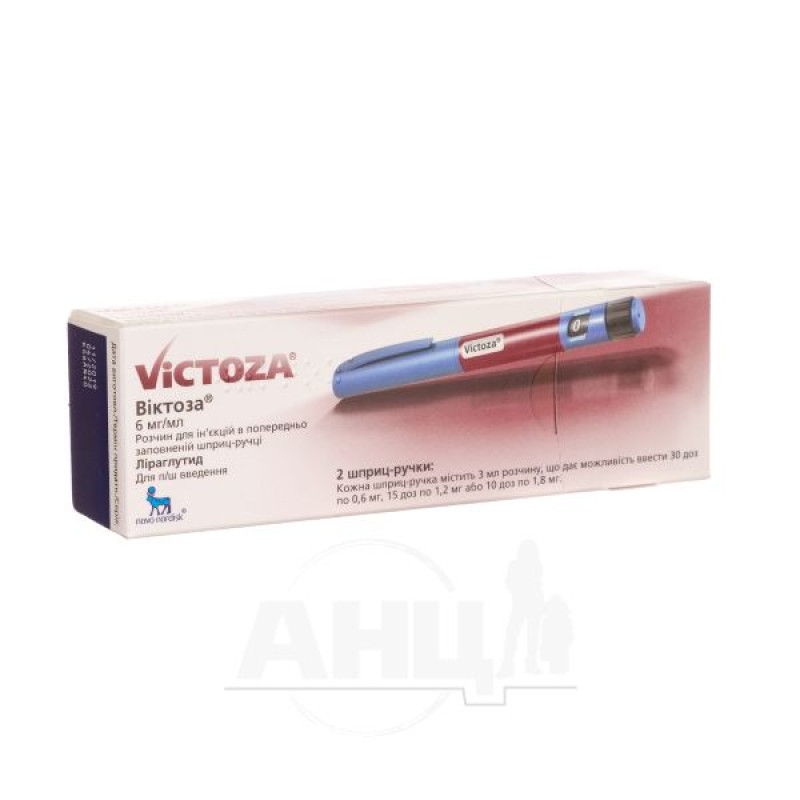
Instructions Victoza solution for injection 6 mg/ml cartridge inserted into a 3 ml syringe pen No. 2
Composition
active ingredient: liraglutide;
1 ml of solution contains 6 mg of liraglutide, an analogue of human glucagon-like peptide-1 (GLP-1) produced by recombinant DNA technology in Saccharomyces cerevisiae. One pre-filled pen contains 18 mg of liraglutide in 3 ml;
Excipients: sodium hydrogen phosphate dihydrate, propylene glycol, phenol, sodium hydroxide, hydrochloric acid, water for injection.
Dosage form
Solution for injection.
Main physicochemical properties: transparent and colorless isotonic solution, pH = 8.15.
Pharmacotherapeutic group
Drugs used in diabetes mellitus are glucagon-like peptide-1 (GLP-1) analogues.
ATX code A10BJ02.
Pharmacological properties
Pharmacodynamics
Mechanism of action
Liraglutide is a GLP-1 analogue with an amino acid sequence 97% homologous to human GLP-1 that binds to and activates GLP-1 receptors. The GLP-1 receptor is the target of native GLP-1 (an endogenously secreted incretin hormone), which potentiates glucose-dependent insulin secretion by pancreatic β-cells. Unlike native GLP-1, the pharmacokinetics and pharmacodynamics of liraglutide in humans allow it to be administered once daily. The prolonged action of subcutaneously administered liraglutide is due to three mechanisms: self-association, which slows absorption, binding to blood albumin, and increased resistance to the action of the enzymes dipeptidyl peptidase-4 (DPP-4) and neutral endopeptidase (NEP), which is manifested in a long half-life of the drug from plasma.
The action of liraglutide is mediated by a specific interaction with GLP-1 receptors, which leads to an increase in the level of cyclic adenosine monophosphate (cAMP). Liraglutide stimulates insulin secretion in a glucose-dependent manner and simultaneously reduces inappropriately high glucagon secretion, also depending on the level of glucose in the blood. Thus, at a high concentration of glucose in the blood, insulin secretion increases and glucagon secretion decreases. On the contrary, during hypoglycemia, liraglutide reduces insulin secretion, but does not affect glucagon secretion. The mechanism of lowering blood glucose also includes a slight delay in gastric emptying. Liraglutide reduces body weight and fat mass by mechanisms that reduce hunger and energy expenditure.
GLP-1 is a physiological regulator of appetite and food intake, but the exact mechanism of its action is not fully understood. In animal studies, peripheral administration of liraglutide resulted in its accumulation in specific brain regions involved in appetite regulation, where liraglutide, through specific activation of the GLP-1 receptor (GLP-1R), increased satiety and reduced key hunger signals, leading to weight loss.
GLP-1 receptors are also expressed in certain areas of the heart, blood vessels, immune system, and kidneys. In a mouse model of atherosclerosis, liraglutide prevented the progression of aortic plaque and reduced inflammation in the plaque. In addition, liraglutide had a positive effect on plasma lipids. Liraglutide did not reduce the size of existing plaques.
Effects due to the pharmacodynamics of the drug
Liraglutide acts over 24 hours and improves glycemic control by reducing fasting and postprandial blood glucose levels in patients with type 2 diabetes.
Clinical efficacy and safety
Both improving glycemic control and reducing cardiovascular morbidity and mortality are integral parts of the treatment of type 2 diabetes.
Five double-blind, randomized, controlled phase 3a clinical trials in adults were conducted to evaluate the effect of liraglutide on glycemic control (Table 1). Liraglutide treatment resulted in clinically and statistically significant improvements in glycosylated hemoglobin A1c (HbA1c), fasting plasma glucose, and postprandial plasma glucose compared with placebo.
These studies were conducted in 3978 patients with type 2 diabetes mellitus (2501 patients received liraglutide): 53.7% were men, 46.3% were women, 797 patients (508 received liraglutide) were aged ≥ 65 years, and 113 patients (66 received liraglutide) were aged ≥ 75 years.
Additional studies of liraglutide were conducted in 1901 patients in four open-label, randomized, controlled clinical trials (464, 658, 323, and 177 patients in each trial, respectively), as well as one double-blind, randomized, controlled clinical trial in patients with type 2 diabetes mellitus and moderate renal impairment (279 patients).
Liraglutide was also used in a large cardiovascular study (LEADER®) involving 9,340 patients with type 2 diabetes at high risk of cardiovascular disease.
Glycemic control
Monotherapy
Combination with oral hypoglycemic agents
Treatment for 26 weeks with liraglutide in combination with metformin, glimepiride, or the combination of metformin and rosiglitazone, or an SGLT2 inhibitor ± metformin, achieved statistically significant and sustained reductions in HbA1c compared with placebo (Table 1).
Table 1. Use of liraglutide in phase 3a clinical studies as monotherapy (52 weeks) and in combination with oral hypoglycemic agents (26 weeks)
| N | Mean baseline HbA1c level (%) | Change in mean HbA1c from baseline (%) | Patients (%) who reached the level HbA1c < 7% | Average starting weight (kg) | Change in average weight compared to baseline (kg) | | |
| Monotherapy |
Liraglutide 1.2 mg Liraglutide 1.8 mg Glimepiride 8 mg/day | 251 246 248 | 8.18 8.19 8.23 | - 0.84* - 1.14** - 0.51 | | 42.81, 58.33 | | 50.91, 62.03 | | 27.81, 30.83 |
| 92.1 92.6 93.3 | - 2.05** - 2.45** 1.12 |
| Add-on to metformin (2000 mg/day) |
| Liraglutide 1.2 mg | 240 | 8.3 | - 0.97† | 35.31, 52.82 | 88.5 | - 2.58** |
| Liraglutide 1.8 mg | 242 | 8.4 | - 1.00† | 42.41, 66.32 | 88.0 | - 2.79** |
| Placebo | 121 | 8.4 | 0.09 | 10.81, 22.52 | 91.0 | - 1.51 |
| Glimepiride 4 mg/day | 242 | 8.4 | - 0.98 | 36.31, 56.02 | 89.0 | 0.95 |
| Addition to glimepiride (4 mg/day) |
| Liraglutide 1.2 mg | 228 | 8.5 | - 1.08** | 34.51, 57.42 | 80.0 | 0.32** |
| Liraglutide 1.8 mg | 234 | 8.5 | - 1.13** | 41.61, 55.92 | 83.0 | - 0.23** |
| Placebo | 114 | 8.4 | 0.23 | 7.51, 11.82 | 81.9 | - 0.10 |
Rosiglitazone 4 mg/day | 231 | 8.4 | - 0.44 | 21.91, 36.12 | 80.6 | 2.11 |
| Add-on to metformin (2000 mg/day) + rosiglitazone (4 mg twice daily) |
| Liraglutide 1.2 mg | 177 | 8.48 | - 1.48 | 57.51 | 95.3 | - 1.02 |
| Liraglutide 1.8 mg | 178 | 8.56 | - 1.48 | 53.71 | 94.9 | - 2.02 |
| Placebo | 175 | 8.42 | - 0.54 | 28.11 | 98.5 | 0.60 |
| Add-on to metformin (2,000 mg/day) + glimepiride (4 mg/day) |
| Liraglutide 1.8 mg | 230 | 8.3 | - 1.33* | 53.11 | 85.8 | - 1.81** |
| Placebo | 114 | 8.3 | - 0.24 | 15.31 | 85.4 | - 0.42 |
| Insulin glargine4 | 232 | 8.1 | - 1.09 | 45.81 | 85.2 | 1.62 |
| Addition to SGLT25 inhibitor ± metformin (≥1500 mg/day) |
Liraglutide 1.8 mg Placebo | 203 100 | 8.00 7.96 | -1.02*** -0.28 | 54.8*** 13.9 | 91.0 91.4 | -2.92 -2.06 |
* Higher efficacy (p < 0.01) versus active comparator.
** Higher efficacy (p < 0.0001) versus active comparator.
*** Higher efficacy (p < 0.001) versus active comparator.
† Non-inferior efficacy (p < 0.0001) compared to active comparator.
1 All patients.
2 Previous monotherapy with an oral hypoglycemic agent.
3 Patients who previously followed a diet.
4 The insulin glargine study was open-label and dosed according to insulin glargine titration guidelines.
5The addition of Victoza® to an SGLT2 inhibitor has been studied at all registered doses of the SGLT2 inhibitor.
Insulin glargine titration recommendations:
| Self-determination of fasting plasma glucose concentration | Insulin glargine dose increase (IU) |
| ≤ 5.5 mmol/L (≤ 100 mg/dL) Target level | Do not change the dose. |
| > 5.5 and < 6.7 mmol/L (> 100 and < 120 mg/dL) | 0–2 MOa |
| ≥ 6.7 mmol/L (≥ 120 mg/dL) | 2 MO |
a As per individual investigator recommendations provided at the previous visit, e.g., based on whether the patient experienced hypoglycemia.
In a 104-week clinical trial, 57% of patients with type 2 diabetes treated with insulin degludec in combination with metformin achieved a target HbA1c of <7%, while the remaining patients continued in an open-label study for 26 weeks, where they were randomly assigned to add liraglutide or insulin aspart once daily (with the largest meal). In the insulin degludec plus liraglutide group, the insulin dose was reduced by 20% to minimize the risk of hypoglycemia. The addition of liraglutide resulted in a statistically significant greater reduction in HbA1c: -0.73% with liraglutide and -0.40% with comparator and body weight -3.03 vs. 0.72 kg, respectively. The incidence of hypoglycemia (per patient per year of drug use) was statistically significantly lower with the addition of liraglutide compared with the addition of insulin aspart once daily (1.0 vs. 8.15; ratio: 0.13; 95% CI: 0.08 to 0.21).
In a 52-week clinical trial, the addition of insulin detemir to liraglutide in patients who did not achieve their target glycemic control on liraglutide 1.8 mg and metformin alone resulted in a reduction in HbA1c of 0.54% from baseline compared with a reduction of 0.20% in the control group receiving liraglutide 1.8 mg and metformin. Weight loss was maintained. There was a small increase in the number of mild hypoglycemia events (0.23 vs. 0.03 per patient-year, respectively).
In the LEADER® study (see Cardiovascular Effects below), 873 patients received premixed insulin (with or without oral hypoglycemic agents) at baseline and for at least 26 weeks. The mean HbA1c at baseline was 8.7% for liraglutide and placebo. At week 26, the estimated mean change in HbA1c was -1.4% and -0.5% for liraglutide and placebo, respectively, with a treatment difference estimate of -0.9 [-1.00; -0.70] 95%. The safety profile of liraglutide in combination with premixed insulin was generally comparable to that observed with placebo in combination with premixed insulin (see Adverse Reactions).
Experience in treating patients with renal impairment
In a double-blind study comparing the efficacy and safety of liraglutide 1.8 mg and placebo as add-on to insulin and/or oral hypoglycemic agents in patients with type 2 diabetes mellitus and moderate renal impairment, liraglutide was superior to placebo in reducing HbA1c levels after 26 weeks of treatment (1.05% vs. 0.38%, respectively). Significantly more patients achieved HbA1c levels below 7% with liraglutide compared to placebo (52.8% vs. 19.5%). Weight loss was observed in both groups: -2.4 kg with liraglutide vs. -1.09 kg with placebo. The relative risk of hypoglycemia was comparable in both treatment groups. The safety profile of liraglutide was generally similar to that observed in other studies of liraglutide.
With Victoza® monotherapy, patients whose HbA1c level was above 9.5% before treatment had an average decrease of 2.1%, and with combination treatment - by 1.1-2.5%.
Proportion of patients with decreased HbA1c levels
Liraglutide monotherapy provided a statistically significantly higher proportion of patients achieving HbA1c ≤ 6.5% at week 52 compared to patients receiving glimepiride (37.6% at 1.8 mg and 28.0% at 1.2 mg vs. 16.2% with comparator).
When treated for 26 weeks with liraglutide in combination with metformin, glimepiride, with metformin and rosiglitazone, or with an SGLT2 inhibitor ± metformin, a statistically significantly higher percentage of patients achieved HbA1c ≤ 6.5% compared to monotherapy with these drugs was observed.
Fasting plasma glucose level
Treatment with liraglutide and its combination with one or two oral antidiabetic agents resulted in a reduction in fasting plasma glucose levels of 13 to 43.5 mg/dL (0.72 to 2.42 mmol/L). This reduction was observed within the first 2 weeks of treatment.
Plasma glucose level after a meal
Liraglutide reduced plasma glucose levels after all 3 daily meals by 31–49 mg/dL (1.68–2.71 mmol/L).
Beta cell function
Clinical studies of liraglutide, based on data obtained by assessing the homeostasis model of beta-cell function and the values of the proinsulin/insulin ratio, concluded that the functional state of beta-cells was improved. After 52 weeks of treatment with liraglutide in a group of patients with type 2 diabetes mellitus (n = 29), an improvement in the first and second phases of insulin secretion was observed.
Body weight
When treated with liraglutide in combination with metformin, metformin and glimepiride, metformin and rosiglitazone, or an SGLT2 inhibitor, with and without metformin, patients consistently lost between 0.86 and 2.62 kg of body weight compared with placebo.
More pronounced weight loss was observed in patients with higher body mass index before treatment.
A retrospective analysis of serious adverse cardiovascular events (cardiovascular death, myocardial infarction, stroke) across all mid- and long-term phase 2 and 3 studies (26 to 100 weeks duration) involving 5,607 patients (of whom 3,651 received liraglutide) showed no increased risk of cardiovascular events [incidence rate 0.75 (95% CI 0.35; 1.63)] with liraglutide compared to all comparators.
The Liraglutide Cardiovascular Effects and Effects Study in Diabetes (LEADER®) was a multicenter, placebo-controlled, double-blind clinical trial. 9340 patients were randomly assigned to receive liraglutide (4668) or placebo (4672) as an add-on to standard care aimed at reducing HbA1c and cardiovascular risk factors. The primary outcome or vital status at the end of the study was known in 99.7% and 99.6% of patients randomized to liraglutide or placebo, respectively. The duration of follow-up was a minimum of 3.5 years and a maximum of 5 years. The study included patients ≥ 65 years of age (n = 4329) and ≥ 75 years of age (n = 836) and patients with mild (n = 3907), moderate (n = 1934) or severe (n = 224) renal impairment. The average age of the patients was 64 years and the average body mass index was 32.5 kg/m². The average duration of diabetes was 12.8 years.
The primary endpoint was the time from randomization to the first occurrence of any major adverse cardiovascular event (MACE): cardiovascular death, nonfatal myocardial infarction, or nonfatal stroke. Liraglutide was superior to placebo in preventing major adverse cardiovascular events. The risk estimate was consistently lower than 1 for all 3 components of major adverse cardiovascular events.
Liraglutide also significantly reduced the risk of many serious adverse cardiovascular events (primary MACE, unstable angina requiring hospitalization, coronary revascularization, or heart failure requiring hospitalization) and other secondary endpoints.
Liraglutide added to standard care resulted in significant and sustained reductions in HbA1c from baseline to 36 months compared with placebo (–1.16% vs –0.77%; estimated treatment difference –0.40% [–0.45; –0.34]). Liraglutide reduced the need for insulin intensification by 48% compared with placebo in insulin-naïve patients (HR 0.52 [0.48; 0.57]).
Blood pressure and heart rate
During phase 3a studies, liraglutide reduced systolic blood pressure by an average of 2.3 to 6.7 mmHg from baseline compared with the active comparator, which reduced by 1.9 to 4.5 mmHg.
In long-term clinical trials, including LEADER®, liraglutide modestly increased heart rate from baseline by 2 to 3 beats per minute. In the LEADER® trial, no long-term clinical impact of the increase in heart rate on the risk of cardiovascular events was observed.
Assessment of microvascular diseases
In the LEADER® study, microvascular events included nephropathy and retinopathy. Analysis of the time to first microvascular event for liraglutide versus placebo showed a HR of 0.84 [0.73, 0.97]. The HR for liraglutide versus placebo was 0.78 [0.67, 0.92] for first nephropathy and 1.15 [0.87, 1.52] for first retinopathy.
Immunogenicity
Due to the potential immunogenic properties of medicinal products containing proteins or peptides, patients may develop antibodies to liraglutide during treatment with liraglutide. They were detected in an average of 8.6% of patients. The formation of antibodies did not lead to a decrease in the effectiveness of liraglutide.
Children
A double-blind study compared the efficacy and safety of Victoza® 1.8 mg and placebo as add-on to metformin ± insulin in adolescents and children aged 10 years and older with type 2 diabetes. After 26 weeks of treatment, Victoza® was more effective in reducing HbA1c (-1.06 [-1.65, 0.46]) than placebo. After a further 26 weeks of treatment, in an open-label extension study, the difference in HbA1c was 1.3%, confirming the sustained glycemic control of Victoza®.
The efficacy and safety profile of Victoza® are similar to those observed in adults treated with Victoza®. Depending on adequate glycemic control or tolerability, 30% of subjects continued treatment at a dose of 0.6 mg, 17% increased the dose to 1.2 mg, and 53% increased the dose to 1.8 mg.
An open-label study compared the efficacy and safety of liraglutide (1.2 mg and 1.8 mg) and sitagliptin (a dipeptidyl peptidase inhibitor – 4, 100 mg) in the treatment of patients who did not achieve adequate glycemic control with metformin (mean HbA1c = 8.5%). After 26 weeks of treatment, both doses of liraglutide were statistically significantly more effective in reducing HbA1c (-1.24% and -1.50%) than sitagliptin (0.90%, P < 0.0001). Patients treated with liraglutide had a greater reduction in body weight (-2.9 kg and -3.4 kg) than those treated with sitagliptin (-1.0 kg, P < 0.0001). Transient nausea was more common in patients receiving liraglutide (20.8% and 27.1%) compared with sitagliptin (4.6%). The greater reduction in HbA1c observed after 26 weeks of treatment with liraglutide (1.2 mg and 1.8 mg) was maintained after 52 weeks (-1.29% and -1.51%) compared with sitagliptin (-0.88%, p < 0.0001). Switching patients after 52 weeks of sitagliptin treatment to liraglutide treatment (1.2 mg and 1.8 mg) contributed to a further statistically significant reduction in HbA1c levels, which at week 78 were -0.24% and -0.45% (95% CI: -0.41% - 0.07% and -0.67% - 0.23%), but there was no formal control group.
In an open-label study in patients inadequately controlled on metformin and/or a sulphonylurea (mean HbA1c = 8.3%), the efficacy and safety of liraglutide 1.8 mg (once daily) was compared with exenatide 10 mcg (twice daily). After 26 weeks of treatment, liraglutide was statistically significantly more effective in reducing HbA1c (-1.12%) than exenatide (-0.79%), with an estimated difference between groups of -0.33% (95% CI: -0.47% - 0.18%). The number of patients whose HbA1c level fell below 7% was significantly higher among those receiving liraglutide (54.2%) compared with exenatide (43.4%, p = 0.0015). With both treatments, the body weight of patients decreased by an average of 3 kg. Switching patients after 26 weeks of exenatide treatment to liraglutide treatment contributed to an additional and statistically significant reduction in HbA1c, which at week 40 was -0.32% (95% CI: -0.41% - 0.24%), but there was no formal control group. During the 26 weeks of treatment with liraglutide, 12 serious complications (5.1%) occurred in 235 patients, and with exenatide treatment, 6 serious complications (2.6%) occurred in 232 patients. No clear distribution of these complications by organ system was found.
In an open-label study comparing the efficacy and safety of liraglutide 1.8 mg and lixisenatide 20 mcg in 404 patients not achieving glycemic control on metformin (mean HbA1c 8.4%), liraglutide was more effective than lixisenatide in reducing HbA1c after 26 weeks of treatment (–1.83% vs. –1.21%, p < 0.0001). Significantly more patients achieved HbA1c below 7% with liraglutide compared with lixisenatide (74.2% vs. 45.5%, p < 0.0001), as did HbA1c ≤ 6.5% (54.6% vs. 26.2%, p < 0.0001). Weight loss was observed in both groups of patients (– 4.3 kg with liraglutide and – 3.7 kg with lixisenatide). Gastrointestinal side effects were more common in patients receiving liraglutide (43.6% vs. 37.1%).
Pharmacokinetics
Absorption
After subcutaneous administration, liraglutide is absorbed slowly, with peak concentrations occurring 8–12 hours later. After a single subcutaneous dose of 0.6 mg liraglutide, peak concentrations were 9.4 nmol/l (mean body weight approx.
73 kg). After administration of 1.8 mg liraglutide, its average steady-state concentration (AUCt/24) reached approximately 34 nmol/l (mean body weight approximately 76 kg). Liraglutide exposure decreases with increasing body weight. Liraglutide exposure increased in proportion to the dose. In the same patient, the coefficient of variation of the AUC value after a single administration of liraglutide was 11%.
The absolute bioavailability of liraglutide after subcutaneous administration is
approximately 55%.
Distribution
The apparent volume of distribution after subcutaneous administration is 11–17 L. The mean volume of distribution after intravenous administration of liraglutide is 0.07 L/kg. Liraglutide is extensively bound to plasma proteins (> 98%).
Metabolism
Within 24 hours after a single dose of radiolabeled [3H]-liraglutide to healthy volunteers, unchanged liraglutide was the major component in plasma. Two minor metabolites were detected in plasma (£9% and £5% of total plasma radioactivity exposure). Liraglutide is metabolized by the same pathways as large proteins. No specific organ of major elimination pathway has been identified.
Elimination
Following a dose of [3H]-liraglutide, no unchanged liraglutide was detected in urine or feces. Only a small fraction of the monitored radioactivity excreted as liraglutide-bound metabolites was detected in urine (6%) and feces (5%). The radioactivity in urine and feces was mainly excreted during the first 6–8 days as three metabolites in minor amounts, respectively.
After a single subcutaneous injection of liraglutide, the mean clearance is approximately 1.2 l/h and the half-life is approximately 13 hours.
Elderly patients: Based on data from a pharmacokinetic study in healthy volunteers and a pharmacokinetic analysis of a group of patients aged 18 to 80 years, it was concluded that age does not have a clinically significant effect on the pharmacokinetics of liraglutide.
Gender. Based on population pharmacokinetic analysis data in male and female patients, as well as a pharmacokinetic study in healthy volunteers, it was concluded that gender does not have a clinically significant effect on the pharmacokinetics of liraglutide.
Ethnic origin. Based on the pharmacokinetic analysis of a group of patients of Caucasian, Mongoloid and Negroid races, it was concluded that ethnic origin does not have any significant clinical effect on the pharmacokinetics of liraglutide.
Obesity. According to the population pharmacokinetic analysis, the value of body mass index does not have a significant effect on the pharmacokinetics of liraglutide.
Hepatic impairment: The pharmacokinetics of liraglutide were investigated in patients with varying degrees of hepatic impairment in a single-dose study. It was shown that in patients with mild to moderate hepatic impairment, liraglutide exposure was reduced by 13-23% compared to healthy volunteers.
In patients with severe hepatic impairment (> 9 points according to the Child-Pugh classification), exposure was significantly lower (44%).
Renal impairment: Liraglutide exposure was reduced in patients with renal impairment compared to subjects with normal renal function. In patients with mild impairment (creatinine clearance 50-80 mL/min), exposure was reduced by 33%, in patients with moderate impairment (creatinine clearance 30-50 mL/min), by 14%, in patients with severe impairment (creatinine clearance <30 mL/min), by 27%, and in patients with end-stage renal disease requiring dialysis by 26%. Similarly, in 26-week clinical studies in patients with type 2 diabetes mellitus and renal impairment (creatinine clearance 30-59 ml/min, see section 5.2), liraglutide exposure was reduced by 26% compared to patients with type 2 diabetes mellitus and normal or mild renal impairment.
Children: Pharmacokinetic properties have been studied in clinical studies in children with type 2 diabetes mellitus aged 10 years and older. Liraglutide exposure in adolescents and children was similar to that in adult patients.
Preclinical safety data
Preclinical data revealed no special hazard for humans based on conventional studies of safety pharmacology, repeated dose toxicity, or genotoxicity.
Non-lethal thyroid C-cell tumors were observed in rats and mice in 2-year carcinogenicity studies. No increase in the incidence or severity of adverse effects was observed in rats. No such tumors were observed in monkeys treated for 20 months. Tumors in rodents are due to a non-genotoxic specific GLP-1 receptor-mediated mechanism to which rodents are partially sensitive. The relevance of this mechanism in humans is low but cannot be completely excluded. No other tumors were observed during treatment with Victoza®.
Animal studies have not shown any direct harmful effects on fertility, but a slight increase in early embryonic mortality was observed at the highest doses. Administration of Victoza® during mid-gestation resulted in decreased maternal body weight and fetal growth retardation with unclear effects on rib development in rats and skeletal development in rabbits. Growth retardation in neonatal rats treated with Victoza® was observed, which persisted through weaning in the high-dose group. It remains unclear whether the growth retardation in neonatal rats is due to a decrease in milk intake as a result of direct exposure to GLP-1 or to a decrease in maternal milk production due to a decrease in caloric intake.
Indication
Victoza® is used to treat poorly controlled type 2 diabetes in adults, adolescents and children aged 10 years and older as an adjunct to diet and exercise:
- in monotherapy when the use of metformin is considered inappropriate due to intolerance or contraindications;
- in combination with other drugs for the treatment of diabetes.
For the results of studies of use in combination with other agents, the effect on glycemic control and cardiovascular events, as well as the populations studied, see the sections “Special instructions for use”, “Interaction with other medicinal products and other types of interactions” and “Pharmacodynamics”.
Contraindication
Hypersensitivity to the active substance or to other components of the drug listed in the list of excipients.
Interaction with other medicinal products and other types of interactions
Liraglutide causes a slight delay in gastric emptying, which may affect the absorption of concomitant oral medications. Interaction studies have not shown any clinically significant delay in absorption and therefore no dose adjustment is required. At least 1 case of severe diarrhea has been reported in some patients treated with Victoza®. Diarrhea may impair the absorption of concomitant oral medications.
Warfarin and other coumarin derivatives
Drug interaction studies have not been performed. A clinically significant interaction with an active substance with low solubility or a narrow therapeutic index, such as warfarin, cannot be excluded. More frequent monitoring of INR (international normalized ratio) is recommended at the beginning of treatment with liraglutide in patients receiving warfarin or other coumarin derivatives.
Paracetamol
Liraglutide did not alter the overall exposure of paracetamol after a single 1000 mg dose. The maximum concentration of paracetamol (Cmax) was reduced by 31% and the time to reach maximum concentration (tmax) was increased to 15 minutes. No dose adjustment is required when paracetamol is co-administered.
Atorvastatin
Liraglutide did not change the total exposure of atorvastatin to a clinically significant level after a single dose of 40 mg. Therefore, no dose adjustment of atorvastatin is required when co-administered with Victoza®. Atorvastatin Cmax was decreased by 38% and tmax was delayed from 1 hour to 3 hours when co-administered with liraglutide.
Griseofulvin
Liraglutide did not alter the overall exposure of griseofulvin after a single 500 mg dose. Cmax increased by 37%, while tmax was unchanged. No dose adjustment is necessary for griseofulvin and other poorly soluble, highly permeable compounds.
Digoxin
After a single administration of 1 mg digoxin in combination with liraglutide, a decrease in the area under the concentration-time curve (AUC) for digoxin was observed by 16%, Cmax was reduced by 31%. The mean tmax of digoxin increased from 1 hour to 1.5 hours. Based on these results, no dose adjustment of digoxin is required.
Lisinopril
After a single dose of 20 mg lisinopril, a 15% decrease in the area under the concentration-time curve (AUC) for lisinopril was observed, and Cmax was reduced by 27%. The mean tmax of lisinopril increased from 6 hours to 8 hours. Based on these results, no dose adjustment of lisinopril is required.
Oral contraceptives
When administered concomitantly with a single dose of oral contraceptives, liraglutide decreased the Cmax of ethinylestradiol or levonorgestrel by 12% and 13%, respectively, and increased tmax by 1.5 hours. This had no clinical effect on the total exposure of ethinylestradiol or levonorgestrel, suggesting that co-administration of liraglutide would not affect the contraceptive efficacy of ethinylestradiol and levonorgestrel.
Insulin
In patients with stabilized type 2 diabetes mellitus, no signs of pharmacokinetic and pharmacodynamic interactions were observed with the simultaneous administration of insulin detemir (5 U/kg) and liraglutide (1.8 mg).
Children
Interaction studies were conducted only with adults.
Application features
Liraglutide is not used to treat patients with type 1 diabetes or diabetic ketoacidosis.
Liraglutide is not a substitute for insulin. Diabetic ketoacidosis has been reported in insulin-dependent patients following rapid discontinuation or reduction of insulin dose (see section 4.2).
There is no therapeutic experience in patients with New York Heart Association (NYHA) class IV congestive heart failure, and therefore liraglutide is not recommended for use in these patients.
There is limited experience with liraglutide in patients with inflammatory bowel disease and diabetic gastroparesis. The use of liraglutide in these patients is not recommended as it is associated with transient gastrointestinal adverse reactions, including nausea, vomiting and diarrhoea.
Acute pancreatitis
Acute pancreatitis has been observed with the use of GLP-1 receptor analogues.
Patients should be informed about the characteristic symptoms of acute pancreatitis. If pancreatitis is suspected, liraglutide treatment should be discontinued. If acute pancreatitis is confirmed, re-administration of liraglutide is not recommended (see sections 4.8 and 5.1).
Thyroid disease
Thyroid adverse reactions have been observed in clinical trials