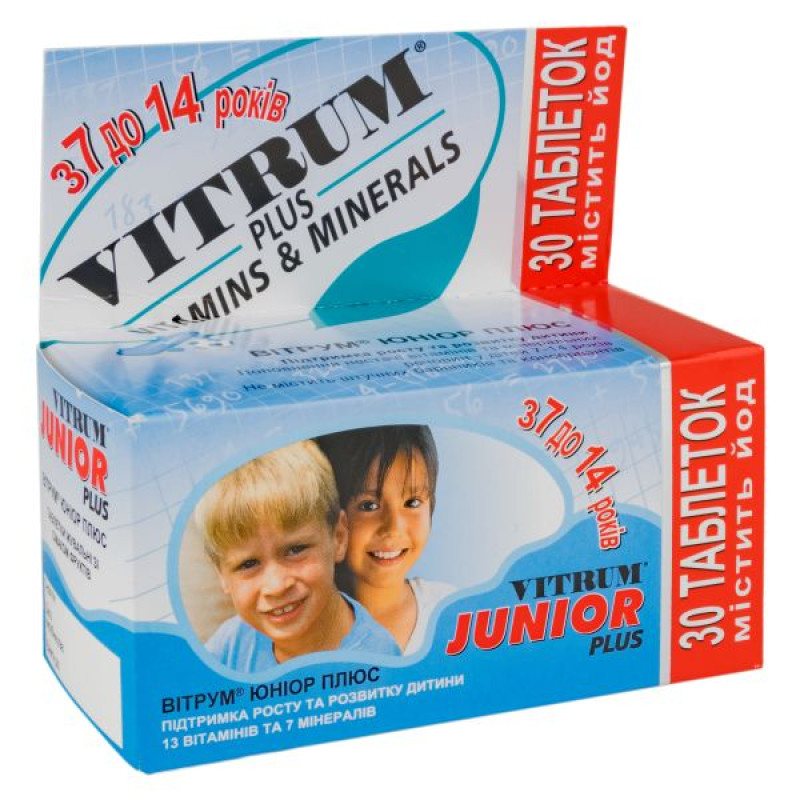
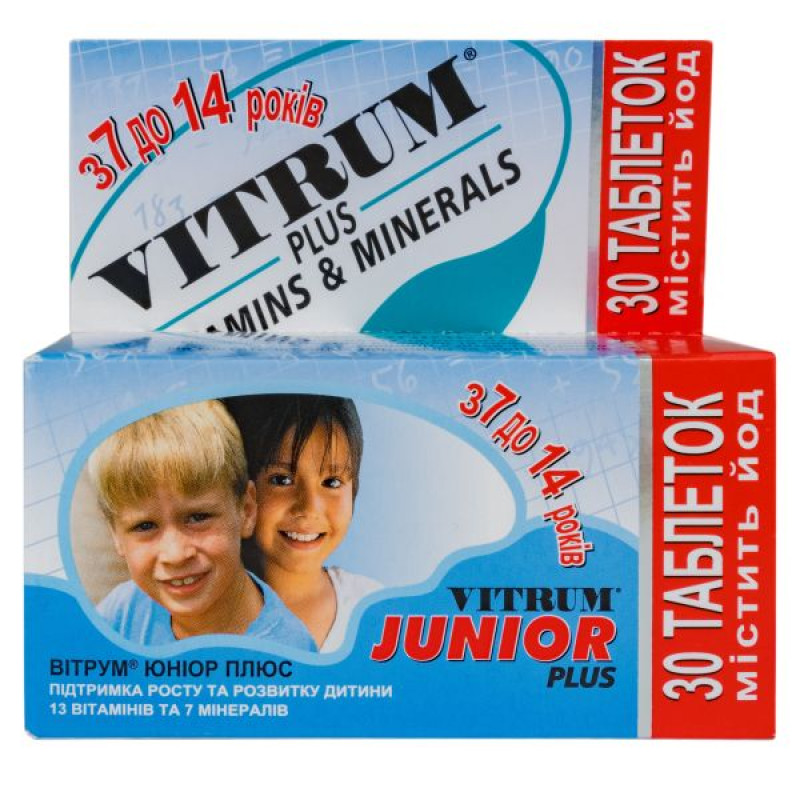
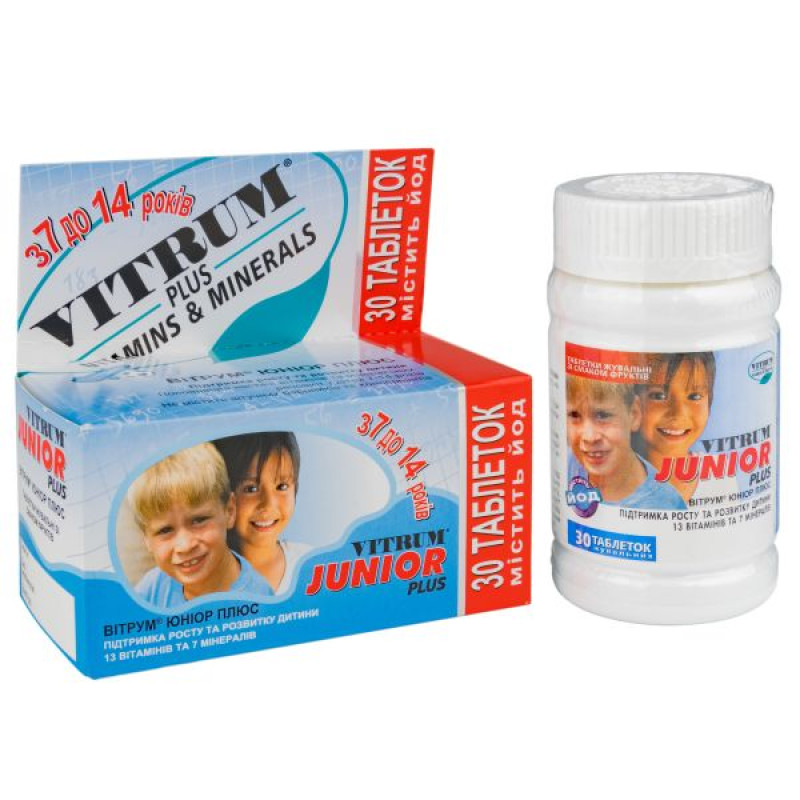
Instructions for Vitrum Junior Plus tablets No. 30
Composition
1 tablet weighing 1740 mg contains:
| Vitamin A | 0.466 mg | Folic acid | 266.0 mcg |
| Vitamin B1 | 1,466 mg | D-Biotin | 26.0 mcg |
| Vitamin B2 | 1.6 mg | Iodine | 75.0 mcg |
| Vitamin B3 | 20.0 mg | Calcium | 160.0 mg |
| Vitamin B6 | 2.0 mg | Magnesium | 45.0 mg |
| Vitamin B12 | 2.6 mcg | Iron | 9.6 mg |
| Vitamin D3 | 6.6 mcg | Copper | 0.56 mg |
| Vitamin E | 13.3 mg | Zinc | 8.0 mg |
| Vitamin C | 80.0 mg | Manganese | 1.0 mg |
| Pantothenic acid | 4.0 mg | Vitamin K1 | 0.01 mg |
Ingredients: brown sugar, tribasic calcium phosphate, acidity regulator - citric acid, ascorbic acid, sodium ascorbate, magnesium oxide, niacinamide, anti-caking agents: magnesium stearate, silicon dioxide, ferrous fumarate, bulking agent - microcrystalline cellulose, DL-alpha-tocopherol acetate, stabilizer - stearic acid, natural orange flavor (maltodextrin, natural orange flavor, acidity regulator - citric acid, antioxidant - butylhydroxytoluene), zinc oxide, pyridoxine hydrochloride, riboflavin, calcium D-pantothenate, thiamine mononitrate, retinol acetate, folic acid, cholecalciferol, manganese sulfate monohydrate, D-biotin, natural pineapple flavor (dextrose, natural pineapple flavor, stabilizer - silicon dioxide), phylloquinone, copper carbonate, potassium iodide, dye – iron oxide yellow, cyanocobalamin.
Properties
Vitamin A is necessary for the normal course of metabolic processes, including the regulation of growth and development of the body. It ensures the normal function of the organ of vision, the structural integrity of tissues, and increases the body's resistance to the effects of harmful environmental factors.
Vitamin E is an active antioxidant, inhibits lipid peroxidation, which is increased in many diseases, prevents damage to cellular structures by free radicals. It participates in the processes of tissue respiration, heme and protein biosynthesis, fat and carbohydrate metabolism, cell proliferation and other metabolic processes.
Vitamin D3 enhances calcium absorption in the intestines and phosphorus reabsorption in the renal tubules, normalizes the formation of the skeleton and teeth in children, and helps preserve bone structure.
Vitamin C has pronounced reducing properties. It participates in redox processes, regulation of carbohydrate metabolism, affects the metabolism of aromatic amino acids, thyroxine metabolism, biosynthesis of catecholamines, steroid hormones and insulin; necessary for blood clotting, synthesis of collagen and procollagen, regeneration of connective and bone tissues. Normalizes capillary permeability. Promotes iron absorption in the intestine and participates in the synthesis of hemoglobin. Increases nonspecific resistance of the body, has antioxidant properties.
Vitamin B1 is necessary for the normal functioning of the nervous, digestive systems, cardiac activity, and endocrine glands.
Vitamin B2 participates in growth processes. Supports the process of phagocytosis, affects the morphology and function of the central and autonomic nervous systems, plays an important role in maintaining normal visual function of the eye and in the synthesis of erythropoietin, hemoglobin. Increases the secretory function of the stomach, improves bile secretion, facilitates the absorption of carbohydrates in the small intestine, is necessary for maintaining normal intestinal microflora. Improves liver function, promotes insulin secretion.
Vitamin B6 is a component of enzymes that participate in the processes of decarboxylation and transamination of amino acids, lipid metabolism. It is necessary for the normal functioning of the peripheral and central nervous systems.
Vitamin B12 has high biological activity and participates in carbohydrate, protein, and lipid metabolism. It enhances tissue regeneration, normalizes hematopoiesis, liver, and nervous system functions.
Folic acid is necessary for the normal maturation of megablasts and the formation of normoblasts. It stimulates erythropoiesis, participates in the synthesis of amino acids, nucleic acids, purines and pyrimidines, as well as in choline metabolism.
Nicotinamide substrate stimulates the synthesis of nicotinamide adenine dinucleotide (NAD) and nicotinamide adenine dinucleotide phosphate (NADP). In the form of NAD and NADP, it accepts and transfers protons in many redox reactions, ensuring the normal course of many types of metabolism, including energy metabolism.
Pantothenic acid stimulates the formation of corticosteroids. It is a substrate for the synthesis of acetylation coenzymes. It participates in carbohydrate and fat metabolism, the synthesis of acetylcholine, corticosteroids. It optimizes the energy supply of myocardial contractility, improves regeneration processes.
Vitamin K1 is necessary for the synthesis of proteins that ensure a sufficient level of coagulation. It plays an important role in the metabolism of substances in bones and connective tissue, as well as in the functioning of the kidneys. In all these cases, the vitamin participates in the absorption of calcium and in ensuring the interaction of calcium and vitamin D.
Calcium ions participate in the transmission of nerve impulses, in the contraction of skeletal and smooth muscles, myocardium, in blood clotting, and in the formation and maintenance of the integrity of bone tissue.
Phosphorus is a component of nucleotides, nucleic acids, phosphoproteins, phospholipids, coenzymes, enzymes, and is an important element in the composition of bones and tooth enamel.
Magnesium regulates metabolic processes, neurochemical transmission and muscle excitability, and reduces the amount of acetylcholine in the peripheral and central nervous systems.
Iron is a component of hemoglobin, myoglobin, and cytochromes, participates in a number of redox reactions, and plays an important role in hematopoiesis.
Copper plays an important role in redox reactions and protecting the body from the effects of free radicals.
Zinc participates in the synthesis of DNA, insulin, RNA synthesis and degradation, lipid and protein metabolism, promotes the normal functioning of T-lymphocytes, providing them with an immunomodulatory effect. It has antioxidant properties.
Manganese plays an important role in a number of physiological processes as a component and activator of a number of enzymes, including superoxide dismutase (the main antioxidant enzyme of mitochondria).
Iodine is a component of thyroid hormones, which are involved in the regulation of metabolic processes in the body, the activity of the brain, nervous and cardiovascular systems, the growth and development of a child, and the formation of his intellectual abilities.
Recommendations for use
Vitamin-mineral complex of 13 vitamins and 7 minerals in chewable tablets with a pleasant fruit flavor can be recommended for use in children's diets as an additional source of vitamins: A, D3, E, C, B1, B2, B6, B12, B3 (nicotinamide), B5 (pantothenic acid), vitamin K1, folic acid, D-biotin, and minerals: calcium, magnesium, iron, zinc, manganese, copper, iodine.
Replenishment of vitamin and mineral deficiencies in children 7-14 years old.
Helps maintain the optimal composition of a child's diet, which contributes to:
the proper physical and intellectual development of the child;
strengthening the child's body's defenses during the cold season;
maintaining the optimal functional state of the nervous system during the period of adaptation to school.
Method of administration and doses
Children aged 7 to 14 years - 1 tablet per day with meals.
Duration of use - 2-3 weeks. If necessary, it can be repeated after 1 month after consultation with the doctor.
Reservation
Do not use in children with individual intolerance to the product components, carbohydrate metabolism disorders. This product is not intended for the diagnosis, treatment or prevention of any diseases, and should not be used as a substitute for various diets. Before consumption, consult a pediatrician. Children with thyroid diseases should consult an endocrinologist. Do not exceed the recommended daily dose. Do not use after the expiration date indicated on the package.
It is not a medicine.
Storage conditions
At a temperature of +15 °C to +25 °C and a relative humidity of no more than 60%.
Expiration date
2 years.