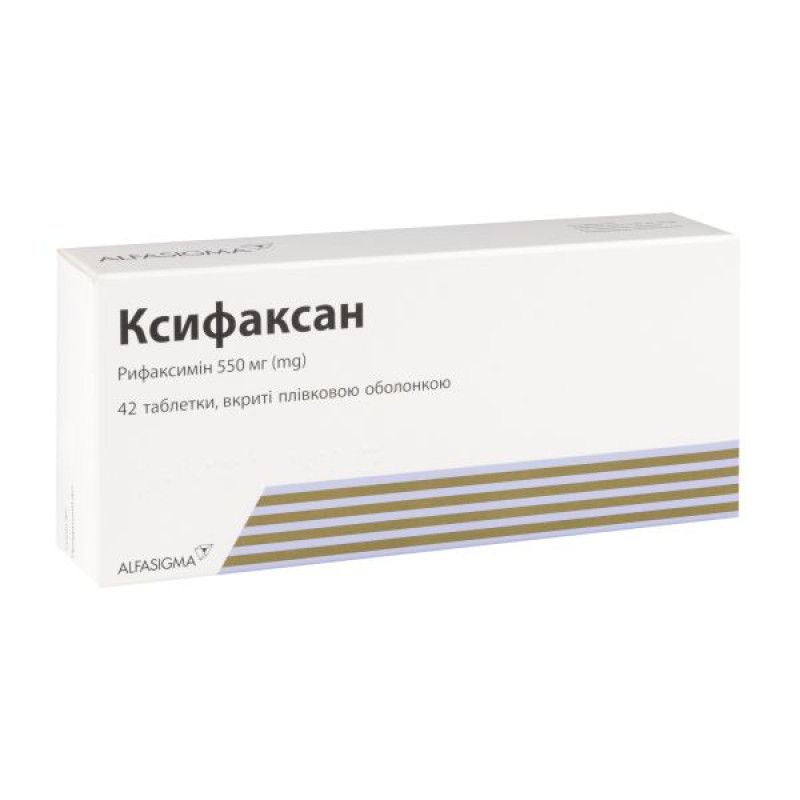
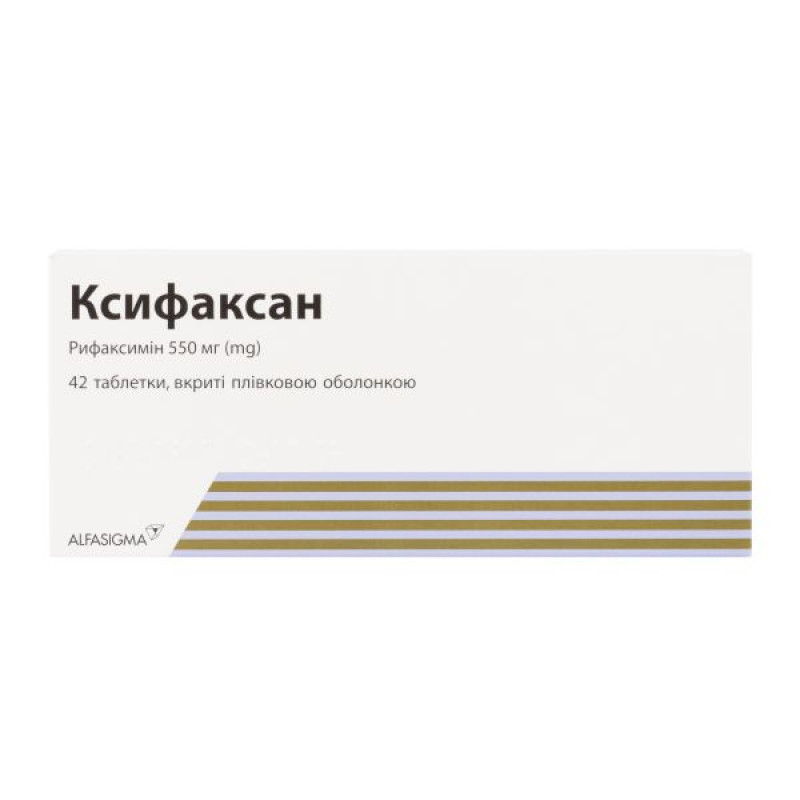
Instructions for use Xifaxan tablets 550 mg No. 42
Composition
active ingredient: rifaximin;
1 film-coated tablet contains 550 mg of rifaximin;
excipients: sodium starch glycolate (type A), glycerol distearate, colloidal anhydrous silica, talc, microcrystalline cellulose, hypromellose, titanium dioxide (E 171), disodium edetate, propylene glycol, red iron oxide (E 172).
Dosage form
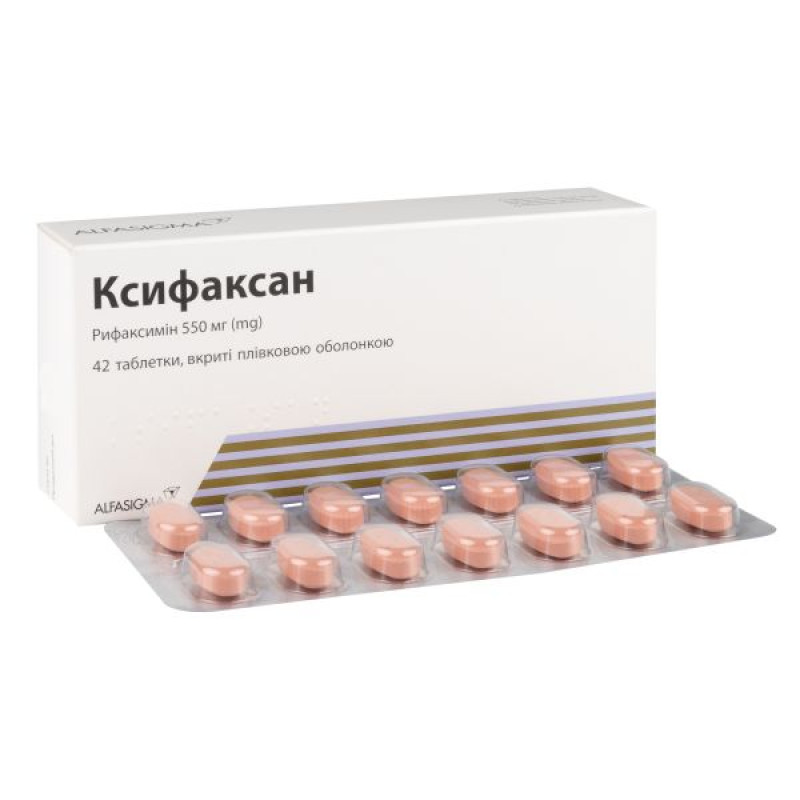
Film-coated tablets.
Main physicochemical properties: pink oval biconvex tablets, film-coated, embossed with “RX” on one side.
Pharmacotherapeutic group
Drugs used for intestinal infections. Antibiotics. ATX code A07A A11.
Pharmacological properties
Pharmacodynamics
The active ingredient of the drug XYFAXAN is rifaximin - an antimicrobial substance of the rifamycin class, which irreversibly binds the beta subunit of bacterial DNA-dependent RNA polymerase and thus inhibits the synthesis of bacterial RNA and proteins.
Rifaximin has a broad spectrum of antimicrobial activity against most gram-positive and gram-negative aerobic and anaerobic bacteria, including ammonia-producing strains. Rifaximin may inhibit the division of urea-deaminating bacteria, thereby reducing the production of ammonia and other compounds thought to be important in the pathogenesis of hepatic encephalopathy.
Mechanism of resistance
The development of resistance to rifaximin is primarily due to reversible chromosomal single-step rearrangement of the rpoB gene, which encodes bacterial RNA polymerase.
Clinical studies examining changes in the susceptibility of intestinal flora in patients with traveler's diarrhea failed to detect the emergence of drug-resistant Gram-positive (e.g., enterococci) or Gram-negative (E. coli) organisms during a 3-day course of rifaximin treatment.
The development of resistance in normal intestinal bacterial flora was studied after repeated high doses of rifaximin were administered to healthy volunteers and patients with inflammatory bowel disease. Rifaximin-resistant strains developed during the study, but they were unstable and did not colonize the gastrointestinal tract or displace rifaximin-sensitive strains. After cessation of treatment, the resistant strains disappeared rapidly.
Preclinical and clinical data suggest that treatment with rifaximin in patients carrying strains of Mycobacterium tuberculosis and Neisseria meningitides will not lead to the development of rifampicin resistance.
Sensitivity
Rifaximin is a non-absorbable antibacterial agent. In vitro susceptibility testing results cannot be used to reliably determine the susceptibility or resistance of bacteria to rifaximin. At this time, there are insufficient data to establish a clinical breakpoint for rifaximin.
Rifaximin has been studied in vitro against several pathogens, including ammonia-producing bacteria such as Escherichia coli strains, Clostridium strains, Enterobacteriaceae, and Bacteroides strains. Due to its very low absorption from the gastrointestinal tract, rifaximin is not clinically effective against invasive pathogens, even when these bacteria are susceptible to it in vitro.
Clinical efficacy
Hepatic encephalopathy
The efficacy and safety of rifaximin at a dose of 550 mg twice daily in adult patients with hepatic encephalopathy (HE) in remission was studied in a 6-month, randomized, double-blind, placebo-controlled, phase 3 study.
299 subjects were randomized to receive rifaximin 550 mg twice daily (n = 140) or placebo (n = 159) for 6 months. In the main study, 91% of subjects in both groups were taking lactulose concomitantly. Patients with a MELD score (Model of End-Stage Disease) > 25 were excluded from the study.
The primary endpoint was the time to the first breakthrough episode of overt PE, after which the patient was excluded from the study. A breakthrough episode of overt PE was defined as a marked deterioration in neurological function and an increase in the Conn score to grade ≥ 2. In patients with a baseline Conn score of 0, a breakthrough episode of overt PE was defined as an increase in the Conn score to 1 and asterixis grade to 1.
During the 6-month period, a breakthrough episode of overt PE occurred in 31 of 140 patients in the rifaximin group (22%) and in 73 of 159 patients in the placebo group (46%). Rifaximin reduced the risk of PE exacerbation by 58% (p < 0.0001) and the risk of PE-related hospitalization by 50% (p < 0.013) compared with placebo.
Combination therapy with rifaximin and lactulose demonstrated a statistically significant reduction in mortality in patients with PE compared with lactulose alone in a systematic review and meta-analysis of four randomized and three observational trials involving 1822 patients (risk difference (RD) -0.11, 95% CI -0.19 to -0.03, P = 0.009). Additional sensitivity analyses confirmed these results. In particular, a pooled analysis of two randomized trials including 320 patients treated for up to 10 days and followed up during hospitalization demonstrated a statistically significant reduction in mortality (RD -0.22, 95% CI -0.33 to -0.12, P < 0.0001).
The efficacy and safety of rifaximin at a dose of 550 mg three times daily for the treatment of irritable bowel syndrome with diarrhea (IBS-D) were studied in 3 randomized, multicenter, double-blind, placebo-controlled studies in adult patients.
Studies RFIB3007 and RFIB3008, which were of identical design, enrolled a total of 1258 patients who met the Rome II criteria for IBS and were randomized to receive either rifaximin 550 mg three times daily (n = 624) or placebo (n = 634) for 14 days, followed by 10 weeks of observation without treatment. Patients with IBS with constipation were excluded from the studies.
The primary endpoint in both studies was the proportion of patients who had adequate relief of signs and symptoms of IBS for at least two weeks within a month after 14 days of treatment.
Adequate relief of IBS symptoms within a month after 2 weeks of treatment was observed more frequently in patients taking rifaximin compared to those taking placebo (126 of 309 patients [41%] vs. 98 of 314 patients [31%], p = 0.0125 in study RFIB3007; 128 of 315 patients [41%] vs. 103 of 320 patients [32%], p = 0.0263 in study RFIB3008).
The studies also examined a composite endpoint, which was defined as the number of patients who responded to treatment based on measures of abdominal pain and stool consistency associated with IBS.
At one month, a greater proportion of patients receiving rifaximin responded to symptoms of abdominal pain and stool consistency compared to those receiving placebo (144 of 309 patients [47%] versus 121 of 314 patients [39%], p < 0.05, in study RFIB3007; 147 of 315 patients [47%] versus 116 of 320 patients [36%], p < 0.01, in study RFIB3008.
Study RFIB3053 evaluated retreatment of adult patients with IBD who met the Rome III criteria for up to 46 weeks. A total of 2,579 patients received an initial 14-day course of open-label rifaximin treatment, followed by a 4-week treatment-free observation period. At the end of the observation period, patients were evaluated for response to treatment, which was defined by the following criteria:
improvement in weekly mean abdominal pain index by ≥ 30% compared to baseline as assessed by daily questionnaire;
a reduction in the number of days per week with a daily stool consistency of type 6 or 7 on the Bristol scale by at least 50% compared to baseline.
Those patients who responded to treatment were then followed for up to 20 weeks without treatment to monitor for recurrence of IBS-D symptoms, such as abdominal pain or soft/watery stools.
In case of recurrence of these symptoms, patients were randomized to a repeat treatment phase in a double-blind, placebo-controlled regimen.
Of the 2438 patients who responded to initial treatment with improvement in abdominal pain and stool consistency, 1074 (44%) were evaluable and were evaluated for sustained response or recurrence of IBS symptoms for 22 weeks. The response rate for each IBS symptom during the open-label phase of the study was similar to that observed in studies RFIB3007 and RFIB3008.
Subsequently, a total of 636 patients with signs and symptoms of relapse were randomized to a double-blind retreatment phase. The median time to relapse in patients with an initial response during the open-label rifaximin treatment phase was 10 weeks (range 6 to 24 weeks).
These patients received either rifaximin 550 mg three times daily (n = 328) or placebo (n = 308) for two additional 14-day repeat courses of treatment, separated by a 10-week break. The rifaximin and placebo groups had similar baseline IBS symptom scores at the time of relapse and randomization to the double-blind phase, but symptom scores were less severe than at the time of entry into the open-label phase.
In the double-blind, placebo-controlled part of the study, the proportion of patients who responded to retreatment was determined by IBS-related abdominal pain and stool consistency, as described above, within 4 weeks after the first course of retreatment with rifaximin.
At one month, a greater proportion of patients receiving rifaximin responded to symptoms of abdominal pain and stool consistency compared with those receiving placebo (125 of 328 patients [38%] versus 97 of 308 patients [31%], p < 0.05). The difference in response rate was 7% with a 95% confidence interval (0.9% to 16.9%).
Pharmacokinetics
Absorption
Pharmacokinetic studies have shown that there is virtually no absorption (less than 1%) of rifaximin in the α polymorphic form after oral administration. After repeated administration of therapeutic doses of the drug to both healthy volunteers and patients with damaged intestinal mucosa (inflammatory bowel disease), rifaximin plasma levels were very low (less than 10 ng/ml). In patients with PE, after administration of rifaximin at a dose of 550 mg twice daily, the average exposure to rifaximin was approximately 12 times higher than that observed in healthy volunteers after administration of the same doses.
In patients with IBS-D who received rifaximin 550 mg twice daily, mean exposure was generally comparable to that observed in healthy subjects.
Distribution
Rifaximin is moderately bound to human plasma proteins. In vivo, the mean protein binding of rifaximin was 67.5% in healthy volunteers and 62% in patients with liver disease.
Metabolism
Studies have shown that rifaximin is not metabolized during passage through the gastrointestinal tract.
In a study with radiolabeled rifaximin, it was found that 0.025% of the administered rifaximin dose was excreted in the urine and less than 0.01% of the dose was metabolized to 25-desacetylrifaximin, the only rifaximin metabolite identified in humans.
Breeding
The results of a study with radiolabeled rifaximin suggest that it is almost exclusively and completely excreted in the feces (96.9% of the administered dose). Urinary excretion of labeled rifaximin does not exceed 0.4% of the administered dose.
Linearity/nonlinearity
The rate and extent of systemic exposure of rifaximin in humans are believed to exhibit non-linear dose-dependent kinetics, consistent with the possibility that absorption may be limited by the dissolution rate of rifaximin.
Indication
- Reduction of recurrence of episodes of overt hepatic encephalopathy in patients aged 18 years and older;
- treatment of irritable bowel syndrome with diarrhea in patients aged 18 years and older.
Contraindication
- Hypersensitivity to rifaximin, rifamycin derivatives or to any of the excipients of the drug;
- intestinal obstruction.
Interaction with other medicinal products and other types of interactions
There is no experience with the simultaneous use of rifaximin with other antibacterial agents of the rifamycin group for the treatment of systemic bacterial infections.
In vitro data indicate that rifaximin does not inhibit the major cytochrome P450 enzymes (1A2, 2A6, 2B6, 2C8, 2C9, 2C19, 2D6, 2E1 and 3A4) involved in drug metabolism. In in vitro induction studies, rifaximin did not induce CYP1A2 and CYP2B6, but was a weak inducer of the cytochrome P450 isoenzyme CYP3A4.
In clinical drug interaction studies in healthy volunteers, rifaximin has not been shown to significantly affect the pharmacokinetics of CYP3A4 substrates. However, in patients with impaired hepatic function, it cannot be excluded that rifaximin may reduce the efficacy of concomitantly administered CYP3A4 substrates (e.g. warfarin, antiepileptic and antiarrhythmic drugs, and oral contraceptives) due to increased systemic exposure to rifaximin in these patients compared to healthy subjects.
Both decreases and increases in international normalized ratio have been reported when rifaximin is administered to patients taking warfarin. If such co-administration is necessary, careful monitoring of the international normalized ratio should be performed when rifaximin is added or withdrawn. Dosage adjustments of oral anticoagulants may be necessary.
In vitro studies suggest that rifaximin is a moderate affinity substrate for P-glycoprotein (P-gp) and is metabolized by CYP3A4. It is unknown whether concomitant use with drugs that inhibit CYP3A4 may increase the systemic exposure of rifaximin.
In healthy subjects, coadministration of a single 600 mg dose of cyclosporine, a potent inhibitor of P-glycoprotein, with a single 550 mg dose of rifaximin resulted in an 83-fold and 124-fold increase in mean Cmax and AUC∞ for rifaximin, respectively. The clinical significance of this increase in systemic exposure is unknown.
In vitro studies have investigated the potential for drug interactions occurring at the level of transport systems. The results of these studies suggest that clinical interactions between rifaximin and other compounds that are excreted by P-gp and other transport proteins (MRP2, MRP4, BCRP and BSEP) are unlikely.
Application features
Clostridium difficile-associated diarrhea (CDAD) has been reported with nearly all antibiotics, including rifaximin. A potential association of rifaximin treatment with CDAD and pseudomembranous colitis cannot be excluded.
Concomitant use of rifaximin with other rifamycins is not recommended due to lack of data and the potential for severe intestinal flora disturbance with unknown consequences.
Despite its low absorption (less than 1%), rifaximin, like other rifamycin derivatives, can stain urine reddish, which patients should be warned about.
The drug should be used with caution in patients with severe liver damage (Child-Pugh score C) and in patients with a MELD score > 25.
Both decreases and increases in international normalized ratio (associated with bleeding events in some cases) have been reported when rifaximin is administered to patients taking warfarin. If such co-administration is necessary, careful monitoring of the international normalized ratio should be performed when rifaximin is added or withdrawn. Dosage adjustments of oral anticoagulants may be necessary to maintain the desired level of anticoagulation.
This medicine contains less than 1 mmol (23 mg) sodium per tablet, i.e. essentially 'sodium-free'.
Use during pregnancy or breastfeeding
There are no or limited data from the use of rifaximin in pregnant women. In animal studies, transient effects on ossification and skeletal changes in the fetus have been observed. As a precautionary measure, rifaximin is not recommended during pregnancy.
It is not known whether rifaximin or its metabolites are excreted in human milk, therefore a risk to the breastfed infant cannot be excluded. Therefore, a decision should be made whether to discontinue breast-feeding or to discontinue/abstain from the drug during breast-feeding, taking into account the benefit of breast-feeding for the child and the need for therapy for the mother.
Animal studies do not indicate direct or indirect harmful effects of rifaximin on male or female fertility.
Ability to influence reaction speed when driving vehicles or other mechanisms
If dizziness occurs during treatment with the drug, you should refrain from driving vehicles and operating other mechanisms.
Method of administration and doses
Overt hepatic encephalopathy
In the main study, 91% of patients were taking lactulose concomitantly.
The duration of treatment is determined by the doctor.
Irritable bowel syndrome with diarrhea
Take 550 mg three times a day for 14 days. Patients with relapses may be prescribed up to 2 courses of treatment according to this regimen.
Method of application
Take orally with a glass of water. The drug can be taken regardless of meals.
Certain patient groups
Elderly patients
Since there are no differences in the safety and efficacy of rifaximin when used in young and elderly patients, no dose adjustment is necessary when prescribing the drug to elderly patients.
Patients with liver damage
Available clinical data indicate an increase in systemic exposure to rifaximin in patients with hepatic impairment compared with healthy subjects. When compared with healthy volunteers, systemic exposure to rifaximin is increased approximately 10-, 13- and 20-fold in patients with mild (Child-Pugh score A), moderate (Child-Pugh score B) and severe (Child-Pugh score C) hepatic impairment, respectively. However, the increase in systemic exposure to rifaximin in patients with hepatic impairment should be considered in the context of the local effects of rifaximin in the gastrointestinal tract and its low systemic bioavailability, as well as the safety data available for rifaximin in patients with cirrhosis. Therefore, due to the local effects, dose adjustment of rifaximin is not recommended in these patients.
Patients with kidney damage
There are no clinical data on the use of rifaximin in patients with renal impairment. Although no dose adjustment is expected in such patients, caution should be exercised when prescribing rifaximin to patients with renal impairment.
Children
The safety and efficacy of XYFAXAN in children (under 18 years of age) have not been established.
Overdose
No cases of overdose have been reported.
In clinical trials in patients with traveler's diarrhea, doses of rifaximin up to 1800 mg/day were tolerated without any severe clinical manifestations. Doses of up to 2400 mg rifaximin per day for 7 days in patients and healthy volunteers did not result in any significant clinical symptoms associated with the use of high doses.
In case of accidental overdose, symptomatic and supportive treatment is recommended.
Adverse reactions
Hepatic encephalopathy
The safety of rifaximin in patients with hepatic encephalopathy (HE) in remission was evaluated in two studies, RFHE3001 and RFHE3002.
In study RFHE3001, treatment with rifaximin 550 mg twice daily for 6 months (140 patients) was compared with placebo treatment (159 patients), while in study RFHE3002, 322 patients were treated, of which 152 patients were from study RFHE3001. Patients received rifaximin 550 mg twice daily for 12 months (66% of patients) and for 24 months (39% of patients).
In addition, in three additional studies, 152 patients with PE received various doses of rifaximin ranging from 600 mg to 2400 mg per day for up to 14 days.
The following adverse reactions were observed in the placebo-controlled study RFHE3001 and the long-term study RFHE3002, as well as during post-marketing surveillance. Adverse reactions are classified according to system organ class and frequency as follows: very common (≥ 1/10); common (≥ 1/100 to < 1/10); uncommon (≥ 1/1,000 to < 1/100); rare (< 1/10,000).
Uncommon: Clostridial infection, urinary tract infection, candidiasis.
Rare: pneumonia, cellulitis, upper respiratory tract infections, rhinitis.
Blood and lymphatic system disorders
Uncommon: anemia.
Metabolic and nutritional disorders
Uncommon: anorexia, hyperkalemia.
Uncommon: dehydration.
Mental disorders
Common: depression.
Uncommon: confusion, anxiety, increased drowsiness, insomnia.
Nervous system disorders
Common: dizziness, headache.
Uncommon: balance disorders, amnesia, convulsions, disturbance in attention, hypoaesthesia, memory impairment.
Vascular disorders
Uncommon: hot flashes.
Rare: arterial hypertension, arterial hypotension.
Respiratory, thoracic and mediastinal disorders
Common: dyspnea.
Uncommon: pleural effusion.
Rare: chronic obstructive pulmonary disease.
Gastrointestinal disorders
Common: abdominal pain upper, feeling of abdominal distension, diarrhea, nausea, vomiting, ascites.
Uncommon: abdominal pain, esophageal variceal bleeding, dry mouth, stomach discomfort.
Uncommon: constipation.
Skin and subcutaneous tissue disorders
Common: rash, itching.
Musculoskeletal and connective tissue disorders
Common: muscle spasm, arthralgia.
Uncommon: myalgia.
Uncommon: back pain.
Kidney and urinary tract disorders
Uncommon: dysuria, pollakiuria.
Uncommon: proteinuria.
General disorders and administration site conditions
Common: peripheral edema.
Uncommon: edema, pyrexia.
Rare: asthenia.
Injuries, poisonings and complications after procedures
Uncommon: falls.
Rare: bruising, pain during procedures.
Irritable bowel syndrome with diarrhea
The safety of rifaximin for the treatment of irritable bowel syndrome with diarrhea was evaluated in 3 placebo-controlled trials in which 952 patients were randomized to receive 550 mg of rifaximin three times daily for 14 days. In these three trials, 96% of patients received at least 14 days of rifaximin treatment.
In two studies, 624 patients received only one 14-day course of treatment. In the third study, the safety of rifaximin was evaluated in 328 patients who received 1 open-label course of treatment and 2 double-blind re-treatment courses of 14 days each for up to 46 weeks. The combined patient population in the studies had a mean age of 47 years (range 18 to 88 years).
In patients taking rifaximin in the first two studies, adverse reactions observed at a frequency of ≥ 2% and more frequently than in the placebo group included:
Gastrointestinal disorders: nausea (3% - rifaximin, 2% - placebo).
In the third IBS-D treatment study, during the double-blind treatment phase in patients taking rifaximin (n = 328), adverse reactions that occurred at a frequency of ≥ 2% and more frequently than in the placebo group (n = 308) included:
Laboratory tests: increased ALT levels (rifaximin − 2%, placebo − 1%);
Gastrointestinal disorders: nausea (rifaximin − 2%, placebo − 1%).
Adverse reactions observed in less than 2% of patients treated for IBS-D in clinical trials included:
Infections and infestations: clostridial colitis,
Laboratory tests: increased blood creatine phosphokinase levels,
Musculoskeletal and connective tissue disorders: myalgia.
Post-registration surveillance
Additional adverse reactions have been reported during post-marketing surveillance with XIFAXAN. The frequency of these adverse reactions cannot be estimated as they were reported spontaneously. Therefore, the frequency of these adverse reactions is listed as not known (cannot be estimated from the available data).
| MedDRA System Organ Class | Frequency unknown |
| Blood and lymphatic system disorders | Thrombocytopenia |
| Immune system disorders | Anaphylactic reactions, angioedema, hypersensitivity |
| Vascular disorders | Pre-fainting state, fainting |
| Hepatobiliary disorders | Abnormalities in liver function tests |
| Skin and subcutaneous tissue disorders | Dermatitis, eczema |
| Laboratory studies | Deviation in the value of the international normalized ratio |
Reporting adverse reactions after the registration of a medicinal product is important. This allows monitoring of the benefit/risk ratio when using this medicinal product. Medical and pharmaceutical professionals, as well as patients or their legal representatives, should report all cases of suspected adverse reactions and lack of efficacy of the medicinal product via the Automated Information System for Pharmacovigilance at the link: https://aisf.dec.gov.ua.
Expiration date
3 years.
Do not use after the expiry date stated on the packaging.
Storage conditions
Does not require any special storage conditions. Keep out of the reach of children.
Packaging
14 tablets in a PVC-PE-PVDC/aluminium blister; 2, 3 or 4 blisters in a cardboard box.
Vacation category
According to the recipe.
Producer
Alfasigma S.p.A./Alfasigma SpA
Manufacturer's location and business address
Via Enrico Fermi 1, 65020 Alanno (Pescara), Italy.