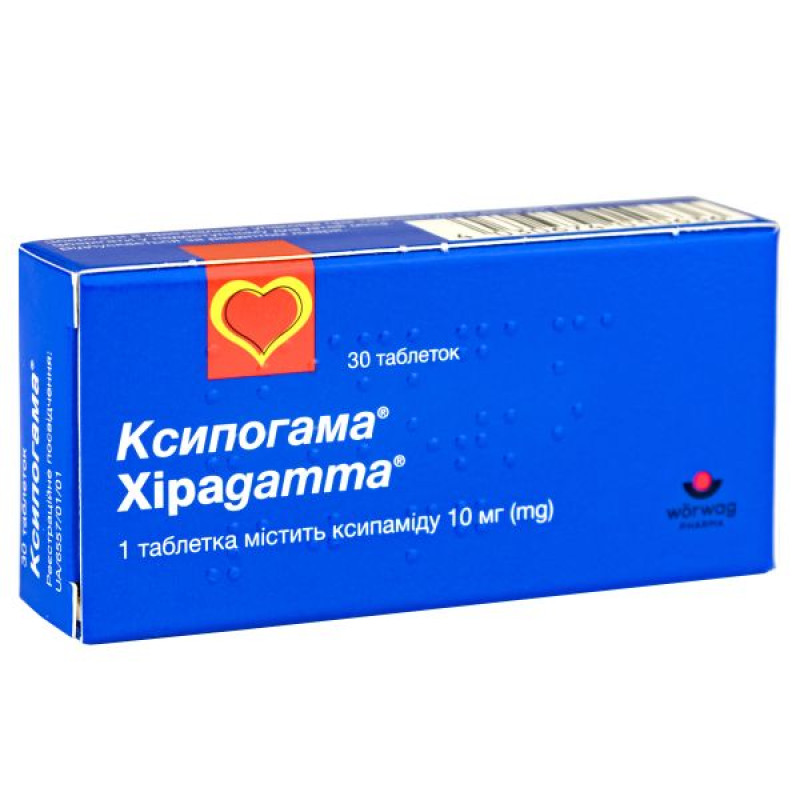
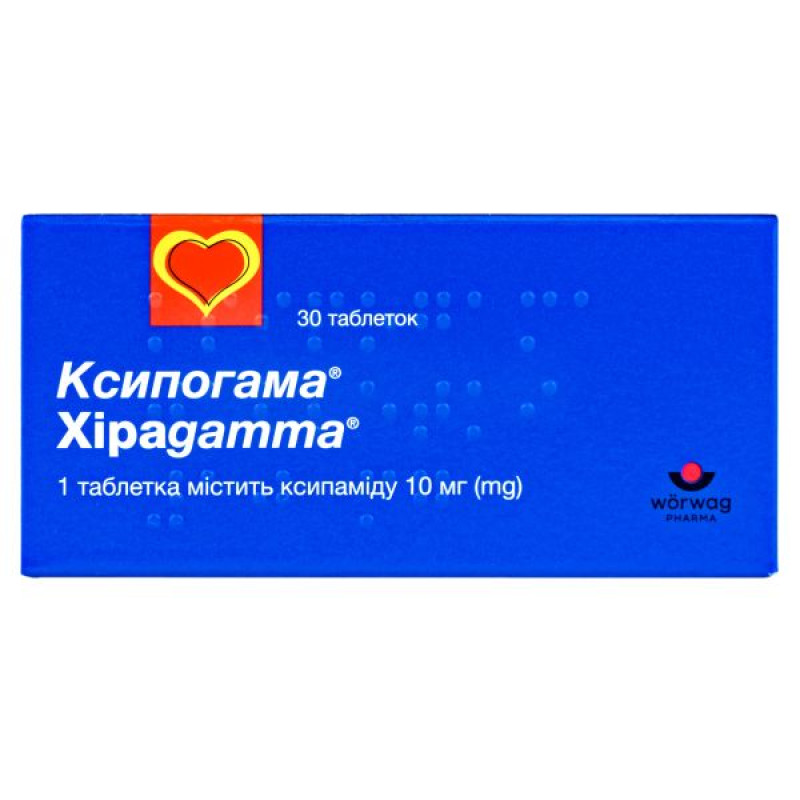
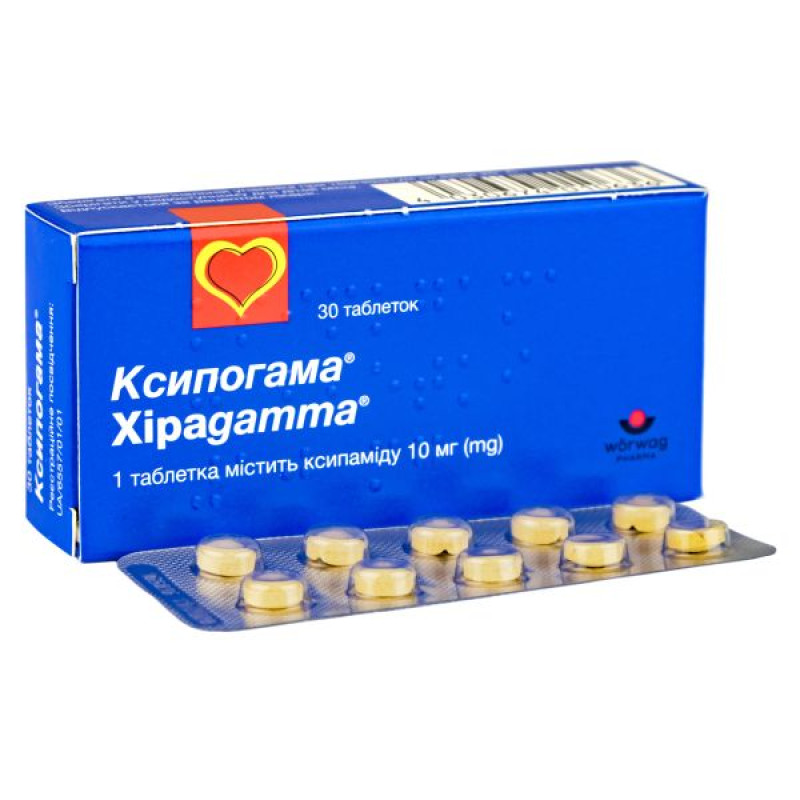
Instructions for use of Xypogam tablets 10 mg No. 30
Composition
active ingredient: xipamide;
1 tablet contains xypamide 10 mg or 20 mg; or 40 mg;
excipients:
10 mg: starch, microcrystalline cellulose, povidone (K 25), cetyl alcohol, lactose monohydrate, highly dispersed silicon dioxide, magnesium stearate, iron oxide (III) yellow (E 172);
20 mg: starch, microcrystalline cellulose, povidone (K 25), cetyl alcohol, lactose monohydrate, highly dispersed silicon dioxide, magnesium stearate;
40 mg: starch, microcrystalline cellulose, povidone (K 25), cetyl alcohol, lactose monohydrate, highly dispersed silicon dioxide, magnesium stearate, iron oxide (III) yellow (E 172), indigo dye.
Dosage form
Pills.
Main physicochemical properties: 10 mg tablets: yellow, round tablets with a “snap-tab” on one side, practically odorless;
20 mg tablets: white round tablets with a “snap-tab” on one side, practically odorless;
40 mg tablets: light green, round tablets with a “snap-tab” on one side, practically odorless.
Pharmacotherapeutic group
Non-thiazide diuretics with moderate activity. Sulfonamides, simple preparations. ATC code S0ZV A10.
Pharmacological properties
Pharmacodynamics. Xipamide is a diuretic that inhibits reabsorption in the distal tubule of the nephron and initially leads to the excretion of chlorine and sodium, then to an increase in polyuria due to osmotically bound water. Due to the increase in the current in the distal tubule, potassium secretion is stimulated. The excretion of bicarbonate, calcium and magnesium also increases. The mechanism of action of xipamide differs from thiazides, despite the structural relationship. Xipamide does not affect renal hemodynamics, the glomerular filtration rate. The diuretic effect occurs after 1 hour and reaches its maximum between the 3rd and 6th hours. The excretion of chlorine and sodium is carried out at the 12th–24th hour, so there is no rebound effect. The maximum dose of xipamide is 5 mg (oral). If the dose exceeds 80 mg, there is no further saluresis and diuresis.
The hypotensive effect of xipamide occurs at the beginning of treatment. The maximum blood pressure-lowering effect is achieved after 2–3 weeks.
Pharmacokinetics. The maximum concentration of xipamide in the blood plasma is reached after approximately 1 hour. Protein binding is 99%. The half-life is 7 hours. Oral absorption of xipamide is complete.
In renal failure, the half-life increases to 9 hours; in liver cirrhosis, despite the increased level of xypamide in the blood plasma, it remains unchanged.
Renal excretion of unchanged substance is 30–40%. Extrarenal excretion (total about 2/3 of natural xypamide) is half carried out by glucuronidation. The inactive metabolite formed in this way is excreted by the kidneys, the rest - through the intestines.
Indication
Arterial hypertension.
Cardiac, renal and hepatogenic edema.
Contraindication
Hypersensitivity to xipamide, to other sulfonamide derivatives or thiazides or to other components of the drug;
severe liver dysfunction (precoma and Coma hepaticum);
severe renal failure;
Untreated hypokalemia;
severe hyponatremia;
hypercalcemia;
hypovolemia;
gout;
hereditary galactose intolerance, lactase deficiency, glucose-galactose malabsorption.
Interaction with other medicinal products and other types of interactions
The following interactions have been reported with thiazide diuretics and similar drugs and may also occur with xypamide.
Combination not recommended for use:
Lithium. With simultaneous treatment with lithium, the cardio- and neurotoxic effects of lithium are enhanced. If diuretic treatment cannot be avoided, it is necessary to monitor the level of lithium in the blood and adjust the dosage accordingly.
Combinations requiring special precautions:
Substances that can cause torsades de pointes:
- Class Ia antiarrhythmic drugs (e.g. quinidine, hydroquinidine, disopyramide);
- class III antiarrhythmic drugs (e.g. amiodarone, sotalol, dofetilide, ibutilide);
- some antipsychotics: phenothiazines (e.g. chlorpromazine, cyamemazine, levomepromazine, thioridazine, trifluoroperazine), benzamides (e.g. sulpiride, sultopride, tiapride), butyrophenones (e.g. droperidol, haloperidol);
- others: bepridil, cisapride, diphemanil, erythromycin intravenously, halofantrine, mizolastine, pentamidine, sparfloxacin, moxifloxacin, vincamine intravenously.
The risk of ventricular arrhythmia, torsades de pointes (with hypokalemia) increases.
Hypokalemia should be monitored and corrected if necessary before starting treatment with this combination. Plasma electrolytes and ECG monitoring are required.
Nonsteroidal anti-inflammatory drugs, including selective COX-2 inhibitors, high doses of salicylic acid (> 3 g/day). Possible reduction of the hypotensive effect of xipamide. Risk of acute renal failure in case of dehydration (glomerular filtration). It is necessary to ensure adequate fluid intake and monitor renal function at the beginning of treatment. Treatment with high doses of salicylate may increase its toxic effect on the CNS.
ACE inhibitors: Risk of severe hypotension and/or acute renal failure with initiation of ACE inhibitor treatment in patients with pre-existing sodium depletion (particularly renal artery stenosis).
If treatment with Xypamide for arterial hypertension has led to a decrease in sodium, it is necessary:
- or stop taking xipamide 3 days before starting treatment with ACE inhibitors and then add xipamide;
‒ or start treatment with ACE inhibitors at low doses and then gradually increase them.
In decompensated heart failure, a very low dose of ACE inhibitors should be started.
In any case, kidney function (blood creatinine determination) should be monitored in the first weeks of treatment with ACE inhibitors.
Other diuretics, antihypertensives, beta-blockers, nitrates, vasodilators, barbiturates, phenothiazines, tricyclic antidepressants, alcohol.
The hypotensive effect of xipamide may be enhanced.
Other agents that lower potassium levels: amphotericin B (intravenous), gluco- and mineralocorticoids (systemic), tetracosactide, stimulant laxatives.
The risk of hypokalemia increases (additive effect). Plasma potassium levels should be monitored and corrected, particularly during treatment with cardiac glycosides.
Baclofen. Enhances the decrease in blood pressure. It is necessary to ensure adequate fluid intake and monitor renal function at the beginning of treatment.
Cardiac glycosides. Hypokalemia and/or hypomagnesemia, which increase the toxic side effects of digitalis glycosides. Monitoring of blood potassium and ECG is required.
Combinations that allow for additional interactions.
Potassium-sparing diuretics (amiloride, spironolactone, triamterene). Although this combination is considered appropriate in some patients, it may lead to hypokalemia or hyperkalemia (especially in patients with renal insufficiency or diabetes mellitus). Plasma potassium levels and ECG should be monitored and therapy adjusted if necessary.
Potassium-sparing diuretics (e.g. furosemide), glucocorticoids, ACTH (adrenocorticotropic hormone), carbenoxolone, penicillin G, amphotericin or laxatives. Concomitant use with xipamide may lead to increased potassium loss. With the simultaneous use of xipamide and loop diuretics (e.g. furosemide), the risk of developing electrolyte and fluid imbalances increases. Careful monitoring of the patient's condition is required.
Metformin: The risk of metformin-induced lactic acidosis is increased due to the possibility of functional renal failure during therapy with diuretics, especially loop diuretics.
Metformin is not used if blood creatinine is 15 mg/L (135 μmol/L) in men and 12 mg/L (110 μmol/L) in women.
Iodine-containing contrast media: In diuretic-induced hydration, there is an increased risk of acute renal failure if iodinated contrast media are used (particularly in high doses). Rehydration is necessary before the use of iodinated contrast media.
Tricyclic antidepressants (imipramine), neuroleptics. Hypotensive effect and increased risk of orthostatic hypotension.
Calcium (salts). Risk of hypercalcemia due to reduced urinary calcium excretion.
Cyclosporine, tacrolimus: Risk of increased serum creatinine.
Corticosteroids, tetracosactide (systemic). Decreased hypotensive effect (fluid and sodium retention due to corticosteroids).
Cytostatics (e.g. cyclophosphamide, fluorouracil, methotrexate). Risk of toxicity, particularly reduction in granulocytes.
Antidiabetic drugs, drugs that lower serum uric acid levels, noradrenaline, adrenaline. The effect of these drugs may be weakened when taken simultaneously with xipamide.
Quinidine: The excretion of quinidine may be reduced.
Muscle relaxants (curare-type alkaloids). Enhanced and prolonged effect of muscle relaxants.
Colestipol and cholestyramine: The absorption of xypamide may be reduced.
Application features
This medicinal product contains lactose monohydrate. Patients with rare hereditary problems of galactose intolerance, the Lapp lactase deficiency or glucose-galactose malabsorption should not take this medicinal product.
Water and electrolyte balance. Xipamide should not be used in cases of untreatable electrolyte imbalance, orthostatic dysregulation of blood pressure, central nervous system disorders, pancreatitis, changes in the blood picture (anemia, leukopenia, thrombocytopenia), acute cholecystitis, vasculitis, and increased myopia.
Chronic overuse of diuretics can lead to pseudo-Bartter syndrome (extraadrenal hyperaldosteronism) with edema. This edema is a manifestation of increased renin with subsequent secondary hyperaldosteronism.
Serum sodium levels should be checked before starting treatment and then regularly at regular intervals. Since hyponatremia may initially be asymptomatic, patients should be closely monitored, especially in the elderly and patients with cirrhosis.
Serum potassium levels. Hypokalemia may occur during prolonged treatment with xypamide. Serum electrolytes (especially potassium, sodium, calcium), bicarbonate, creatinine, urea and uric acid, and blood sugar should be monitored regularly. Potassium replacement may be necessary in elderly patients who do not absorb sufficient potassium.
Hypokalemia (blood potassium level less than 3.4 μmol/l) should be avoided, in particular in cases of severe fluid loss (e.g. due to vomiting, diarrhoea or heavy sweating) and in patients at risk, i.e. elderly patients, debilitated patients, patients who have received repeated drug treatment, as well as patients with cirrhosis of the liver and edema and ascites, patients with coronary heart disease and heart failure. In such patients, hypokalemia increases the cardiotoxicity of cardiac glycosides and the risk of cardiac arrhythmias. Hypovolemia or dehydration, as well as significant electrolyte or acid-base disturbances, should be monitored. If necessary, treatment with Xypogama® should be temporarily discontinued.
Patients at risk include those with a prolonged QT interval, whether congenital or acquired. The presence of hypokalemia and bradycardia predisposes to serious cardiac arrhythmias, including potentially fatal torsades de pointes.
In all of the above cases, it is necessary to check the potassium level in the blood more often, with the first analysis being carried out in the first week of treatment. Hypokalemia should be corrected.
Blood calcium levels: Treatment with thiazide diuretics and related drugs may result in decreased urinary calcium excretion and a significant, transient increase in blood calcium levels. Overt hypercalcemia may occur due to hyperparathyroidism.
Treatment should be discontinued before parathyroid function testing.
Blood sugar: In patients with diabetes, blood sugar levels should be checked, especially if hypokalemia is present.
Uric acid levels: Patients with hyperuricemia are at increased risk of gout attacks.
Renal function and diuretics. Thiazide diuretics and their derivatives are fully effective in normal renal function or in mild impairment (serum creatinine < 25 mg/L or < 220 μmol/L in adults). In elderly patients, serum creatinine should be adjusted for age, weight, and sex.
Hypovolemia caused by fluid or sodium loss caused by diuretics at the beginning of treatment leads to a decrease in glomerular filtration. This can lead to an increase in blood urea and nitrogen levels. This temporary functional renal failure in people with healthy kidneys does not leave any consequences, but it can aggravate existing renal failure.
If electrolyte balance cannot be corrected, treatment should be discontinued.
Choroidal effusion, acute myopia, and secondary angle-closure glaucoma. Drugs containing sulfonamide or sulfonamide derivatives may cause an idiosyncratic reaction resulting in choroidal effusion with visual field defect, transient myopia, and acute angle-closure glaucoma. Symptoms include acute onset of decreased visual acuity or eye pain and usually occur within hours to weeks of starting the drug.
Untreated acute angle-closure glaucoma can lead to permanent vision loss. The main treatment is to stop the medication as soon as possible. If the intraocular pressure remains uncontrolled, urgent medical or surgical treatments may be necessary. Risk factors for developing acute angle-closure glaucoma may include a history of sulfonamide or penicillin allergy.
Use during pregnancy or breastfeeding
The use of xypamide during pregnancy or breastfeeding is contraindicated.
Ability to influence reaction speed when driving or using other mechanisms
Since the reaction to the drug is individual, the speed of the reaction may vary to such an extent that the ability to drive and balance may be impaired. This may occur at the beginning of treatment, when increasing the dose and changing medications.
Method of administration and doses
Adults should take 10–20 mg of xipamide once a day for both arterial hypertension and edema.
The dose for the treatment of edema may be 40 mg of xipamide. In case of severe renal impairment, the daily dose of xipamide may be increased to 80 mg.
After the edema is relieved, you can switch to a dose of 20 mg or 10 mg of xipamide to prevent relapses.
After prolonged treatment, xipamide should be gradually discontinued.
Swallow the tablets whole with a sufficient amount of water (approximately 1 glass), preferably in the morning after breakfast.
Impaired liver function. In case of impaired liver function, the dosage of Xypamide should correspond to the degree of functional impairment.
Reduced cardiac function. In severe cardiac decompensation, the absorption of xypamide may be significantly limited.
Children
Xipamide should not be used in children, as the safety and efficacy of the drug for this category of patients have not been determined.
Overdose
Acute intoxications are manifested primarily by disturbances in water and electrolyte balance (hyponatremia, hypokalemia). Clinical symptoms may include nausea, vomiting, a sharp decrease in blood pressure, convulsions, dizziness, drowsiness, confusion, polyuria or oliguria up to anuria (due to hypovolemia).
Emergency measures: administration of activated charcoal. Restoration of water and electrolyte balance.
In cases of overdose, it is necessary to immediately stop taking the drug and consult a doctor. Treatment is symptomatic.
Side effects
The frequency of adverse reactions is defined as follows: very common (≥ 10%), common (≥ 1%–< 10%), uncommon (≥ 0.1%–< 1%), rare (≥ 0.01%–< 0.1%), very rare (<0.01% or unknown).
From the side of the central nervous system and organs of vision: often - headache, dizziness, increased fatigue, dry mouth, sweating.
Cardiovascular system: often - orthostatic hypotension, palpitations, at high doses, in particular in venous diseases, the risk of thrombosis and embolism increases.
On the part of the digestive tract: often - abdominal pain, spastic abdominal pain, diarrhea, constipation, acute cholecystitis in the presence of cholelithiasis;
rarely – hemorrhagic pancreatitis;
very rarely - jaundice.
Skin: allergic reactions (including itching, erythema, urticaria, chronic photosensitivity) (discontinuation of therapy).
On the part of the organs of vision: rarely: slight visual disturbances, worsening of pre-existing myopia (cessation of therapy), choroidal effusion with an unknown frequency.
From the side of the hematopoietic organs and lymphatic system: very rarely - thrombocytopenia, leukopenia, agranulocytosis, aplastic anemia (termination of therapy).
Psychiatric disorders: often - apathy, lethargy, feeling of anxiety, agitation.
Metabolic disorders: rarely - hyperlipidemia. Latent diabetes may manifest. Increased blood sugar levels may indicate that the patient has diabetes.
From the urinary system: very rarely - acute interstitial nephritis.
Musculoskeletal system: often - muscle spasms and cramps.
Electrolyte and fluid balance: Electrolyte and fluid balance disorders are frequently observed during treatment with xypamide as a result of increased fluid and electrolyte excretion. Therefore, it is necessary to monitor the level of electrolytes (potassium, sodium and calcium).
Patients very often suffer from hypokalemia, which can manifest as symptoms such as nausea, vomiting, ECG changes, hypersensitivity to glycosides, cardiac arrhythmias, or skeletal muscle hypotension.
Potassium intake is reduced or potassium loss is increased in the following situations: vomiting, chronic diarrhea, profuse sweating. Increased renal potassium loss may result in hypokalemia, which may manifest as neuromuscular symptoms (muscle weakness, paresthesias, paresis), gastrointestinal symptoms (vomiting, constipation, flatulence), renal symptoms (polyuria, polydipsia), and cardiac symptoms (e.g., impaired impulse generation and conduction). Severe hypokalemia may lead to paralytic ileus, loss of consciousness, or coma.
Due to increased sodium loss, patients may develop hyponatremia. The most common symptoms of hyponatremia are: apathy, convulsions, loss of appetite, weakness, drowsiness, vomiting, confusion.
Increased renal calcium excretion can lead to hypocalcemia. Hypocalcemia can cause tetany.
In case of increased renal excretion of magnesium, tetany or cardiac arrhythmias may occasionally occur.
As a result of fluid and electrolyte loss during xypamide therapy, patients may develop metabolic alkalosis or worsen existing metabolic alkalosis.
Increased levels of uric acid in the blood can lead to the development of gout in patients who are prone to it.
Excessive diuresis can cause dehydration, resulting in hypovolemia, hemoconcentration, and occasionally convulsions, loss of consciousness, vascular collapse, and dizziness.
Other: rarely - anaphylactoid reactions.
Expiration date
5 years.
Storage conditions
Store in original packaging at a temperature not exceeding 25 ° C. Keep out of the reach of children.
Packaging
10 tablets in a blister, 3, 5 or 10 blisters in a cardboard box.
Vacation category
According to the recipe.
Producer
Artesan Pharma GmbH & Co. KG, Germany.
Address
29439, Luechow, Wendlandstrasse 1/29439, Luechow, Wendlandstrasse 1.