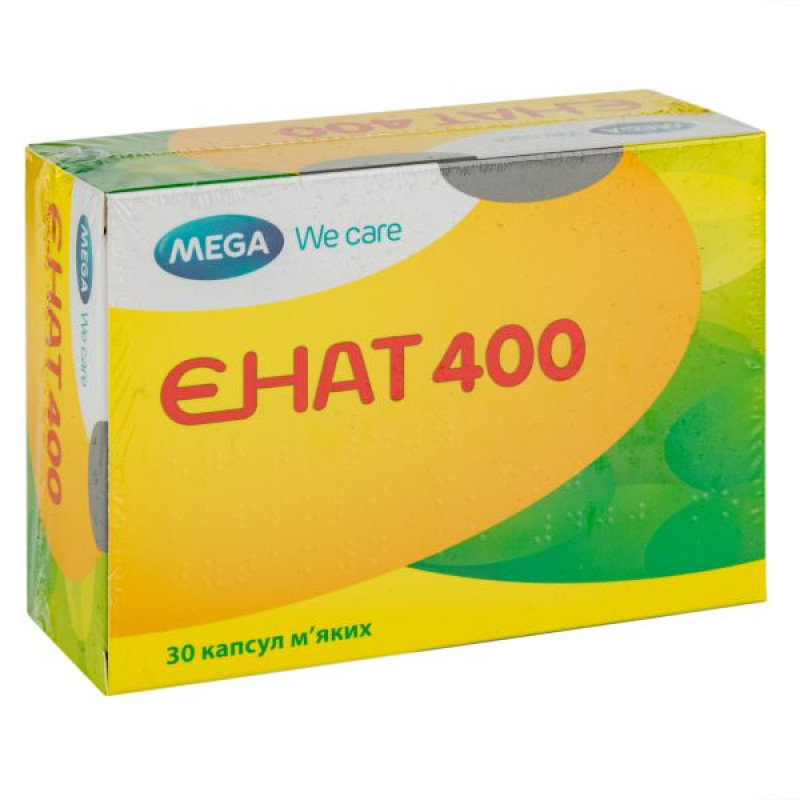
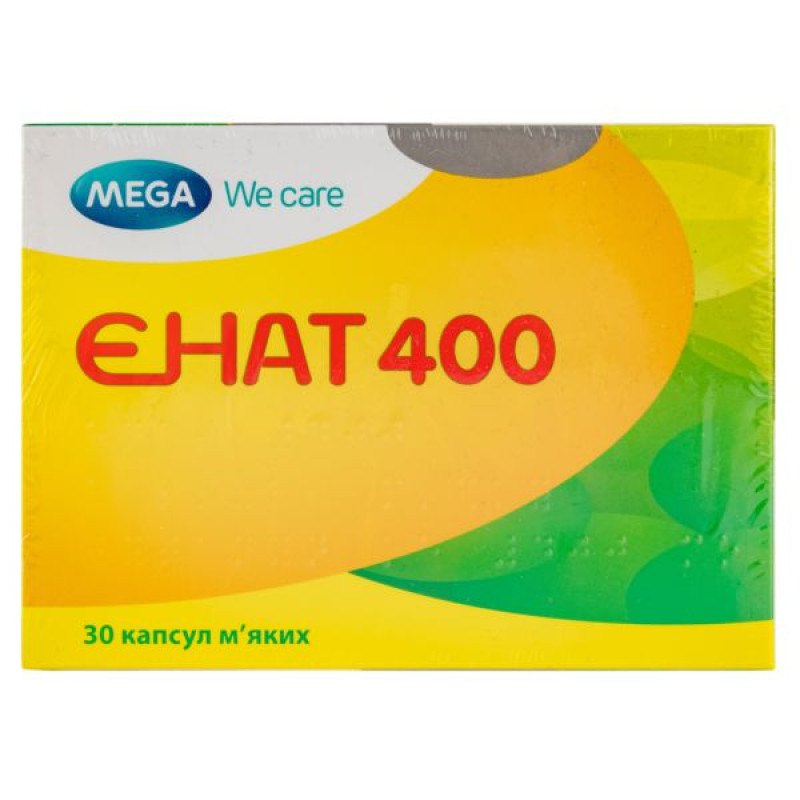
Instructions for use Enat 400 capsules 400 IU No. 30
Composition
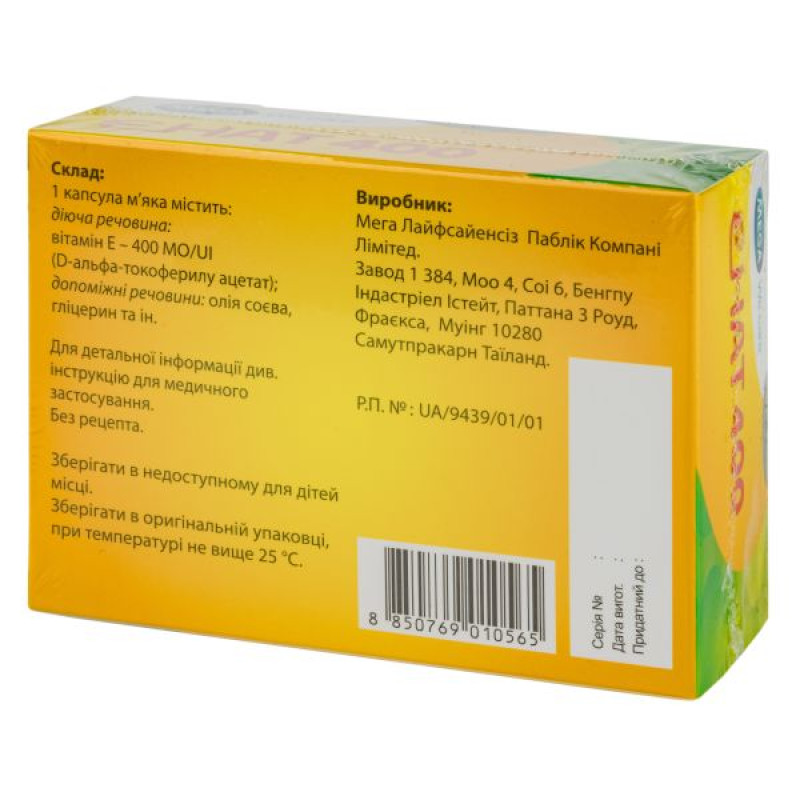
active ingredient: 1 capsule contains vitamin E – 400 IU (D-alpha-tocopheryl acetate);
excipients: soybean oil; gelatin capsule: gelatin, glycerin, purified water.
Dosage form
Soft capsules.
Main physicochemical properties: oval soft gelatin capsules filled with a transparent light yellow oily liquid.
Pharmacotherapeutic group
Simple vitamin preparations. Tocopherol (vitamin E). ATX code A11H A03.
Pharmacological properties
Pharmacodynamics
Vitamin E is a fat-soluble vitamin that has a high antioxidant and radioprotective effect, participates in the biosynthesis of heme and proteins, cell proliferation and other important processes of cellular metabolism. Vitamin E improves oxygen consumption by tissues. It has angioprotective effect, affecting the tone and permeability of blood vessels, stimulating the formation of new capillaries.
The immunomodulatory effect of vitamin E is due to the stimulation of T-cell and humoral immunity.
Tocopherol is indispensable for normal reproductive processes: fertilization, fetal development, formation and functioning of the reproductive system.
Vitamin E deficiency causes hypotension and dystrophy of skeletal muscles and myocardium, increased capillary permeability and fragility, photoreceptor degeneration, which causes vision impairment. Decreased sexual function in men and menstrual cycle disorders, and a tendency to miscarriage in women.
Vitamin E deficiency can lead to the development of hemolytic jaundice in newborns, as well as malabsorption syndrome and steatorrhea.
Pharmacokinetics
After absorption in the intestine, most of the tocopherol enters the lymph and blood, is rapidly distributed in the body's tissues with predominant accumulation in the liver, muscles, and adipose tissue. The highest concentration is observed in the adrenal glands, pituitary gland, gonads, and myocardium. Most of the drug is excreted from the body with urine, and partially with bile.
Indication
Hypovitaminosis and avitaminosis of vitamin E. In complex antioxidant therapy, during the period of convalescence after injuries, severe somatic diseases, with physical overload, with unbalanced nutrition.
As part of complex therapy:
– prevention of pathologies of embryonic development, congenital anomalies (malformations) of the fetus;
– threats of abortion;
– menstrual cycle disorders, vulva kraurosis, climacteric disorders;
– perceptual hearing disorders;
– atrophic disorders in the mucous membrane of the respiratory tract;
– degenerative and proliferative changes in the joints and fibrous tissue of the spine and large joints; muscle weakness due to discogenic blockades in intervertebral disc diseases, scleroderma, lupus erythematosus, rheumatoid arthritis, and other systemic connective tissue diseases;
– neurasthenia with exhaustion, mainly muscular dystrophy and muscle atrophy, secondary muscle weakness and myopathy in chronic arthritis;
– autonomic disorders;
– some endocrine disorders;
– some cardiovascular diseases;
– atrophic processes in the mucous membrane of the digestive system, nutritional disorders, malabsorption syndrome, alimentary anemia, chronic hepatitis;
– some periodontitis;
– eye diseases;
– skin diseases: dermatitis, trophic ulcers, psoriasis, eczema;
– plastic induration of the penis, balanitis, with impaired libido, impaired function of the gonads in men, with impaired spermatogenesis and potency in men, infertility (in combination with vitamin A).
Hypervitaminosis A and D.
Contraindication
Hypersensitivity to the active substance and to any of the components of the drug; cardiosclerosis; acute period of myocardial infarction; thyrotoxicosis; hypervitaminosis E; hypersensitivity to peanut or soy.
Interaction with other medicinal products and other types of interactions
Vitamin E cannot be used together with iron preparations, silver, alkaline agents (sodium bicarbonate, trisamine), and indirect anticoagulants (dicoumarin, neodicoumarin).
Vitamin E enhances the effect of steroidal and nonsteroidal anti-inflammatory drugs (diclofenac sodium, ibuprofen, prednisolone); reduces the toxic effect of cardiac glycosides (digitoxin, digoxin), vitamins A and D.
Vitamin E and its metabolites have an antagonistic effect on vitamin K.
Vitamin E increases the effectiveness of antiepileptic drugs in patients with epilepsy.
Cholestyramine, colestipol, and mineral oils reduce the absorption of vitamin E.
When taking high doses of vitamin E, vitamin A reserves in the body may decrease.
Application features
The use of large doses of vitamin E can exacerbate blood clotting disorders caused by vitamin K deficiency, so it is necessary to monitor blood clotting time.
Creatinuria, increased creatine kinase activity, increased cholesterol concentration, thrombophlebitis, pulmonary embolism and thrombosis in predisposed patients are rare. In epidermolysis bullosa, white hair may begin to grow in areas affected by alopecia.
When using the drug, it is necessary to adhere to the dosage and duration of treatment prescribed by the doctor to prevent overdose and the occurrence of hypervitaminosis E.
Use during pregnancy or breastfeeding
The drug can be used under the supervision of a physician in recommended doses during pregnancy or breastfeeding.
The drug partially penetrates the placental barrier; vitamin E enters the fetus, where its amount is 20-30% of the concentration of vitamin E in the mother's blood plasma.
Vitamin E passes into breast milk.
The ability to influence the speed of reactions when driving vehicles or other mechanisms
When using the drug, side effects such as visual disturbances and dizziness may occur. In such cases, it is necessary to refrain from driving or using other mechanisms.
Method of administration and doses
Vitamin E should be administered orally after meals, the dose should be selected individually, depending on the type of disease, the course of the disease, and the patient's condition. To achieve the prescribed dose, the drug should be used in the appropriate dosage. The capsule should be swallowed whole with sufficient water.
Dosage for adults:
– in complex antioxidant therapy: 0.2-0.4 g 1-2 times a day;
– with pathology of embryonic development, congenital anomalies (malformations) of the fetus: 0.1-0.2 g once a day in the first trimester of pregnancy;
– with the threat of abortion: 0.1 g 1-2 times a day for 14 days;
– for menstrual cycle disorders in complex treatment: 0.3-0.4 g every other day, starting from the 17th day of the cycle (repeat 5 cycles);
– for menstrual cycle disorders when using the drug before starting hormone therapy: 0.1 g 1-2 times a day for 2-3 months;
– for rheumatoid arthritis: 0.1-0.3 g daily for several weeks;
– for muscular dystrophies, diseases of the neuromuscular and tendon-joint apparatus – 0.1 g 1-2 times a day for 30-60 days, repeated course after 2-3 months;
– for neurasthenia with exhaustion, take the drug at a dose of 0.1 g once a day for 30-60 days;
– for some endocrine disorders: 0.3-0.5 g per day;
– for some cardiovascular diseases: 0.1 g daily;
– for alimentary anemia, 0.3 g per day for 10 days;
– for chronic hepatitis: 0.3 g per day for a long time;
– for some periodontal diseases: 0.2-0.3 g per day;
– for eye diseases: 0.1-0.2 g 1-2 times a day for 1-3 weeks in combination with vitamin A;
– for skin diseases: 0.1-0.2 g 1-2 times a day for 20-40 days;
– for plastic induration of the penis: 0.3-0.4 g daily for several weeks, then as prescribed by a doctor;
– for disorders of spermatogenesis and potency in men: 0.1-0.3 g per day in combination with hormone therapy for 30 days.
In other cases, the dosage and duration of treatment are determined by the doctor.
For adults, the average single dose is 0.1 g, the highest single dose is 0.4 g; the average daily dose is 0.2 g, the highest daily dose is 1 g.
Children.
The drug is contraindicated in children under 12 years of age.
Overdose
Symptoms. When taking high doses of vitamin E (400-800 mg per day for a long time), visual disturbances, diarrhea, dizziness, headache, nausea or abdominal cramps, extreme fatigue or weakness, increased creatine kinase activity, increased serum cholesterol and triglyceride concentrations, and increased urinary estrogen and androgen levels are possible.
Very high doses (more than 800 mg for a long time) may provoke a bleeding tendency in patients with vitamin K deficiency; they may disrupt thyroid hormone metabolism and increase the risk of thrombophlebitis and thromboembolism in susceptible patients.
Treatment. Treatment of overdose consists of removing vitamin E from the body and providing symptomatic therapy.
Adverse reactions
The drug is usually well tolerated, however, with prolonged use of large doses in the range of 400 to 800 mg per day, increased hypothrombinemia, visual disturbances, dizziness, nausea, development of gastrointestinal bleeding, diarrhea, stomach pain, liver enlargement, creatinine, digestive disorders, increased fatigue, general weakness, headache. Allergic reactions are possible, including skin rashes, itching, redness of the skin and fever.
Expiration date
3 years.
Storage conditions
Store in original packaging, at a temperature not exceeding 25 ºС.
Keep out of reach of children.
Packaging
10 capsules in a blister; 3 blisters in a cardboard box.
Vacation category
Without a prescription.
Producer
Mega Lifesciences Public Company Limited.
Factory 1 384, Moo 4, Soi 6, Bangpu Industrial Estate, Pattana 3 Road, Phraeksa, Mueang 10280 Samut Prakan Thailand.
Plant 1 384, Moo 4, Soi 6, Bangpoo Industrial Estate, Pattana 3 Road, Phraeksa, Mueang 10280 Samutprakarn Thailand.