Pharmacological properties
Pharmacodynamics. Benzydamine is an NSAID with analgesic and antiexudative properties.
Clinical studies have shown that benzydamine is effective in relieving symptoms associated with localized irritant pathologies in the oral cavity and pharynx. In addition, benzydamine has an anti-inflammatory and local analgesic effect on the oral mucosa.
Pharmacokinetics. The fact of absorption through the mucous membrane of the oral cavity and pharynx has been proven by the presence of measurable amounts of benzydamine in human blood plasma. However, this is not sufficient to exert any systemic pharmacological effect. Excretion occurs mainly with urine, mainly in the form of inactive metabolites or conjugated compounds.
It has been shown that topical application achieves the accumulation of effective concentrations of benzydamine in inflamed tissues due to its ability to penetrate the mucous membrane.
Indication
Symptomatic treatment of irritations and inflammations of the oropharynx; pain caused by gingivitis, stomatitis, pharyngitis; in dentistry it is used after tooth extraction or for preventive purposes.
Application
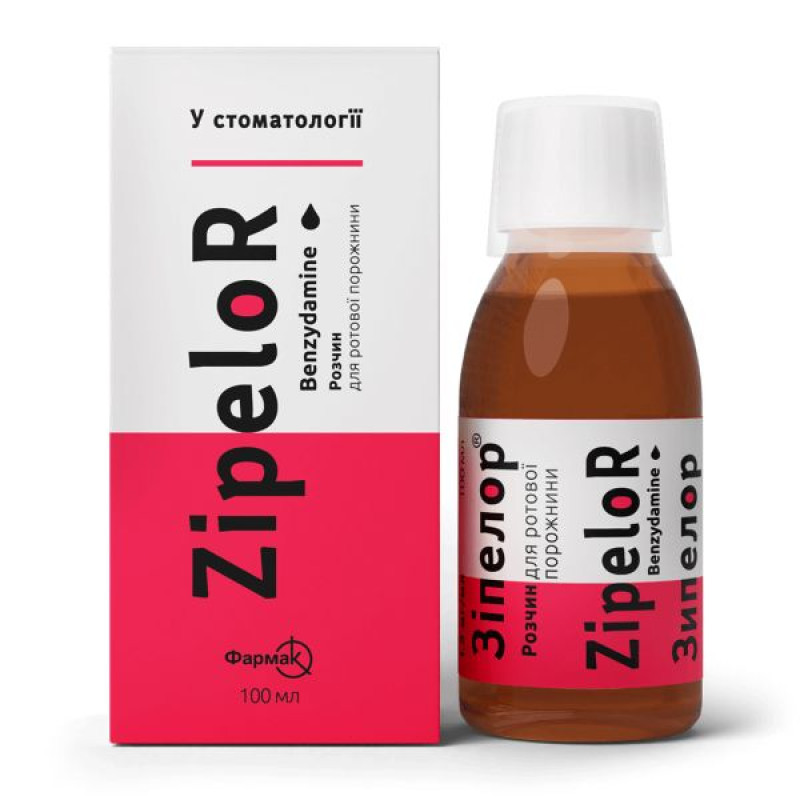
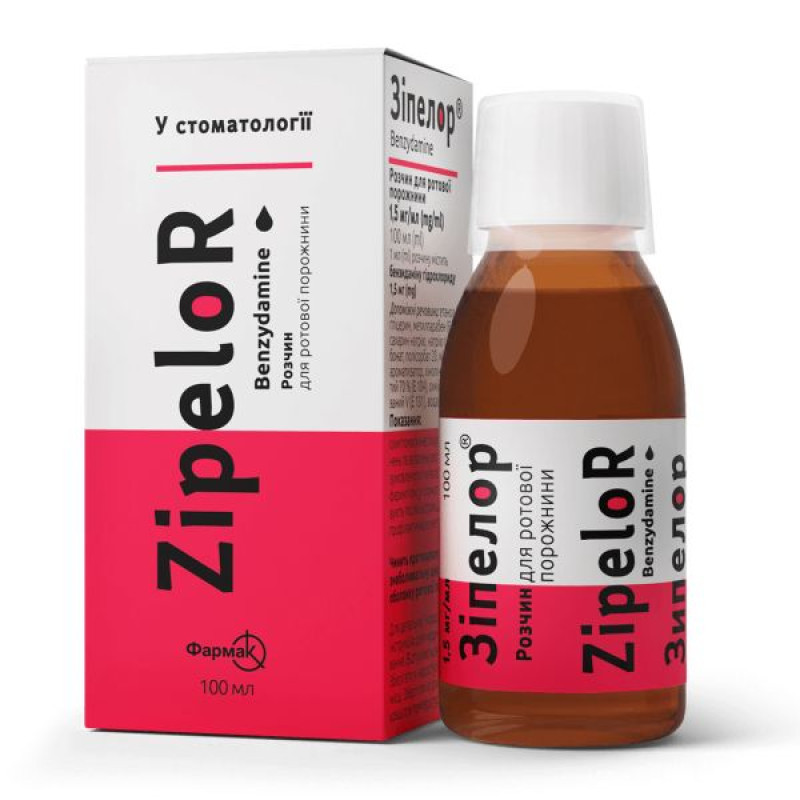
Zipelor, oral solution:
Measure 15 ml of Zipelor solution from the bottle using a measuring cup and rinse the mouth with the undiluted or diluted (15 ml of the solution can be diluted with 15 ml of water) preparation. Rinsing should be done 2-3 times a day. Do not exceed the recommended dose.
Zipelor, spray:
Before use, the nebulizer must be installed.
When you press the pump, an aerosol is formed containing 1 dose of spray - 0.17 ml, which corresponds to 0.255 mg of benzydamine hydrochloride.
dosage
Adults: 2-4 sprays 2-6 times a day.
Do not exceed recommended doses.
Zipelor Forte, spray:
Before use, the nebulizer must be installed.
When you press the pump, an aerosol is formed containing 1 dose of spray - 0.17 ml, which corresponds to 0.51 mg of benzydamine hydrochloride.
dosage
Adults: 4-8 sprays 2-6 times a day.
Children aged 6-12 years: 4 sprays 2-6 times a day.
Children aged 4-6 years: 1 spray for every 4 kg of body weight. The maximum dose is equivalent to 4 sprays 2-6 times a day.
Do not exceed recommended doses.
Contraindication
Hypersensitivity to the active substance or other components of the drug.
Side effects
From the gastrointestinal tract: rarely - burning sensation in the mouth, dry mouth; frequency unknown - oral hypoesthesia, nausea, vomiting, swelling and discoloration of the tongue, change in taste;
Immune system disorders: rarely - hypersensitivity reaction; frequency unknown - anaphylactic reaction;
Respiratory, thoracic and mediastinal disorders: very rarely - laryngospasm; frequency unknown - bronchospasm;
Skin and subcutaneous tissue disorders: uncommon - photosensitivity; very rare - angioedema; frequency unknown - rash, itching, urticaria;
Nervous system: frequency unknown - dizziness, headache.
Special instructions
If sensitivity occurs with prolonged use, treatment should be discontinued and a doctor should be consulted for appropriate treatment.
In some patients, buccal/pharyngeal ulcers may be due to serious underlying conditions. Therefore, patients whose symptoms worsen or do not improve within 3 days, or who develop a fever or other symptoms, should seek advice from a GP or dentist.
Benzydamine is not recommended for use in patients with hypersensitivity to acetylsalicylic acid or other nonsteroidal anti-inflammatory drugs.
The use of the drug may cause bronchospasm in patients with bronchial asthma or a history of asthma. Such patients should be warned about this.
For athletes: the use of medicines containing ethyl alcohol may give a positive result in an anti-doping test.
Use during pregnancy and lactation. There are currently no adequate data available on the use of benzydamine in pregnant or breastfeeding women. The ability of this agent to penetrate into breast milk has not been studied. Animal data are insufficient to draw any conclusions about the effects of this agent during pregnancy or lactation. The potential risk to humans is unknown.
Zipelor / Zipelor forte should not be used during pregnancy and breastfeeding.
Children.
Zipelor, oral solution: do not use in children under 12 years of age due to the possibility of swallowing the solution while rinsing the mouth.
Zipelor, spray: the drug is used in children over 4 years of age.
Zipelor Forte, spray: the drug is not used in children (under 18 years of age).
The ability to influence the reaction rate when driving vehicles or working with other mechanisms. When used in recommended doses, the drug has no effect on the ability to drive vehicles and work with mechanisms.
Interactions
No interaction studies have been conducted.
Overdose
However, it is known that benzydamine, when ingested in high doses (which exceeded the possible doses of this dosage form by hundreds of times), especially in children, can cause agitation, convulsions, tremors, nausea, increased sweating, ataxia, vomiting. Such an acute overdose requires immediate gastric lavage, treatment of water and electrolyte balance disorders and symptomatic treatment, adequate hydration.
Storage conditions
In the original packaging at a temperature not exceeding 25 °C.