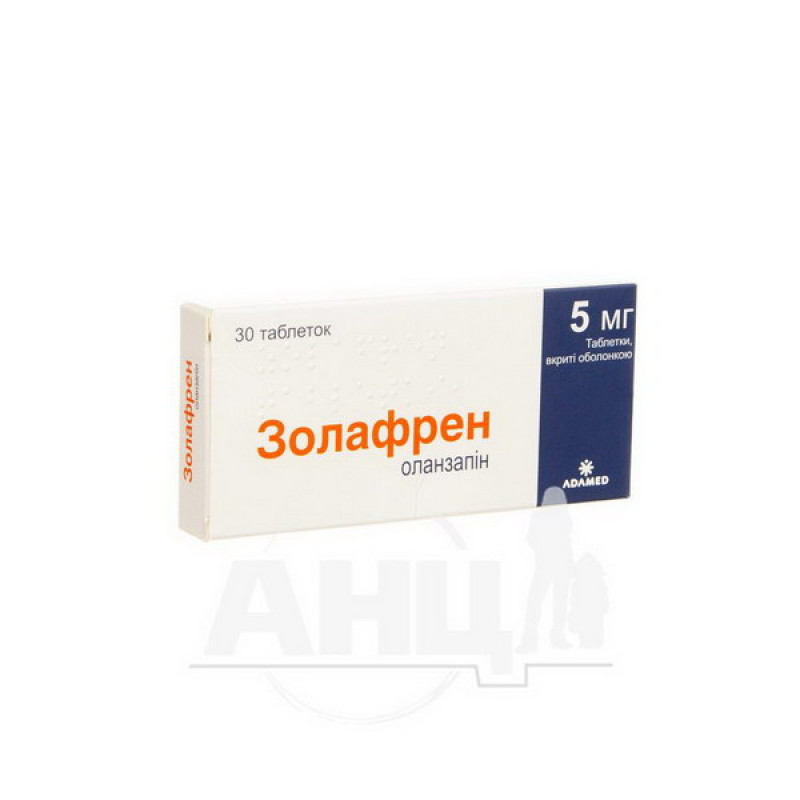
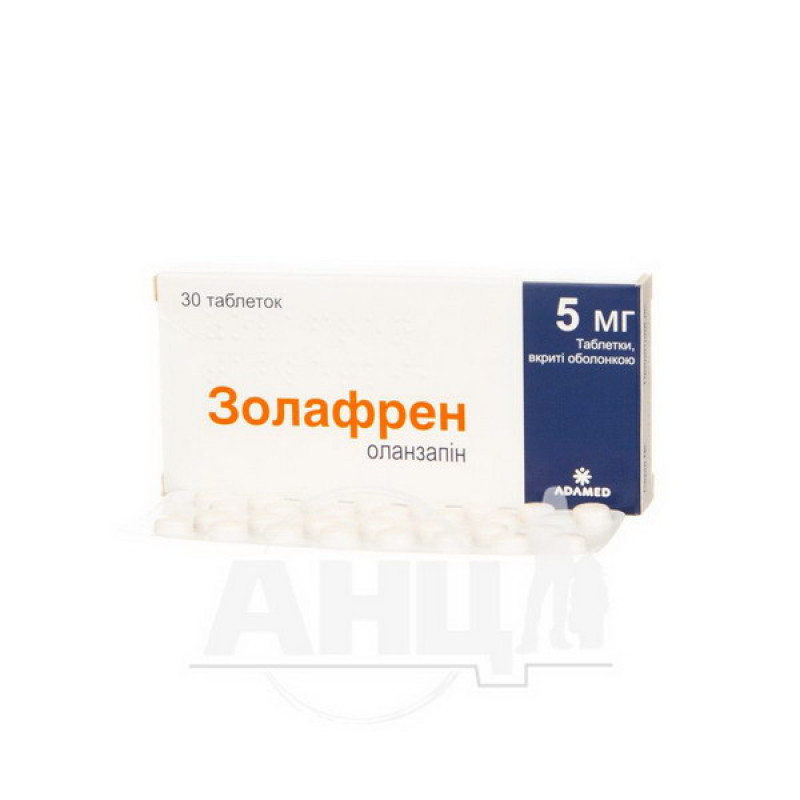
Zolafren film-coated tablets 5 mg blister No. 30
Zolafren tablets are indicated for:
treatment of schizophrenia; maintenance of the achieved clinical effect during long-term therapy in patients who have responded to initial therapy; treatment of moderate to severe manic episodes; prevention of recurrent attacks in patients with bipolar disorders who have responded to olanzapine treatment of mania.Composition
Active ingredient: 1 tablet contains 5 mg or 10 mg of olanzapine;
Excipients: lactose, microcrystalline cellulose, sodium starch (type A), magnesium stearate;
Shell: hydroxypropylmethylcellulose (hypromellose), polyethylene glycol (Macrogol) 400, dye Yellow No.6 Al-Lake (E 110), titanium dioxide (E 171), iron oxide yellow (E172), lactose.
Contraindication
Hypersensitivity to the active substance or to the auxiliary components of the drug.
Known risk of glaucoma.
Method of application
Treatment of schizophrenia, manic episodes and prevention of relapse in bipolar disorder. The daily dose should be determined based on clinical status in the range of 5 to 20 mg per day. Increases in the recommended initial dose should be made at intervals of at least 24 hours only after clinical examination. Olanzapine should be used regardless of meals, since food intake does not affect the absorption of the drug. When discontinuing the drug, the end of therapy should be carried out gradually.
Application features
Pregnant women
Olanzapine should be used during pregnancy only if the expected benefits justify the potential risk to the fetus.
Children
Olanzapine is not recommended for the treatment of children and adolescents.
Drivers
With caution, dizziness and drowsiness are possible.
Overdose
Symptoms: Very common (> 10%): tachycardia, agitation/aggressiveness, dysarthria, various extrapyramidal symptoms and decreased level of consciousness, ranging from sedation to coma.
Other significant complications of overdose include delirium, seizures, coma, possible neuroleptic malignant syndrome, respiratory depression, aspiration, hypertension or hypotension, cardiac arrhythmia (<2% of overdoses), and cardiopulmonary shock. Fatalities have been reported with acute overdoses of 450 mg, but there have been cases of survival after acute overdoses of 2 g of olanzapine orally.
Treatment. There is no specific antidote. Drugs that induce vomiting are not recommended. Standard overdose procedures are recommended (e.g. gastric lavage, administration of activated charcoal). Co-administration of activated charcoal has been shown to reduce the oral bioavailability of olanzapine by 50-60%.
Side effects
The most common adverse reactions (occurring in ≥ 1% of patients) associated with the use of olanzapine in clinical studies were: drowsiness, weight gain, eosinophilia, increases in prolactin, cholesterol, glucose and triglycerides in the blood, glycosuria, increased appetite, dizziness, akathisia, parkinsonism, leukopenia, neutropenia, dyskinesia, orthostatic hypotension, anticholinergic effects, transient asymptomatic increases in hepatic transaminases, rash, asthenia, fatigue, hyperthermia, arthralgia, increases in alkaline phosphatase, gamma-glutamyltransferase, uric acid, CPK and edema.
Interaction
Caution should be exercised when prescribing olanzapine with other drugs with a known risk of prolonging the QTc interval.
Storage conditions
Store at a temperature not exceeding 25 °C, in the original packaging.
Keep out of reach of children.
Shelf life - 3 years.
There are no reviews for this product.
There are no reviews for this product, be the first to leave your review.
No questions about this product, be the first and ask your question.