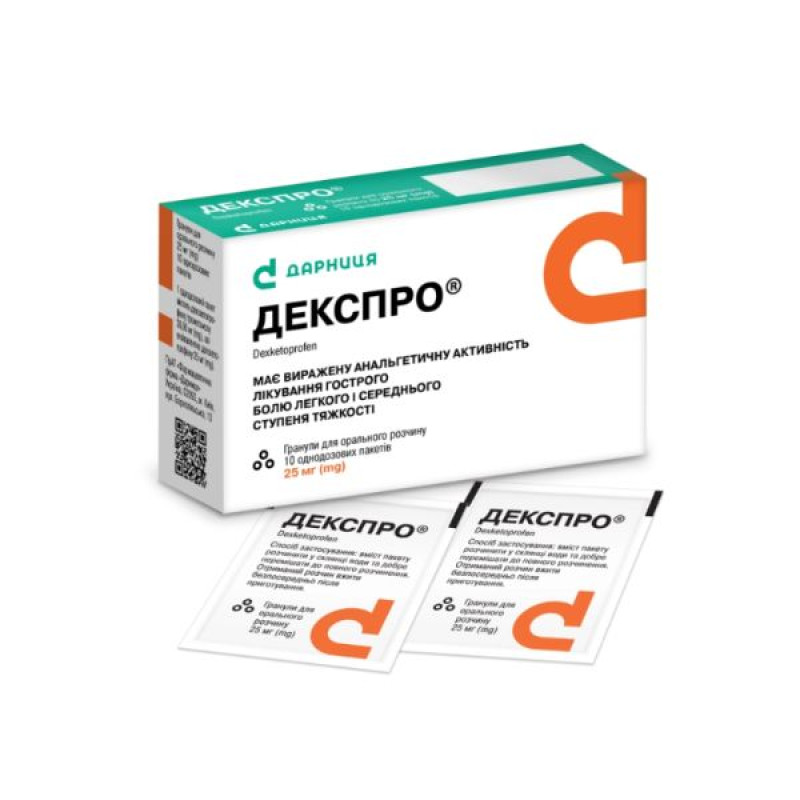
Instructions for Dexpro 25 mg granules, package No. 10
Composition
active ingredient: dexketoprofen;
1 single-dose packet contains 36.90 mg of dexketoprofen trometamol, equivalent to 25 mg of dexketoprofen;
excipients: ammonium glycyrrhizate, acesulfame potassium, lemon flavoring, sucrose, colloidal anhydrous silicon dioxide.
Dosage form
Granules for oral solution.
Main physicochemical properties: white or almost white granules.
Pharmacotherapeutic group
Nonsteroidal anti-inflammatory and antirheumatic drugs. Propionic acid derivatives. Dexketoprofen. ATX code M01A E17.
Pharmacological properties
Pharmacodynamics.
Dexketoprofen trometamol is the tromethamine salt of (S)-(+)-2-(3-benzoylphenyl)propionic acid. It is an analgesic, anti-inflammatory, antipyretic drug belonging to the group of nonsteroidal anti-inflammatory drugs.
Mechanism of action.
The action of nonsteroidal anti-inflammatory drugs (NSAIDs) is to reduce prostaglandin synthesis by inhibiting cyclooxygenase activity. In particular, NSAIDs inhibit the conversion of arachidonic acid to the cyclic endoperoxides PGG2 and PGH2, which form the prostaglandins PGE1, PGE2, PGF2α, PGD2 and PGI2 (prostacyclin) and the thromboxanes TxA2 and TxB2. In addition, inhibition of prostaglandin synthesis may affect other inflammatory mediators, such as kinins, causing additional indirect effects.
Pharmacodynamic action.
The inhibitory effect of dexketoprofen on cyclooxygenase-1 and cyclooxygenase-2 activity has been demonstrated in animals and humans.
Clinical efficacy and safety.
Clinical studies in various types of pain have shown that dexketoprofen has a pronounced analgesic activity. According to some studies, the analgesic effect occurs 30 minutes after administration. The duration of the analgesic effect is 4–6 hours.
Pharmacokinetics.
Absorption.
Dexketoprofen trometamol is rapidly absorbed after oral administration, with peak plasma concentrations occurring 0.25–0.33 hours after administration of the granules. A comparison of dexketoprofen tablets with a standard release time and granules with a dosage of 12.5 and 25 mg showed that these two forms are bioequivalent in terms of bioavailability (AUC). Peak concentrations (Cmax) after administration of the granules were approximately 30% higher than after administration of the tablets.
When administered with food, the AUC does not change, but the Cmax of dexketoprofen trometamol decreases and the rate of its absorption decreases (tmax increases).
Distribution.
The half-life and elimination half-life of dexketoprofen trometamol are 0.35 and 1.65 hours, respectively. Similar to other drugs with a high degree of plasma protein binding (99%), the volume of distribution of dexketoprofen is on average less than 0.25 l/kg.
Biotransformation and excretion.
Dexketoprofen is eliminated mainly by conjugation with glucuronic acid and subsequent renal excretion.
After administration of dexketoprofen trometamol, only the S-(+) optical isomer is detected in the urine, indicating the absence of transformation of dexketoprofen into the R-(–) optical isomer in humans.
Pharmacokinetic studies show that AUC values after multiple administration of dexketoprofen and after a single dose do not differ, indicating the absence of cumulation of the drug substance.
Preclinical safety data.
Standard preclinical studies — safety pharmacology, genotoxicity, and immunopharmacology studies — revealed no special hazard for humans. Chronic toxicity studies in mice and monkeys allowed us to determine the maximum dose of the drug that does not cause adverse reactions, which was 2 times higher than the maximum dose recommended for humans. When administering higher doses of the drug to monkeys, the main adverse reaction was blood in the stool, decreased body weight gain, and at the highest dose — pathologies of the gastrointestinal tract (GI) in the form of erosions. These reactions occurred at doses at which the exposure to the drug was 14–18 times higher than at the maximum dose recommended for humans. Carcinogenicity studies in animals were not conducted.
Like all NSAIDs, dexketoprofen can cause embryo or fetal death in animals due to a direct effect on its development or indirectly - due to damage to the gastrointestinal tract of the mother.
Indication
For the short-term symptomatic treatment of acute pain of mild to moderate severity, e.g. musculoskeletal pain, dysmenorrhea, toothache.
Contraindication
Hypersensitivity to the active substance or to any other NSAID or to any of the excipients.
Use in patients in whom substances with a similar mechanism of action, such as acetylsalicylic acid and other NSAIDs, cause attacks of bronchial asthma, bronchospasm, acute rhinitis or lead to the development of nasal polyps, urticaria or angioedema.
Photoallergic or phototoxic reactions are known during treatment with ketoprofen or fibrates.
History of gastrointestinal bleeding or perforation associated with NSAID use.
Chronic dyspepsia.
Bleeding in the active phase or increased bleeding.
Crohn's disease or nonspecific ulcerative colitis.
Severe heart failure.
Moderate or severe renal impairment (creatinine clearance ≤ 59 ml/min).
Severe liver dysfunction (Child-Pugh score 10–15).
Hemorrhagic diathesis or other blood clotting disorders.
Severe dehydration (due to vomiting, diarrhea, or insufficient fluid intake).
Third trimester of pregnancy and breastfeeding (see section "Use during pregnancy or breastfeeding").
Interaction with other medicinal products and other types of interactions
The following drug interactions generally characterize the NSAIDs class.
Undesirable combinations:
Other NSAIDs, including selective cyclooxygenase-2 inhibitors and salicylates in high doses (≥ 3 g/day): the simultaneous use of several NSAIDs increases the risk of gastrointestinal ulcers and bleeding due to synergistic effects.
Anticoagulants: NSAIDs enhance the effect of anticoagulants, such as warfarin, due to the high degree of binding to plasma proteins, as well as due to inhibition of platelet function and damage to the gastric and duodenal mucosa. If concomitant use is necessary, it should be carried out under the supervision of a physician with careful monitoring of relevant laboratory parameters.
Heparin: increased risk of bleeding (due to inhibition of platelet function and damage to the gastric and duodenal mucosa). If concomitant use is necessary, it should be carried out under medical supervision with careful monitoring of relevant laboratory parameters.
Corticosteroids: increased risk of peptic ulcers and gastrointestinal bleeding.
Lithium preparations: NSAIDs (there have been reports of concomitant use with several NSAIDs) increase the level of lithium in the blood to toxic values by reducing its excretion by the kidneys. Therefore, this parameter requires monitoring at the beginning of use, during dose adjustment and during withdrawal of dexketoprofen.
Methotrexate when used in high doses (15 mg/week or more): the level of methotrexate in the blood increases due to a decrease in its excretion by the kidneys, which leads to toxic effects on the blood system.
Hydantoin derivatives and sulfonamides: possible increased toxicity of these substances.
Combinations requiring careful use:
Diuretics, angiotensin-converting enzyme (ACE) inhibitors, aminoglycoside antibiotics and angiotensin II receptor antagonists: dexketoprofen weakens the effect of diuretics and other antihypertensive agents. In some patients with impaired renal function (e.g. in case of dehydration or in elderly patients with impaired renal function), the condition may worsen when cyclooxygenase inhibitors are used concomitantly with ACE inhibitors, angiotensin II receptor antagonists and aminoglycoside antibiotics. As a rule, this deterioration is reversible. When using dexketoprofen simultaneously with any diuretic, it is necessary to ensure that the patient receives enough fluid, and at the beginning and periodically after treatment, renal function should be monitored. The simultaneous use of dexketoprofen and potassium-sparing diuretics may lead to hyperkalemia. It is necessary to monitor the concentration of potassium in the blood.
Methotrexate when used in low doses (less than 15 mg/week): possible increased toxicity to the blood system due to decreased renal clearance while taking anti-inflammatory drugs; during the first weeks of using such a combination, weekly monitoring of the blood picture is required, especially in the presence of even a slight decrease in renal function, as well as in the elderly.
Pentoxifylline: the risk of bleeding increases, so it is necessary to monitor the patient and control the bleeding time.
Zidovudine: there is a risk of increased toxicity of zidovudine on erythropoiesis (toxicity of reticulocytes) up to the development of severe anemia a week after the use of NSAIDs, therefore, in the first 1–2 weeks after the start of NSAID therapy, a blood test with a reticulocyte count should be performed.
Sulfonylureas: NSAIDs may enhance the hypoglycemic effect of sulfonylureas by displacing them from blood protein binding.
Combinations to consider:
β-blockers: their antihypertensive effect may be reduced due to inhibition of prostaglandin synthesis.
Cyclosporine and tacrolimus: increased renal toxicity of these drugs due to the effect of NSAIDs on prostaglandin synthesis; regular monitoring of renal function is necessary when using this combination.
Thrombolytic agents: increased risk of bleeding.
Platelet aggregation inhibitors and selective serotonin reuptake inhibitors: increased risk of gastrointestinal bleeding.
Probenecid: increased plasma concentrations of dexketoprofen due to decreased renal tubular secretion and glucuronidation; in this case, dexketoprofen dose adjustment is required.
Mifepristone: There is a theoretical risk that prostaglandin synthesis inhibitors may alter the efficacy of mifepristone. Some evidence suggests that concomitant use of NSAIDs and prostaglandins does not affect the effects of mifepristone or prostaglandins, namely cervical ripening or uterine contractility, and does not reduce the clinical efficacy of medical abortion.
Quinoline antibiotics: Animal studies have shown that the use of high doses of quinoline antibiotics in combination with NSAIDs increases the risk of seizures.
Tenofovir: Concomitant use with NSAIDs may increase blood urea nitrogen and creatinine levels, therefore renal function should be monitored to monitor for potential synergistic effects on renal function.
Deferasirox: Concomitant use with NSAIDs may increase gastrointestinal toxicity and requires careful clinical monitoring.
Pemetrexed: Concomitant use with NSAIDs may reduce the elimination of pemetrexed, therefore caution should be exercised when administering higher doses of NSAIDs. Patients with mild to moderate renal impairment (creatinine clearance 45 to 79 ml/min) should avoid NSAIDs for 2 days before and 2 days after pemetrexed administration.
Application features
Use with caution in patients with a history of allergic reactions.
The concomitant use of dexketoprofen with other NSAIDs, in particular selective cyclooxygenase-2 inhibitors, should be avoided.
Adverse reactions can be minimized by using the lowest effective dose for the shortest time necessary to relieve symptoms (see below for gastrointestinal and cardiovascular risks).
Gastrointestinal safety.
Gastrointestinal bleeding, ulceration or perforation, in some cases fatal, have been reported with all NSAIDs at various stages of treatment, regardless of the presence of warning symptoms or a history of serious gastrointestinal disease. If gastrointestinal bleeding or ulceration occurs during treatment with dexketoprofen, the drug should be discontinued.
The risk of gastrointestinal bleeding, ulceration or perforation increases with increasing NSAID dose in patients with a history of ulcer, especially complicated by bleeding or perforation, and in elderly patients.
Elderly patients: Elderly patients have an increased incidence of adverse reactions to NSAIDs, especially gastrointestinal bleeding and ulcer perforation, which can be life-threatening. Treatment of these patients should be started at the lowest possible dose.
Before starting the use of dexketoprofen trometamol in patients with a history of esophagitis, gastritis and/or peptic ulcer disease, as with other NSAIDs, it should be ensured that these diseases are in complete remission. In patients with existing symptoms of gastrointestinal pathology and with a history of gastrointestinal diseases, the condition of the gastrointestinal tract should be monitored during the use of dexketoprofen to identify possible disorders, especially gastrointestinal bleeding.
NSAIDs should be prescribed with caution to patients with a history of gastrointestinal diseases (ulcerative colitis, Crohn's disease) due to the risk of exacerbation of these diseases.
For such patients and patients who use acetylsalicylic acid in low doses or other agents that increase the risk of adverse reactions from the digestive tract, the possibility of combination therapy with protective drugs, such as misoprostol or proton pump inhibitors, should be considered.
Patients, especially the elderly, with a history of gastrointestinal adverse reactions should report, especially in the initial stages of treatment, any unusual symptoms related to the digestive system (in particular gastrointestinal bleeding).
Caution should be exercised when prescribing the drug to patients who are taking concomitant medications that increase the risk of ulceration or bleeding: oral corticosteroids, anticoagulants (e.g. warfarin), selective serotonin reuptake inhibitors or antiplatelet agents such as acetylsalicylic acid.
Kidney safety.
Patients with impaired renal function should be prescribed the drug with caution, since the use of NSAIDs may worsen renal function, fluid retention and edema. Given the increased risk of nephrotoxicity, the drug should be prescribed with caution in patients treated with diuretics, as well as in patients who may develop hypovolemia.
During treatment, the body must receive sufficient fluids to avoid dehydration, which can lead to increased toxic effects on the kidneys.
Like all NSAIDs, dexketoprofen can increase blood urea nitrogen and creatinine levels in the blood plasma. Like other prostaglandin synthesis inhibitors, its use may be accompanied by adverse reactions from the kidneys, which can lead to glomerulonephritis, interstitial nephritis, papillary necrosis, nephrotic syndrome and acute renal failure.
Most kidney dysfunction occurs in elderly patients.
Patients with impaired liver function should be prescribed the drug with caution. As with other NSAIDs, dexketoprofen may cause a temporary and slight increase in some liver parameters, as well as a pronounced increase in the activity of aspartate aminotransferase and alanine aminotransferase. If these parameters increase, therapy should be discontinued.
Most liver dysfunction occurs in elderly patients.
Safety regarding the cardiovascular system and cerebral circulation.
Patients with a history of hypertension and/or mild to moderate heart failure require monitoring and advice. Particular caution should be exercised when treating patients with a history of heart disease, in particular with previous episodes of heart failure, since the risk of developing heart failure is increased with dexketoprofen: fluid retention and edema have been observed with NSAIDs. Clinical trials and epidemiological data suggest that the risk of arterial thrombosis (e.g. myocardial infarction or stroke) is slightly increased with the use of some NSAIDs (especially at high doses and for long periods). There is insufficient data to exclude such a risk with dexketoprofen. Therefore, in the case of uncontrolled hypertension, congestive heart failure, ischemic heart disease, peripheral arterial disease and/or cerebrovascular disease, dexketoprofen should be prescribed only after careful assessment of the patient's condition. The same careful assessment is required before starting long-term treatment in patients with risk factors for cardiovascular disease (such as hypertension, hyperlipidemia, diabetes mellitus, smoking).
All non-selective NSAIDs can reduce platelet aggregation and increase bleeding time due to inhibition of prostaglandin synthesis. Therefore, it is not recommended to prescribe dexketoprofen trometamol to patients taking drugs that affect hemostasis, such as warfarin, other coumarins or heparins. The greatest number of cardiovascular system disorders occurs in elderly patients.
Skin reactions.
Very rare cases of serious skin reactions (some fatal) have been reported with NSAIDs, including exfoliative dermatitis, Stevens-Johnson syndrome and toxic epidermal necrolysis. The risk of these events is likely to be greatest at the start of treatment, with most patients experiencing them within the first month of treatment.
At the first signs of skin rashes, mucosal lesions, or other symptoms of hypersensitivity, the drug should be discontinued.
Masking the symptoms of underlying infections.
Dexketoprofen may mask the symptoms of an infectious disease, which may prevent timely diagnosis and treatment and thereby complicate the course of the disease. Masking of symptoms has been observed in bacterial community-acquired pneumonia and bacterial complications of varicella. When dexketoprofen is used to relieve pain in an infection, monitoring for the infectious disease is recommended. In the setting of treatment outside a medical institution, the patient should consult a doctor if symptoms persist or worsen.
Other information.
Particular caution should be exercised when prescribing the drug to patients:
- with hereditary disorders of porphyrin metabolism (for example, with acute intermittent porphyria);
- with dehydration;
- immediately after major surgical interventions.
If the doctor considers that long-term use of dexketoprofen is necessary, liver and kidney function, as well as blood counts, should be regularly monitored.
In very rare cases, severe acute hypersensitivity reactions (e.g. anaphylactic shock) have been observed. At the first signs of severe hypersensitivity reactions after taking dexketoprofen, treatment should be discontinued. Depending on the symptoms, the necessary treatment in such cases should be carried out under medical supervision.
Patients with asthma in combination with chronic rhinitis, chronic sinusitis and/or nasal polyps are at higher risk of developing allergy to acetylsalicylic acid and/or NSAIDs than other patients. The use of this medicinal product may cause asthma attacks or bronchospasm, especially in patients with allergy to acetylsalicylic acid or NSAIDs.
In special cases, severe infectious complications of the skin and soft tissues may develop in the setting of chickenpox. To date, there is no data that allows us to completely exclude the role of NSAIDs in the exacerbation of this infectious process. Therefore, the use of dexketoprofen should be avoided in chickenpox.
The drug should be used with caution in patients with hematopoietic disorders, systemic lupus erythematosus, and mixed connective tissue diseases.
Children.
Safety for use in children and adolescents has not been established.
Important information about excipients.
Patients with rare hereditary problems of fructose intolerance, glucose-galactose malabsorption or sucrase-isomaltase deficiency should not take this medicine.
Use during pregnancy or breastfeeding
The drug is contraindicated in the third trimester of pregnancy and during breastfeeding.
Pregnancy.
Inhibition of prostaglandin synthesis may adversely affect pregnancy and/or embryo-fetal development. Epidemiological studies have shown that the use of drugs that inhibit prostaglandin synthesis in early pregnancy increases the risk of miscarriage, fetal heart defects and anterior abdominal wall nonunion.
Thus, the absolute risk of developing cardiovascular anomalies increased from less than 1% to approximately 1.5% - it is believed that the risk of such events increases with increasing dose of the drug and duration of therapy. The use of prostaglandin synthesis inhibitors in animals caused an increase in pre- and post-implantation losses and increased embryo-fetal mortality. In addition, in animals treated with prostaglandin synthesis inhibitors during the period of organogenesis, the incidence of fetal malformations, including cardiovascular anomalies, increased. However, studies of dexketoprofen in animals did not reveal toxic effects on the reproductive organs. Starting from the 20th week of pregnancy, the use of dexketoprofen can cause oligohydramnios due to fetal renal dysfunction. This can occur shortly after the start of treatment and is usually reversible after discontinuation of the drug. There have also been reports of narrowing of the ductus arteriosus following treatment in the second trimester of pregnancy, most of which resolved after discontinuation of treatment. Antenatal monitoring for oligohydramnios and narrowing of the ductus arteriosus should be considered after exposure to dexketoprofen for several days, starting from the 20th week of gestation. The use of DEXPRO should be discontinued if these abnormalities of pregnancy and fetus development are detected. The use of dexketoprofen in the first and second trimesters of pregnancy is possible only if absolutely necessary. When prescribing dexketoprofen to women planning a pregnancy or in the first and second trimesters of pregnancy, the lowest possible effective dose should be used for the shortest possible duration of treatment.
During the third trimester, all prostaglandin synthesis inhibitors cause:
Risks to the fetus:
cardiopulmonary toxicity, such as premature narrowing/closure of the ductus arteriosus and hypertension in the pulmonary artery system;
renal dysfunction, which may progress to renal failure with the development of oligohydramnios (see above).
Risks for the woman at the end of pregnancy and for the newborn:
increased bleeding time due to inhibition of platelet aggregation, even when using the drug in low doses;
suppression of uterine contractile activity, which leads to prolongation and delay of labor.
Breastfeeding.
There is no data on the penetration of dexketoprofen into breast milk. Dexketoprofen is contraindicated during breastfeeding.
Fertility.
As with all NSAIDs, dexketoprofen may impair female fertility and is therefore not recommended in women attempting to conceive. If a woman has difficulty conceiving or is undergoing investigation of infertility, discontinuation of dexketoprofen should be considered.
Ability to influence reaction speed when driving vehicles or other mechanisms
When using dexketoprofen, undesirable effects such as dizziness, visual disturbances or drowsiness may occur. In such cases, a decrease in the speed of reactions when driving vehicles or other mechanisms is possible.
Method of administration and doses
Dosage.
The lowest effective dose should be used for the shortest time necessary to control symptoms (see section "Special instructions").
Adults.
Depending on the type and intensity of pain, the recommended dose is 25 mg every 8 hours. The daily dose should not exceed 75 mg.
The medicine is intended only for short-term use, necessary to eliminate symptoms.
Elderly patients. It is recommended to start treatment with low doses. The daily dose is 50 mg. If the drug is well tolerated, the dose can be increased to the usual dose. Due to the risk of side effects of a certain profile, elderly patients should be under close medical supervision.
In case of liver dysfunction.
In patients with mild to moderate hepatic impairment, treatment should be initiated at the minimum recommended dose and under close medical supervision. The daily dose is 50 mg. Dexketoprofen is contraindicated in patients with severe hepatic impairment.
In case of impaired kidney function.
In patients with mild renal impairment (creatinine clearance 60–89 ml/min), the initial total daily dose should be reduced to 50 mg. In patients with moderate or severe renal impairment (creatinine clearance ≤ 59 ml/min), dexketoprofen is contraindicated.
Before use, dissolve the entire contents of 1 sachet in a glass of water and stir well for better dissolution. The resulting solution should be taken immediately after preparation.
Simultaneous use with food slows down the rate of absorption of the drug (see the "Pharmacokinetics" section), therefore, for acute pain, it is recommended to take the drug at least 15 minutes before a meal.
Children
The use of dexketoprofen in children has not been studied, therefore the safety and efficacy in children and adolescents have not been established. The drug should not be prescribed to children and adolescents.
Overdose
Symptoms of overdose are unknown. Similar drugs cause disorders of the digestive tract (vomiting, anorexia, abdominal pain) and the nervous system (drowsiness, vertigo, disorientation, headache).
In case of accidental overdose or excessive use, symptomatic therapy should be initiated immediately according to the patient's clinical condition. If more than 5 mg/kg is ingested by an adult or child, activated charcoal should be administered within one hour. Dexketoprofen trometamol is removed from the body by dialysis.
Adverse reactions
The following are adverse reactions considered at least possibly related to the use of dexketoprofen (in tablet form) based on clinical studies, as well as adverse reactions reported during post-marketing experience.
Since the Cmax level in the blood plasma of dexketoprofen in the form of granules is higher than in the form of tablets, an increased risk of adverse reactions (from the gastrointestinal tract) cannot be excluded.
All adverse reactions are listed by system organ class and frequency: very common (≥ 1/10), common (≥ 1/100 - < 1/10), uncommon (≥ 1/1,000 - < 1/100), rare (≥ 1/10,000 - < 1/1,000), very rare (< 1/10,000), frequency unknown (cannot be estimated from the available data).
On the part of the organs of vision: very rarely - blurred vision.
From the side of the organs of hearing and vestibular apparatus: infrequently - dizziness; very rarely - tinnitus.
From the respiratory system, chest organs and mediastinum: rarely - bradypnea; very rarely - bronchospasm, dyspnea.
Gastrointestinal: often - nausea and/or vomiting, abdominal pain, diarrhea, dyspepsia; infrequently - gastritis, constipation, dry mouth, flatulence; rarely - peptic ulcer, bleeding or perforation; very rarely - pancreatitis.
On the part of the liver and biliary tract: rarely - damage to liver cells.
From the kidneys and urinary system: rarely - polyuria, acute renal failure; very rarely - nephritis or nephrotic syndrome.
Metabolism and metabolism: rarely - anorexia.
From the nervous system: infrequently - headaches, dizziness, drowsiness; rarely - paresthesia, fainting.
On the part of the psyche: infrequently - insomnia, anxiety.
On the part of the heart: infrequently - palpitations; very rarely - tachycardia.
Vascular disorders: infrequently - hot flashes; rarely - hypertension; very rarely - arterial hypotension.
Blood and lymphatic system disorders: very rarely - neutropenia, thrombocytopenia.
On the part of the immune system: rarely - laryngeal edema; very rarely - anaphylactic reactions, including anaphylactic shock.
Skin and subcutaneous tissue disorders: infrequently - rash; rarely - urticaria, acne, increased sweating; very rarely - Stevens-Johnson syndrome, toxic epidermal necrolysis (Lyell's syndrome), Quincke's edema, facial edema, photosensitivity reaction, itching.
Musculoskeletal and connective tissue disorders: rarely - back pain.
From the reproductive system and mammary gland function: rarely - menstrual cycle disorders, prostate dysfunction.
General disorders: infrequently - fatigue, pain, asthenia, muscle rigidity, malaise; rarely - peripheral edema.
Laboratory indicators: rarely - abnormalities in liver function tests.
The most common side effects are from the gastrointestinal tract. Thus, the development of peptic ulcer, perforation or bleeding in the digestive tract is possible, sometimes with a fatal outcome, especially in elderly patients. According to available data, nausea, vomiting, diarrhea, flatulence, constipation, dyspeptic phenomena, abdominal pain, melena, haematemesis, ulcerative stomatitis, exacerbation of colitis and Crohn's disease may occur against the background of the use of the drug. Gastritis is less common. Edema, arterial hypertension and heart failure have also been reported against the background of NSAID treatment.
According to clinical trial results and epidemiological data, the use of some NSAIDs, especially in high doses and for a long time, somewhat increases the risk of developing pathology caused by arterial thrombosis (for example, myocardial infarction or stroke).
As with other NSAIDs, the following adverse reactions are possible: aseptic meningitis, which mainly occurs in patients with systemic lupus erythematosus or mixed collagen diseases, blood reactions (purpura, aplastic and hemolytic anemia, rarely - agranulocytosis and bone marrow hypoplasia).
Reporting of suspected adverse reactions.
Reporting suspected adverse reactions after the registration of a medicinal product is an important procedure. It allows for continued monitoring of the benefit/risk balance of the medicinal product in question. Healthcare professionals should report any suspected adverse reactions through the national pharmacovigilance system.
Expiration date
1.5 years.
Do not use the medicine after the expiry date stated on the packaging.
Storage conditions
Store in the original packaging at a temperature not exceeding 25 °C.
Keep out of reach of children.
Packaging
10 single-dose sachets per pack.
Vacation category
According to the recipe.
Producer
PrJSC "Pharmaceutical Company "Darnitsa".
Location of the manufacturer and address of its place of business.
Ukraine, 02093, Kyiv, Boryspilska St., 13.